
Residents, businesses appeal unexpectedly high water bills; city schedules follow-up inspections and offers payment plans
Get AI-powered insights, summaries, and transcripts
Subscribe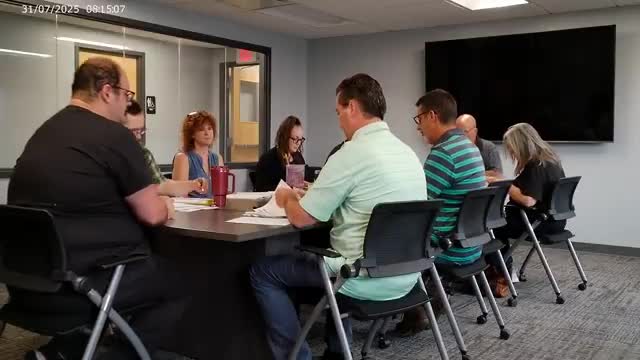
Summary
Several Gardner property owners and a childcare operator told the Public Service Committee on July 28 that they received unexpectedly large water bills and asked the city to investigate and provide relief.
Several Gardner property owners and a childcare operator told the Public Service Committee on July 28 that they received unexpectedly large water bills and asked the city to investigate and provide relief.
A resident identified in committee paperwork as living at 38 Foster Cooler said she moved to Gardner in 2023 and, as a travel nurse, is often away. She said she received a bill that showed about 8,000 cubic feet of usage and that a plumber who inspected the house “went through the house from top to bottom” and found “there’s really no leaks anywhere in this house.” She added, “there’s no way I could diffuse 8,000 cubic feet of water.”
Committee staff explained that the property’s touchpad reader was failing and the department had been estimating usage for several billing cycles; when a new meter was read after replacement, an actual, higher reading produced a large catch‑up charge. Staff said the new meter, installed June 3, registered about 1,600 cubic feet over roughly 55 days.
Committee staff recommended sending the water department back to the address to take more frequent readings while the resident arranges a plumber to check fixtures and the irrigation shutoff. Staff also told the resident the city can set up a payment plan and freeze interest while the issue is investigated.
James Welch, who identified himself at the meeting as the operator and owner of a childcare facility on West Broadway, said combined bills for two billing periods totaled roughly $6,500. He said his facility does not have an irrigation system and staff would not necessarily notice an underground leak; he also asked why the city had not sent earlier notice of elevated usage. City staff said they do mail postcards when they detect abnormal readings but that meter-read cycles can delay detection; they recommended hiring a plumber, running dye tests on toilets and checking seldom-used restrooms. Staff reported the facility’s meter showed about 6,200 cubic feet of use in 55 days.
A third owner, at 131 Peabody Street, said readings later returned to near-normal usage and that a boiler or hot-water component had been repaired during the elevated period; the owner said he could provide an invoice from his plumber. For that account, staff reported usage returned to roughly 5,200 cubic feet in 55 days after readings on June 3 and July 28.
On the final appeal, the committee voted to recalculate and rebuild sewer charges for the customer using an averaged usage method (averaging prior and post-spike usage) and to relieve that customer of the excess sewer charge determined by the committee’s calculation. The motion was made, seconded and approved with the committee’s assent; staff said the affected customer will receive an adjusted bill. The meeting record did not record individual roll-call votes.
Throughout the appeals, staff repeatedly advised property owners to have licensed plumbers inspect fixtures (toilets and boilers were repeatedly flagged) and to verify that irrigation shutoffs are physically closed; staff also offered to drive by and take additional meter readings on short notice. Staff explained that when touchpad readers fail, the department estimates consumption, and a later actual meter reading will reflect the difference accrued during the estimate period.
The committee’s practical next steps included arranging additional water-department checks at the affected addresses, encouraging property owners to hire plumbers to identify and fix leaks, offering payment plans and interest freezes for accounts under active review, and, where warranted, adjusting sewer charges according to the committee’s averaging policy.