
Zoning board denies modification that would cut parking and dwelling units at 163–165 Pine St.
Get AI-powered insights, summaries, and transcripts
Subscribe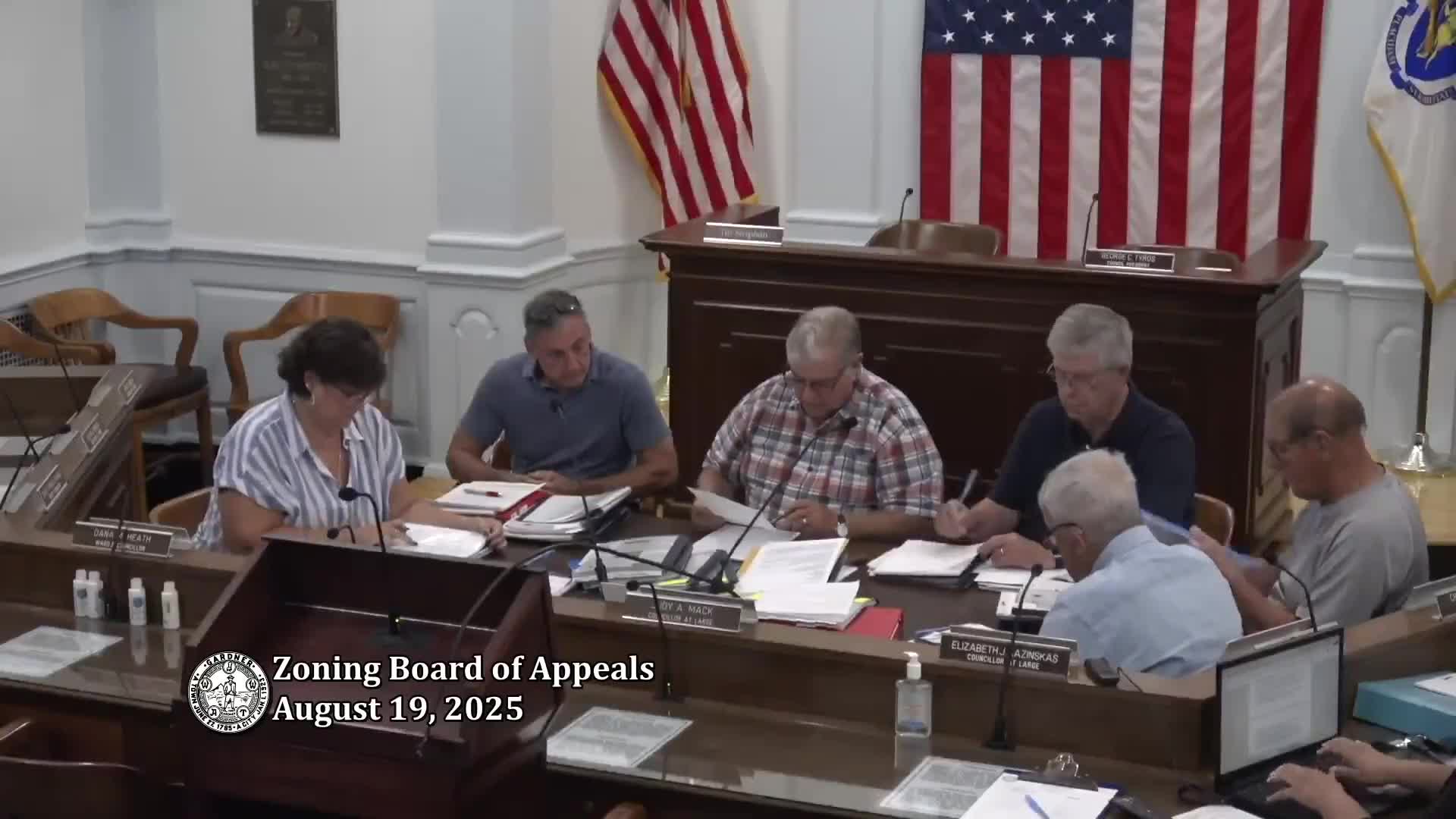
Summary
The Governor's Board of Appeals on Aug. 19 denied a pair of special-permit requests from MHG 3 Fund LLC for 163–165 Pine Street after the board split 3–2, falling short of the four affirmative votes required to approve the changes.
The Governor's Board of Appeals on Aug. 19 denied a pair of special-permit requests from MHG 3 Fund LLC for 163–165 Pine Street after the board split 3–2, falling short of the four affirmative votes required to approve the changes. Attorney Christine Tree, representing the applicant, presented a revised parking plan and a proposed reduction in dwelling units from eight to seven.
The decision matters because the modification would have reduced on-site parking by one space (from 11 to 10 under the revised plan) and required recording an easement to formalize two “buddy” parking spaces that the petitioner says extend partly onto an abutter’s lot. Those changes, the petitioner argued, were the only feasible way to reconcile the approved plan with the site’s built conditions after an updated survey.
Attorney Christine Tree told the board that the petitioner “proposes to give up 1 of the dwelling units so that they will reduce from 8 to 7” and that the net result of the modification would be “1 less parking space than originally approved, 10 instead of 11.” She said the parking plan was revised after a draft survey and that “the pavement goes all the way to the lot line” along the southern boundary. Tree also said the abutter, identified in the record as Mr. Holm, signed an easement permitting “passing and repassing by foot or motor vehicle, for the length of 2 spaces,” and that the easement “would need to be recorded with the special permit decision.”
Board members questioned whether the revised plan actually contained the number of spaces the applicant claimed, asked for further detail about grading and stormwater control, and pressed the petitioner on alternatives discussed at earlier hearings. Tree acknowledged the survey reduced available space and said the team had tried other options, including using off-site parking at a related property 1,200 feet away, which the board rejected previously. Tree also told the board the petitioner had estimated a present-value loss of roughly $175,000 in gross income if the owner permanently lost one unit.
On site-safety and construction questions, Tree said proposed exterior lighting would be mounted at 15 feet with motion activation and adjustable detection between 10 and 100 feet, and she reported the building commissioner advised that guardrail sufficiency would be reviewed at the building-permit stage. On the easement and paving adjacent to the abutter’s foundation, she said the parties had discussed redirecting grade and adding a slight curbing so surface runoff would remain on the petitioner’s property.
After discussion, a motion to proceed to a vote was called and the board initially recorded an evenly split vote; the board then re-opened the roll excluding an alternate and re-voted. The revote returned three yes and two no votes; the chair announced, “So the approval to special permits have been denied.” The transcript records only the tally (3 yays, 2 nays) and does not list individual member votes in the public roll call.
Because the board denied the modification, the petitioner was told the written decision must be filed with the city clerk. Attorney Tree said the petitioner would consider the board’s decision and consult counsel about next steps, including whether to appeal or otherwise alter the property’s occupancy or permit strategy.
No formal conditions were adopted because the board did not approve the modification; the transcript indicates outstanding questions remain about final grading, water runoff mitigation and the guardrail design, matters the building department and engineer would review if and when permits are sought.
The board closed the public hearing on the item after voting.
What happens next: the applicant will receive the board’s written decision filed with the city clerk and may choose whether to appeal or pursue other administrative or legal remedies.