Get Full Government Meeting Transcripts, Videos, & Alerts Forever!
Get email alerts on the Public Safety Burning topic
No spam. Unsubscribe anytime.
Planning commission backs staff recommendation to limit backyard burning to larger lots and align rules with fire agency guidance
Summary
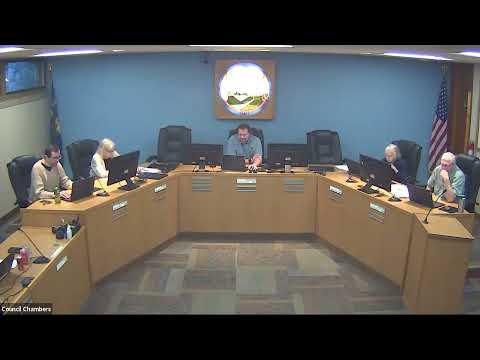
The Planning Commission on May 27 reviewed a draft update to the city’s outdoor‑burning code that adopts local fire‑district and state guidance and directed staff to forward clarified language to council.
The Planning Commission on May 27 reviewed a comprehensive draft update to the city’s outdoor‑burning code that incorporates Clackamas County and state fire and air‑quality standards and asked staff to forward several specific recommendations to the City Council.
Patrick and Kelly walked commissioners through the draft, which largely adopts guidance from the local fire district, the Oregon Department of Forestry and the Department of Environmental Quality (DEQ). Key draft elements include categories of fires (small recreational/cooking fires limited to 3 feet by 3 feet, larger yard/landscape burn piles, and agricultural piles), clearance and siting standards, a 10‑foot diameter by 3‑foot height limit for burn piles as recommended by the fire district, minimum lot‑size thresholds for different categories of burns, and a continuing‑violation fine schedule. Patrick said the fire district and state agencies reviewed the draft and provided suggested language.
Commission discussion produced several clear directions for staff. Commissioners indicated broad agreement with raising the minimum parcel size for larger burn piles from a quarter‑acre to 1 acre for the typical nonagricultural landscape pile; staff reported that a quarter‑acre threshold applies to roughly 927 parcels within city limits and that raising the threshold to 1 acre would reduce the number of eligible parcels to approximately 309. Commissioners also agreed to the fire district’s recommended maximum burn‑pile dimensions (10 feet diameter, 3 feet high) and accepted staff guidance to align local enforcement with DEQ, the fire district and ODF where those agencies have jurisdiction. The commission also signaled support for the proposed fine structure that uses a class‑A infraction at $1,000 for serious violations, with escalating penalties for repeat offenses.
Commissioners asked staff to clarify specific points prior to council work‑session review: how recreational/cooking fires would be treated during air‑quality or fire bans; whether burning rules should explicitly exempt emergency or firefighter staging operations during declared emergencies; and how the 3‑foot height is measured (above grade or within a pit). Staff agreed to check technical clarifications with the fire marshal and return a revised draft. Kelly noted the draft will go next to a city council work session and that the code section is in the municipal code (not the development code), so the commission’s review is advisory.
Why it matters: The draft replaces inconsistent phrasing, aligns local enforcement with county and state standards, and reduces uncertainty for residents and enforcement officers. Commissioners emphasized balancing public‑safety concerns and equitable access for property owners who legitimately need to dispose of vegetation on larger parcels.
Next steps: Staff will confirm technical clarifications with the fire marshal, adjust the draft per the commission’s directions, and present the revised language at a City Council work session prior to formal adoption.