Get Full Government Meeting Transcripts, Videos, & Alerts Forever!
Get email alerts on the Planning Goals topic
No spam. Unsubscribe anytime.
Commission discusses 2025–27 priorities: housing, wildfire resiliency, water conservation and urban forestry
Summary
At a goals session, staff proposed a shortlist of Envision Sandy 2050 policies grouped into six themes; commissioners highlighted housing choice/production, fire and natural‑hazards resiliency, economic development and water/urban‑forest protections as top priorities for the next biennium.
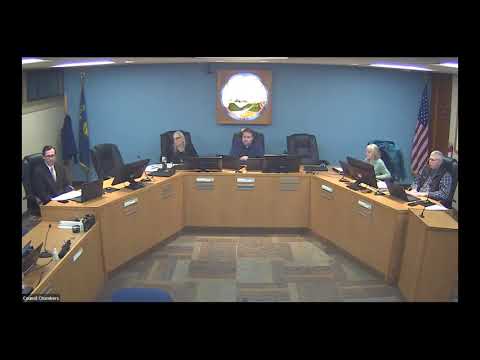
The Sandy Planning Commission held a goals session to set priorities for the 2025–27 biennium, reviewing staff proposals drawn from the Envision Sandy 2050 comprehensive plan and the department’s draft work plan.
Development Services Director Kelly presented background, recent accomplishments and a proposed shortlist of 21 comp‑plan policies grouped into six thematic areas: economic development; housing choice and production; transportation planning; fire and natural‑hazards resiliency; water conservation and wetlands; and urban forestry protections. He invited commissioner feedback on near‑term actions staff and the commission could pursue.
Commissioners repeatedly identified three top concerns: housing choice and production, fire and natural‑hazards resiliency, and water/urban‑forest management. Several commissioners emphasized that the current moratorium on new sewer allocations constrains near‑term housing production but urged preparatory code and incentive work so the city can act when capacity returns. ‘‘We always talk about affordable housing, and none of it’s affordable,’’ one commissioner said, urging exploration of entry‑level units and other creative, non‑subsidy approaches.
Fire‑resiliency measures drew strong support. Commissioners referenced wildfire risk in the wildland‑urban interface and discussed defensible‑space standards, tree‑group protections, and the need for home‑level mitigation programs and post‑disaster building‑safety evaluation plans. Several noted insurance and maintenance incentives could encourage defensible landscaping and property‑level resilience.
Water conservation and stormwater design were discussed as complementary priorities: commissioners suggested drought‑tolerant landscaping incentives, rain‑harvest education programs, and subdivision‑scale stormwater planning that could both cut potable‑water demand and create water supplies useful for firefighting.
Staff noted existing resources: a 2022 Safe Routes to School facilities assessment identifies roughly $800,000–$1 million of potential sidewalk and crossing investments near Sandy Grade and Cedar Ridge Middle School; Kelly said the city previously applied for a construction grant for that work and will pursue coordination with the school district and council for local matching funds before re‑applying.
Several commissioners asked staff to research incentive models other cities use — fee discounts, urban renewal for sidewalk and school safety projects, partnerships with nonprofits for nonmarket housing — and to return with a prioritized work plan. Kelly and Senior Planner Patrick Debo said they will compile the commission’s input into a draft priorities list and staff workload plan for follow‑up review.