Get email alerts on the Community Grants topic
No spam. Unsubscribe anytime.
Council reviews draft ‘Special Service Contract Program’ guidelines; asks staff to tighten scoring and payment rules
Summary
Council reviewed draft guidelines for a Special Service Contract Program to formalize city grants for community events, tourism, livability projects and historical preservation, and asked staff to tighten scoring and payment rules.
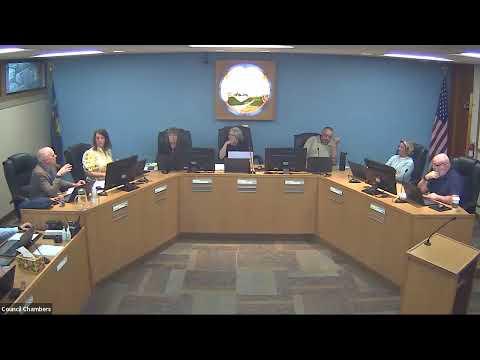
City staff on July 21 presented draft guidelines for a Special Service Contract Program (SSCP) intended to formalize a small grant program that funds community enhancement projects, events and services.
The draft sets program objectives (tourism‑driven economic development, health and physical well‑being, community livability and preservation of Sandy history), eligibility criteria, a budget template, reporting requirements and a two‑stage reimbursement schedule. Staff said the program is modeled on other cities’ community grant programs and is designed to prioritize projects that directly benefit Sandy residents while supporting the council’s biennial objectives.
Council feedback and debate: Council members supported formalizing the program but asked for several changes before adoption. They asked staff to:
- tighten language about political and religious activity so city funds do not underwrite political campaigns and to avoid wording that unintentionally excludes faith‑based programs that provide a secular service (for example, a community dental clinic hosted at a church); - add clearer scoring criteria that favor projects with local resident benefit, measurable reach, volunteer leverage and matching funds; and - revisit the payment structure: several councilors noted small nonprofits may lack cash to prefinance projects, and asked staff to allow negotiated payment mechanisms (reimbursement as default, but vendor payments or staged draws where appropriate).
Staff proposals and next steps: Staff recommended reimbursement with up to two draws per award (midterm and final) and a required midterm report and final report for all awarded projects. Council asked staff to prepare sample scoring criteria and return with a revised guideline for formal adoption; two councilors volunteered to serve on a scoring subcommittee to help refine criteria.
Why it matters: The program governs how city discretionary funds support community events, historic preservation and projects that aim to attract visitors; clarity in eligibility, scoring and payment terms will determine which projects receive limited city support.
AI generated
The text on this page is AI generated. Summaries, highlights, analysis, and video transcripts are all produced from the original source material.
AI can make mistakes, so if you spot one, and we will fix it for everyone.
Note: the source content is unaltered by us. Any content source we link to, be it a video, an audio recording, or a document, is presented exactly as its publisher released it. That publisher is usually a government body, sometimes an individual official or another organisation.