Get Full Government Meeting Transcripts, Videos, & Alerts Forever!
Get email alerts on the System Development Charges topic
No spam. Unsubscribe anytime.
Sandy council adopts higher water and wastewater system development charges after public hearing
Summary
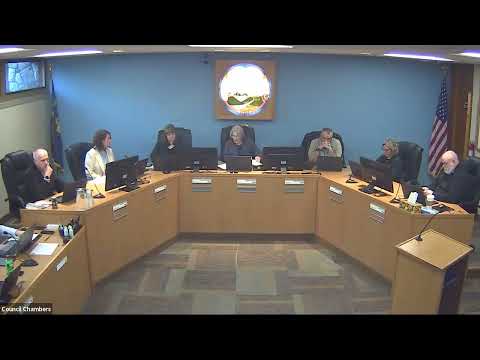
After public testimony from local builders and a lengthy council discussion about infrastructure funding and housing affordability, the Sandy City Council voted to adopt revised water and wastewater System Development Charges (SDCs) at the maximum levels identified in the recently updated methodology.
The Sandy City Council voted April 14 to adopt Resolution 20 25-13, implementing revised system development charges for water and wastewater that match the maximum defensible amounts calculated in the city’s updated SDC methodology.
The change raises the maximum water SDC to $18,477 and the maximum wastewater SDC to $14,952, figures presented by staff during a public hearing. City staff estimated the increases could produce roughly $52,000,000 in additional water SDC revenue and $25,000,000 in additional wastewater SDC revenue over the next 20 years if development occurs at projected levels.
The council held a public hearing before the vote. Builders and local business owners warned the increases would further strain homebuilding and affordability in Sandy. Nolan Wagner, a home builder from Damascus who identified himself during public testimony, said, “as these fees go up, builders are gonna not continue building in the city of Sandy.” Tom Worth, a local developer who described multiple unsold lots in his subdivision, told the council he expected the higher charges would make some of his remaining parcels unsellable and that he planned to appeal assessed values if the resolution passed.
Tyler, staff presenter for the city, told councilors the updated methodology — prepared with consultant FCS Group — had captured the city’s anticipated capital improvement projects for water and wastewater and produced the two maximum defensible SDC amounts. “For water, that maximum defensible SDC is $18,477. And for wastewater, the maximum defensible SDC is $14,952,” Tyler said in the staff report. He added that the SDC methodology updates were adopted at a prior meeting and that staff had been directed to bring forward rates consistent with that methodology.
Council members who supported the resolution said the SDCs are legally restricted to pay for the capacity needed to serve new development and for future upgrades; those costs cannot be shifted onto SDCs’ eligible uses. One councilor who spoke in favor summarized the legal constraint: SDC revenue “is only useful to pay for excess capacity ... or the capacity needed in future upgrades to support that building that's coming online.” Supporters also argued that failing to collect the full methodological amount shifts greater costs onto existing ratepayers through utility rates.
Opponents and some councilors voiced concern about housing affordability and the city’s fragile development market. Jason Schuler, a Sandy business owner and developer, said the timing compounds other market pressures and warned that “adding on another $22,000 to the cost of projects” would reduce starts when sales are already slow. Another speaker, Spencer Mahoy, said the proposed roughly 41% increase in SDCs would worsen housing affordability for locals.
Council discussion noted the council’s limited options: state and federal grant funding remains uncertain, the city is under regulatory pressure on wastewater capacity, and borrowing is forecast to be used to advance projects. Staff and councilors described a three-legged funding approach — SDCs, utility rates, and outside grants — and said the council will keep pursuing grant opportunities and may revisit SDC components such as parks and transportation in the future to find balance.
The council adopted Resolution 20 25-13 after a motion and second, with a majority voting in favor and one councilor recording a dissenting vote with a caveat that the full SDC package be reviewed comprehensively in the future. The council majority said they would be open to future adjustments if the city secures additional grants or if cost estimates change.
The resolution implements the new SDC table immediately; staff said they plan to update the SDCs annually thereafter to keep pace with construction cost inflation per the methodology. Council members and staff encouraged affected developers and residents to contact city staff with questions and noted staff will follow up on implementation details, including how previously paid fees and fee-in-lieu provisions are handled.
Votes at a glance
- Resolution 20 25-13: Adopt revised water and wastewater SDC rates (water max $18,477; wastewater max $14,952). Motion moved by Councilor (mover name recorded in minutes), seconded by Councilor Ramsayer. Outcome: approved; unanimous except one recorded nay with caveat that council later review the full SDC package. Specific roll-call names for each vote were not consistently read into the record in the transcript excerpt; the meeting minutes should be consulted for the certified roll-call vote record.
Why it matters
The adopted SDC increases directly affect the upfront development costs of new housing and commercial development in Sandy. Staff projections indicate the adopted increases could provide tens of millions in funding toward planned capital projects over the next two decades, reducing the portion of those costs that otherwise would be recovered via utility rate increases paid by existing customers. At the same time, local builders told the council the higher upfront costs risk further dampening an already slow market and worsening local housing affordability.
What’s next
Staff said the city will continue pursuing state and federal grant funds, is proceeding with planned bond sales tied to the water program, and intends to bring back further policy discussions — including potential adjustments to non-water SDC categories such as parks and transportation — to seek balance between infrastructure funding and affordability concerns. Staff also noted they will implement the adopted rates and return with any clarifying administrative details needed for collection and fee-in-lieu handling.