
Sandy Council adopts revised development moratorium to tighten ERU extensions and allow limited transfers
Get AI-powered insights, summaries, and transcripts
Subscribe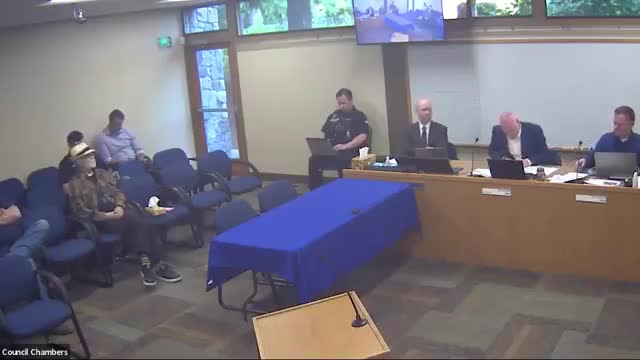
Summary
The Sandy City Council voted to adopt Resolution 2025-14, the fourth iteration of the city’s development moratorium, clarifying ERU reassignment rules, limiting ERU extension eligibility to holders with unexpired land‑use approvals, and allowing limited partitions and reassignment flexibility for economic development.
The Sandy City Council on Tuesday adopted Resolution 2025‑14, the fourth iteration of the city’s development moratorium, which narrows who can receive extensions of existing water/sewer equivalent residential units (ERUs) and clarifies reassignments and limited partitions.
City staff said the revision — called “moratorium 4” in the staff report — preserves most of the ERU allocation limits from the prior moratorium while adding “further refinements” intended to increase flexibility in some narrow circumstances. “This resolution presents what would be the fourth iteration of the city's development moratorium,” staff said during the hearing.
The measure matters because ERUs are required for building permits when new water or sewer demand is created; councilors discussed how extensions and reassignments of those ERUs affect which projects can proceed. The adopted text requires an applicant seeking an ERU allocation extension to show they hold an unexpired land‑use approval for the same project; staff said that requirement was added in response to council feedback in a March work session.
City staff described four primary categories of change: (1) a continuing pause on new ERU allocations except in limited public‑health or safety circumstances and for some pre‑moratorium projects; (2) clarified rules to broaden and make ERU reassignment more usable for economic development, including definitions of what counts as an existing development; (3) allowing partitions in certain limited cases; and (4) housekeeping clarifications in other sections of the moratorium.
Council members asked for clearer redlines and a better mapping between listed changes and the exact sections edited; staff agreed to provide marked‑up language in future packets. Several councilors also pressed staff to provide a current spreadsheet showing ERU allocation dates, expiration dates and any extensions so the council can see which projects remain active and which could be “sitting” on ERUs.
Staff repeatedly emphasized the separation between land‑use approvals (plats, conditional use permits, etc.) and ERU allocations: having one does not automatically confer the other. As staff explained, a building permit check verifies both that a project has a valid land‑use approval and that ERUs are available; if a plat has expired, a building permit will not be granted even if an ERU allocation extension was previously issued.
After public testimony was invited (none was offered), Councilor Sheldon moved to adopt the resolution; Councilor Smallwood seconded. The council voted to approve Resolution 2025‑14.
Council direction and next steps include staff providing clearer redline edits of the moratorium for council review and a current project spreadsheet so council members can track ERU expirations and extensions.
The adopted changes take effect immediately as a matter of local resolution; staff said they expect to continue refining moratorium language in future iterations as circumstances and ERU availability evolve.