Get Full Government Meeting Transcripts, Videos, & Alerts Forever!
Get email alerts on the Parks And Recreation topic
No spam. Unsubscribe anytime.
Council workshop reviews proposed Ordinance 2025-15 to rewrite parks conduct and exclusion rules
Summary
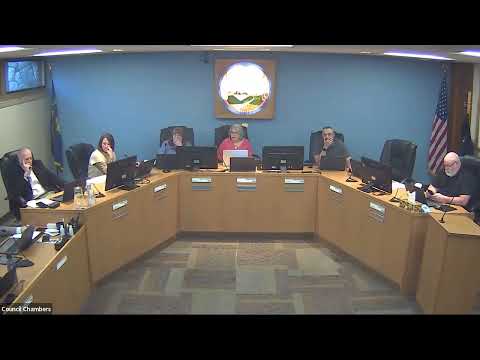
City staff presented Ordinance 2025-15, which would repeal Chapter 12.16 and fold conduct and exclusion rules into a revised Chapter 12.12 and modernize park rules. Councilors and staff discussed appeals, definitions, enforcement discretion, motorized vehicles, drones and permitted commercial uses; no formal vote was taken at the workshop.
City staff opened a 6 p.m. workshop to review Ordinance 2025-15, which would repeal Chapter 12.16 “in its entirety and incorporate all conduct and exclusion policies in a revised Chapter 12.12,” and update city park rules to reflect current uses, safety and enforcement needs.
The ordinance, as presented, would strengthen the exclusion process and the appeal timeline and modernize park rules to address property protection, fires, motorized and non‑motorized vehicles, amplified sound, pesticide alignment with the city’s integrated pest management policy, domestic animals and commercial activities in parks such as lessons or paid instruction at newer amenities like the Action Sports element at Cedar Park. “So it strengthens and clarifies the exclusion process, and it'll ensure, clear timelines. It strengthens the appeal process as well,” staff said when introducing the measure.
Councilors pressed staff on specifics. Questions centered on who may issue an exclusion and how long exclusions last; what counts as grounds for appeal; whether definitions should be centralized or embedded in subsections; and whether the ordinance gives staff too much discretion. Staff noted past practice has commonly used a 30‑day exclusion for many park violations but that more serious or violent incidents have, on occasion, resulted in exclusions of a year or indefinite exclusions. Staff explained the written appeal is submitted to the city manager and that the municipal court remains the judicial backstop for contested exclusions.
On the draft’s terminology, staff said the “transit dependent” and “qualified exclusion” language is modeled on other cities and may be required by federal regulation for certain transit‑related exclusions; they offered to check flexibility for local practice. The city attorney’s representative explained that the ordinance’s purpose statement is legal framing of the city’s police powers and not an enforceable citation provision.
A substantial portion of discussion focused on vehicle classifications and enforcement. Councilors and staff debated how to define and regulate class‑1 e‑bikes, throttled or combustible motorized scooters, motorized dirt bikes and remote‑controlled motorized vehicles. Staff said the draft intends to allow class‑1 pedal‑assist e‑bikes on specified trails, to prohibit combustible engines and throttle‑powered vehicles on most park surfaces, and to permit exceptions by permit in designated areas. Councilors asked staff to supply clear, enforceable vehicle definitions and to consider carve‑outs for small, low‑speed kid‑style scooters. Staff said they would add explicit definitions (for example for “throttle” and “combustible engine”) and to review state and federal classifications.
Council members also debated hours of operation. The draft moves from a dawn‑to‑dusk default toward permitting usage through 10 p.m. in some cases; staff said hours would still allow permits for events and that trail/sidewalk connectivity for residents would generally remain available. Several councilors asked for site‑specific posting (for example, different hours at Cedar Park or children’s play areas) and for daylighting and lighting improvements on pedestrian connectors.
Councilors asked staff to add or clarify the following in the next draft: a narrower list of people authorized to issue exclusions (for example, named city employees rather than an open “other persons” clause), a stated training or internal guideline to reduce arbitrary outcomes and create consistent escalation of exclusion lengths, clearer definitions for vehicle classes and throttles, explicit language on where remote‑control vehicles and drones may be used (staff recommended “designated areas”), and refined language addressing harassment/intimidation that is enforceable and consistent with free‑speech protections. The city attorney advised caution on any wording that would criminalize profanity and suggested wording that targets threatening or disruptive behavior rather than simple profane language.
Staff said the ordinance has been reviewed by the parks board and the city attorney and that they will incorporate the council’s feedback, return with revised language and aim to bring the ordinance back for adoption in May. No formal vote was taken during the workshop.
Ending: Staff will rework definitions, the list of authorized exclusion‑issuers, the transit‑dependent language and vehicle classifications, and return a revised draft for council consideration ahead of a May adoption hearing.