Get Full Government Meeting Transcripts, Videos, & Alerts Forever!
Get email alerts on the Wastewater Moratorium topic
No spam. Unsubscribe anytime.
Sandy council reviews moratorium revisions and proposed rules for trading sewer capacity (ERUs)
Summary
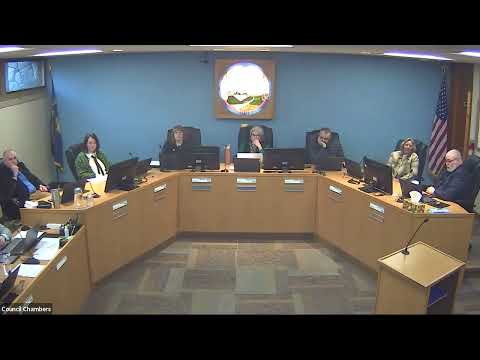
City of Sandy officials spent more than two hours Monday night debating proposed revisions to the city's wastewater moratorium and a program that would let some property owners reassign or transfer equivalent residential units (ERUs) that represent sewer capacity.
City of Sandy officials spent more than two hours Monday night debating proposed revisions to the city's wastewater moratorium and a program that would let some property owners reassign or transfer equivalent residential units (ERUs) that represent sewer capacity.
The proposed moratorium 4 language, drafted by staff and presented by Josh Soper, would (1) update the prior ERU allocation program now that the initial allocations have been delivered; (2) add flexibility to an ERU reassignment program so allocated capacity could, in some circumstances, move to a different property for commercial or industrial uses; (3) allow limited land partitions while protecting the city's control over ERU assignments; and (4) make minor housekeeping edits to clarify existing rules. "These are the revisions that were prepared by staff based on changed circumstances and lessons learned from implementing the moratorium up to this point," Soper told the council.
Why it matters: Sandy is under a sewer moratorium because of system capacity issues. ERUs are a scarce commodity: they determine which projects can connect to the city's sewer system. Council members said they want to avoid creating a speculative market for ERUs that would let property owners sit on capacity or sell it to the highest bidder while other nearby projects remain blocked from connecting.
What staff and council debated
- Transfers from developed lots: Councilors voiced concern about allowing ERUs to move off properties that still have buildings attached (so-called "zombie" buildings). Staff said an administrative deed restriction could prevent the original building from later connecting to sewer service if its ERUs are reassigned, but several council members said they would prefer stronger protections or a requirement that buildings be demolished before transferring ERUs offsite.
- Ownership and market risks: Councilors asked whether ERUs are "owned" by property owners or are a limited public allocation. Staff described ERUs as a land-use approval right that can be reassignable under the moratorium program but acknowledged the city has limited ability to control private transactions. Councilors worried that allowing transfers to other properties or uses could create speculation and prioritize buyers who are willing to pay rather than projects with the greatest public benefit.
- Timing and expiration: Under the current program, ERU allocations issued under moratorium 3 expire after one year and may be extended up to two times for a three-year total. Staff confirmed the moratorium as written allows for those two extensions (maximum three years total) and said the moratorium itself is scheduled to expire June 3 unless the city gives notice to the Department of Land Conservation and Development (DLCD) by April 18 to proceed with moratorium 4.
- Inventory and 'zombie' ERUs: Councilors asked staff to produce a clear inventory listing which properties have allocated ERUs, which meters have been removed for nonpayment (and therefore do not carry active ERUs), and where unused ERUs exist so the council can evaluate whether transfers are likely to remove capacity from active or developable sites.
Council direction and next steps
Council did not vote on the moratorium text at the work session. Instead members asked staff to clarify language on: the interaction between ERU allocations and land-use approvals, whether properties with existing usable buildings should be excluded from reassignment, and the precise limits on extensions. Staff said they would refine the draft moratorium ordinance and return with a version suitable for formal adoption and DLCD notice. Staff also confirmed that some additional ERUs (about 190) may become available to the city within roughly 18 months pending state processes and that the city will need a policy to allocate any newly available capacity.
Community context and concerns
Speakers repeatedly emphasized fairness to local developers who have been waiting for sewer capacity; several council members said they do not want developers who already have ERUs to leapfrog others in a way that undermines equitable allocation. Several council members asked staff to recommend guardrails that would limit speculative transfers (for example, time-in-possession minimums, one-time transfers, deed restrictions, or demolition requirements) rather than creating a free market in ERUs.
Ending note
Staff were directed to return with a clarified draft moratorium 4 for council action and with an ERU inventory that identifies unused or potentially transferable capacity ahead of a future allocation policy. The council also flagged the DLCD notice deadline (April 18) and the current moratorium expiration (June 3) as scheduling constraints for any ordinance the council asks staff to prepare.