Get Full Government Meeting Transcripts, Videos, & Alerts Forever!
Get email alerts on the Chronic Nuisance topic
No spam. Unsubscribe anytime.
Council approves first reading of chronic‑nuisance ordinance; asks for wider work session to consider noncriminal nuisances
Summary
The Sandy City Council approved the first reading of Ordinance 2025‑O4 to amend Chapter 8.22 (chronic nuisance properties), adding the city manager as a designated official, updating statutory references and raising penalties for repeat violations.
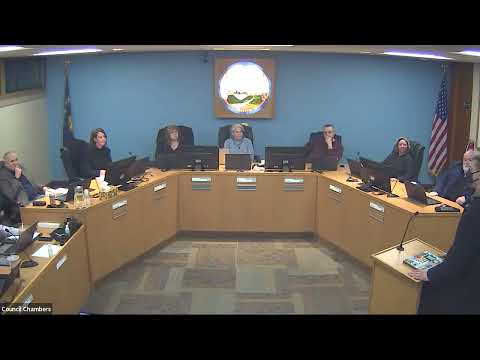
The Sandy City Council held a public hearing and approved the first reading of Ordinance 2025‑O4, updating the city’s chronic‑nuisance code (Chapter 8.22). Staff said the ordinance updates obsolete statutory references, adds the city manager to the list of officials who may declare a property chronic nuisance and clarifies penalty language.
Kelly (city staff) summarized the changes and told the council that the draft implements most of the code enforcement task force’s recommendations: “this chapter has been updated more recently … this would give the chief of police or the city manager the authority to declare something as a chronic nuisance property,” she said. The staff report also reflected input from the police chief and the city attorney; the police chief flagged that the list of violent offenses should include strangulation in addition to assault and menacing, and the city attorney suggested a relabeling of one definition from “intimidation” to “bias crime.”
A key enforcement change in the draft classifies repeated chronic‑nuisance violations as a class A violation under chapter 1.18, carried in the staff report with a suggested baseline penalty of $1,000 per day for repeat offenses and up to $2,000 per day in addition to other penalties. The draft retained a threshold that a property must show multiple qualifying incidents within a 30‑day window to be declared chronic; several councilors urged staff to lengthen that window and to return in a dedicated work session to consider expanding the list of noncriminal behaviors that might be included.
Councilor Sheldon, who had asked the task force to explore a broader list, said he wanted a formal work session and recommended that the enforcement committee or task force sketch a list of additional noncriminal problem behaviors (noise, chronic property maintenance failures, etc.) for council review. Sheldon said the tool is intended to give the city leverage for persistent noncompliance that does not otherwise rise to a criminal charge: “these are all crimes … but what we’re missing is those problematic houses that aren’t changing their behavior based on code enforcement contact that don’t rise to the level of a crime,” he said.
Councilors discussed other edits staff recommended, including adding animal‑cruelty or neglect references; staff agreed to coordinate with the humane society and the city attorney on how to capture those offenses in the code.
After discussion, the council approved first reading. Councilor Smallwood moved and Councilor Sheldon seconded the motion; the council voted to approve the first reading.
Why it matters: The changes give the city a clearer legal framework to declare and enforce chronic nuisances, broaden which officials may declare a chronic nuisance, update outdated statutory references and raise penalties for repeated violations. Council signaled they want a separate work session to consider adding noncriminal but persistent behaviors to the chronic‑nuisance list and requested the staff and task force to prepare options.
What’s next: Staff will revise the draft per council direction (including changing the 30‑day threshold to a longer window for qualifying incidents, clarifying posting/notice procedures and inserting animal‑cruelty references), and return for a second reading; council also asked staff to convene the task force/committee to prepare a list of proposed noncriminal nuisance behaviors for a work session.