Get Full Government Meeting Transcripts, Videos, & Alerts Forever!
Get email alerts on the Parks Recreation Courts topic
No spam. Unsubscribe anytime.
Teen resident proposes basketball court at Fairview City Park; advisory committee votes to investigate
Summary
Fifteen-year-old resident Noah Johns asked the Parks and Recreation Advisory Committee to study placing a basketball court behind the park gazebo. The committee voted to support investigation and add the item to its project list, while members discussed funding and alternatives including a skate park.
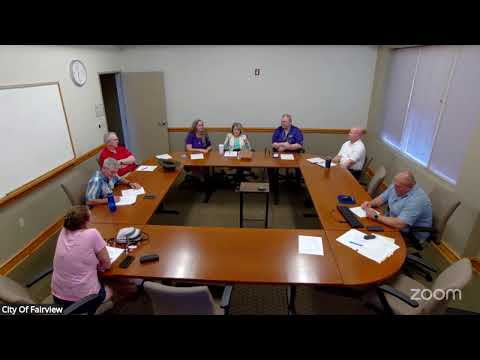
Noah Johns, a 15-year-old Fairview resident, asked the Parks and Recreation Advisory Committee on Sept. 8 to study building a basketball court behind the gazebo at Fairview City Park.
Johns told the committee that a nearby court at Reynolds Elementary requires kids to walk along a busy road and that a neighborhood court would provide a safer place for children and teens to play. “Basketball isn’t just a sport. It’s a way communities connect,” he said, and proposed seeking local-business sponsorships or naming rights to help cover construction and maintenance costs.
Committee members and staff discussed siting, design and funding. John (identified in the meeting as the public works director) said the park already has sewer, water and power on site, which reduces some construction costs. Staff and committee members gave an estimated capital range of roughly $80,000 to $200,000 depending on surface, fencing, lighting and whether a single full court or two half courts are installed. Committee members suggested a range of funding sources: business sponsorships, grassroots donations, grants from regional sports or foundations, and the city’s project list/local-share grants.
Several members raised alternatives and concerns. One member said a skate park might serve more children who use wheeled devices, and members noted that different user groups may seek different amenities and funding streams. The Tony Hawk Foundation was mentioned as a potential funder for skate facilities — with the caveat that that foundation usually requires a submitted design before committing funds.
After discussion, a committee member moved to "support Noah and John in the reference to investigate and put in a basketball court and add it to the list of things." The motion carried on a voice vote; committee members answered “aye.” The committee directed staff and the named public-works contact to follow up with a scope and preliminary costs for presentation to the committee and inclusion on the committee’s work plan and project list.
Noah’s outreach efforts were discussed: he said he knocked on doors in his neighborhood and reported that a large majority supported a court. He also said (attributing the figure to his research) that the local community includes nearly 1,800 residents under age 18 — a figure he presented as context for potential usage. Committee members suggested door-to-door fundraising, sponsor plaques with multi-year agreements, and contacting larger regional sports organizations for partnership or funding.
The committee did not approve a construction contract or appropriate city funds at the meeting. The formal next steps are study and scoping: staff will prepare a conceptual layout, cost estimates and funding options for the committee to review before any design or budget request is taken to city council.
Staff and committee members also asked Noah to work with staff on potential designs—options discussed included a full-length court, two side-by-side half courts, adjustable hoops for younger players, and optional ball-return or shooting lanes. Members emphasized that design, drainage and a good sub-base would be necessary prerequisites to avoid ongoing maintenance problems.
The committee placed the basketball court study on its project list and will consider funding and design options as part of its upcoming work-plan process.