
Fairview committee urges clearer rules, landlord match for urban renewal tenant-improvement grants
Get AI-powered insights, summaries, and transcripts
Subscribe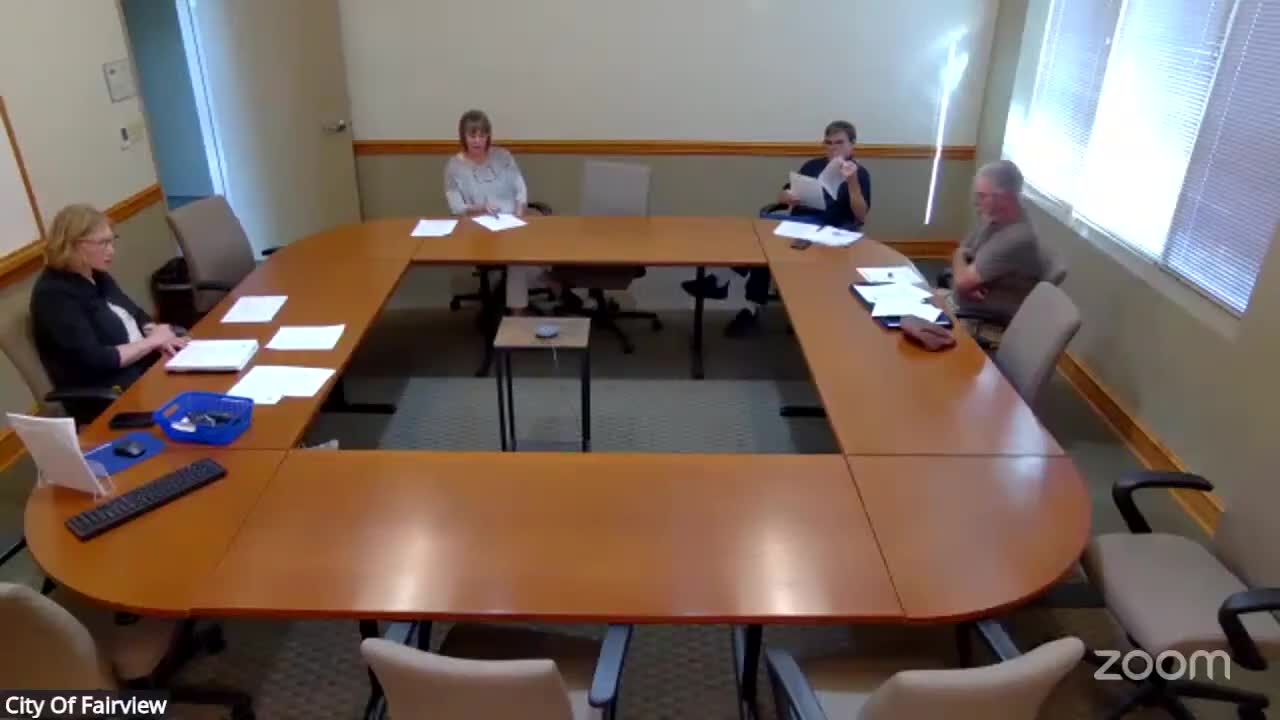
Summary
City staff told the Economic Development Advisory Committee that the urban renewal tenant-improvement grant program is running low on funds and that the city council signaled concern about high grant-to-project ratios. Staff proposed clearer match requirements, a scoring matrix and a council work session before changing the program.
The City of Fairview’s Economic Development Advisory Committee discussed tightening the city’s Urban Renewal Development Grant Program after staff and council members raised concerns about large grant requests and uncertain applicant expectations.
Committee members heard that the program currently allows applicants to request up to $100,000 per property but does not require a specific landlord or tenant match. Sarah Selden, community development director, said a recent application for a photography studio asked the city for $90,000 while the tenant planned to contribute $10,000 and the property owner offered no tenant-improvement allowance. She said the council declined that award because “this is asking for too much of the overall cost to be funded by the city.”
The matter matters because the urban renewal grant fund is limited. Selden told the committee the program has $300,000 in grant funds this fiscal year and the council has raised concerns that the current urban renewal fund may not sustain repeated awards at previous levels.
Committee members and staff discussed several possible changes that would make awards more predictable for applicants: requiring a landlord or tenant match, adopting a point-based scoring sheet that rewards landlord contribution and uses that generate foot traffic, and capping grant awards as a percent of total project cost rather than an absolute number. Selden said she compared Fairview’s parameters with those of other Oregon cities and will bring model options to the council for a work session.
Discussion only — the committee did not adopt formal policy changes. Selden said, “the council hasn't yet directed my department to make any changes to the program,” and described the next step as staff preparing proposals for council consideration. Committee members repeatedly urged that any revision be administrable and predictable so small-business applicants can plan projects and financing.
Committee members also raised logistics questions about timing and reimbursement. Selden said the city can reimburse an applicant or, when appropriate, pay contractors directly to ease upfront cost burdens for small businesses. She noted some previously awarded project reimbursements will need to be paid from the next fiscal year and estimated about $50,000 of outstanding reimbursements that will be claimed against upcoming budgets.
The committee asked staff to prepare a clear recommendation for the council work session that would include a scoring matrix, suggested match percentages, and eligibility clarifications emphasizing active ground-floor uses. Selden said she would circulate the draft recommendation and supporting comparisons before the work session so committee members can provide input.