
Mass Audubon seeks permit for multi-year invasive-plant management and small-structure removals at Laughing Brook
Get AI-powered insights, summaries, and transcripts
Subscribe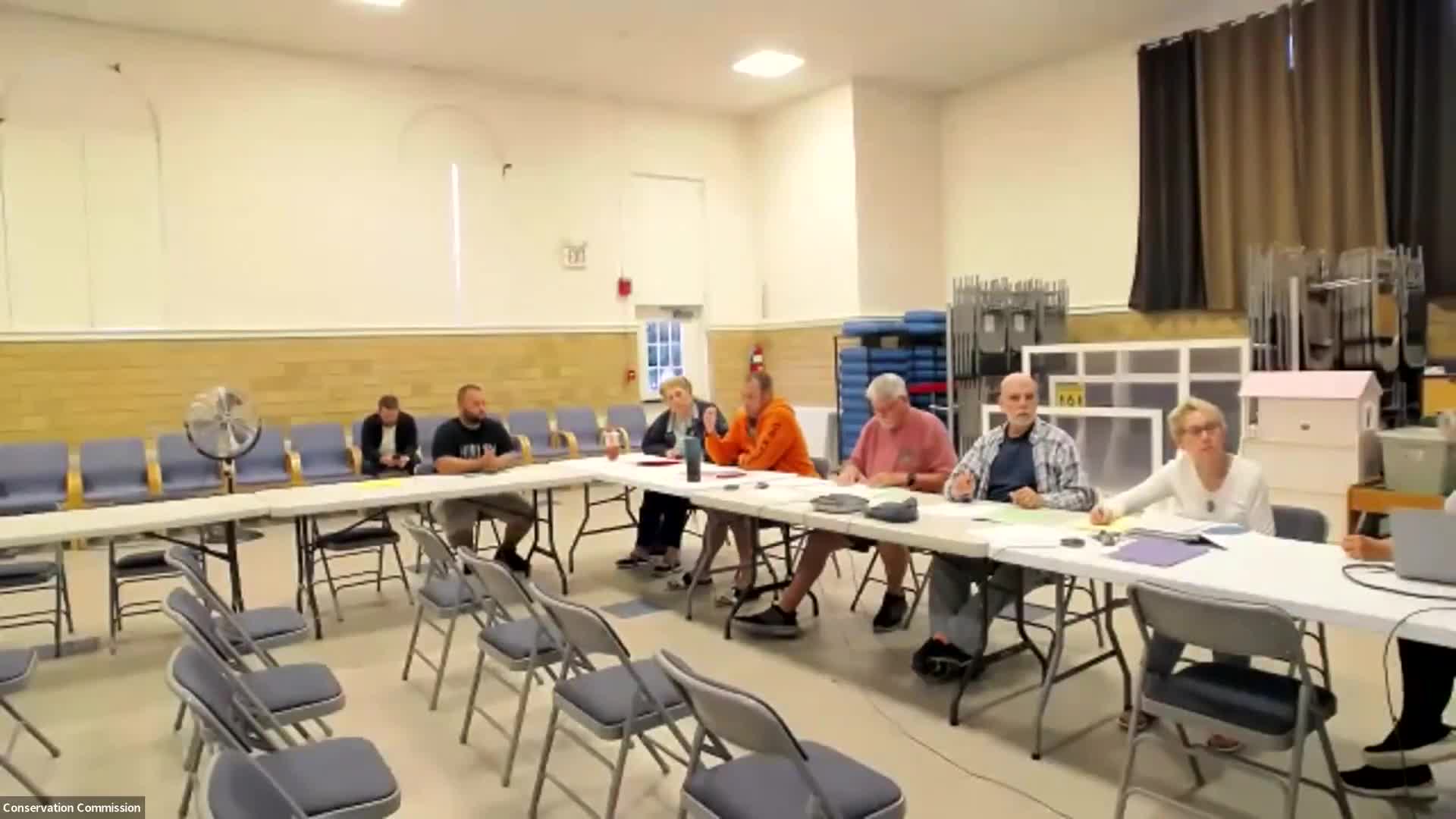
Summary
Mass Audubon on Aug. 20 asked the Hamden Conservation Commission to accept a notice of intent for invasive-plant management and limited structure removals at Laughing Brook Wildlife Sanctuary, a roughly 150-acre conservation property.
Mass Audubon on Aug. 20 asked the Hamden Conservation Commission to accept a notice of intent for invasive-plant management and limited structure removals at Laughing Brook Wildlife Sanctuary, a roughly 150-acre conservation property. Naomi Valentine of SWCA Environmental Consultants presented the application on Mass Audubon’s behalf, and Tom Latsenheiser, senior conservation ecologist with Mass Audubon, described the project as an initial stage of forest restoration planned from 2025 to 2029.
The project aims to reduce woody and herbaceous invasive plants and restore native communities in 15 treatment compartments across five forest stands. "The proposed project is planned out from 2025 to 2029," Valentine said during the presentation. The application divides work by compartment and by treatment intensity—ranging from light chemical and light mechanical methods to mechanical-chemical follow-up in hard-to-access areas.
The commission was told the primary herbicides proposed are glyphosate and triclopyr, with imazapyr listed for the most difficult infestations. Latsenheiser described the chemicals as systemic and said they are selected because "they are systemic herbicides that are translocated from the site of application" and can kill root systems, which is necessary for species such as oriental bittersweet and autumn olive. He added that the team intends to follow product labels and use application methods intended to minimize non-target impacts.
Commission members pressed the project team on water protection. Latsenheiser stated, "There should be no treatment above or into the water," and Valentine explained that application would avoid foliar spraying directly over water and instead rely on targeted techniques (basal bark, cut-stem) where appropriate. The plan also identifies concentric wellhead-protection zones around a town well: no chemical treatment is proposed in the immediate (zone 1) area; an outer zone would receive only every-other-year treatment; and Mass Audubon said it has agreed with the select board that no herbicide application will occur on town-owned parcels within the site.
Two small structure removals are included in the NOI. Mass Audubon proposes removing a bluff-top pavilion that is at risk of falling into East Brook to reduce a safety hazard and to prevent further bank erosion; the commission was told removal would be by small equipment or by hand where possible. The second removal would be flashboards at Smiling Pool; Mass Audubon showed maps and said removing the flashboards would allow the former pool area to function more as flood storage during storms. Latsenheiser framed that change as a modest measure to restore natural hydrology and to help reduce downstream overtopping and trail erosion.
Latsenheiser said the project originated in coordination with MassWildlife and the Natural Heritage & Endangered Species Program (NHESP) and has been developed to match funding guidance from the U.S. Natural Resources Conservation Service (NRCS) under the Environmental Quality Incentives Program (EQIP). He noted the application includes context on a historical pitch-pine–oak/heathland remnant that is fire-adapted; he described fire as a potential future management tool for community restoration but said prescribed burning is not part of this specific NOI. "Fire is a management tool for those communities," Latsenheiser said, but he also said the commission should treat fire as context rather than a near-term action for this filing.
Commissioners also raised monitoring questions. One commissioner asked whether Mass Audubon would test water before and after herbicide application; Valentine said testing was not in the current plan but that Mass Audubon would consider it if the commission requested it. The project team also noted that the MassDEP file number was issued the same day and that NHESP (Natural Heritage) had not yet responded; because of that outstanding review the commission continued the hearing.
The Conservation Commission set two near-term process items: the commission and the applicant will meet on-site at Laughing Brook on Tuesday at 3:00 p.m., and the commission voted to continue the matter to its September meeting on Sept. 17 to allow NHESP materials and any additional comments to be filed.
If NHESP or the commission requests changes, Mass Audubon said it would respond through amended filings or additional applications (forest cutting plan or a subsequent notice of intent) as needed. The commission did not take any substantive permitting vote on the project at the Aug. 20 meeting.
Why this matters: the proposed work would use systemic herbicides and mechanized treatments within a conservation area and includes changes to an existing impoundment that the town identifies as contributing to localized Main Street flooding concerns. The commission’s continuing review will focus on habitat impacts, water-quality protections, and NHESP’s endangered-species guidance.
Next steps: a site visit is scheduled, NHESP review is pending, and the hearing is continued to Sept. 17.