Get Full Government Meeting Transcripts, Videos, & Alerts Forever!
Get email alerts on the Street Restriping topic
No spam. Unsubscribe anytime.
Fairview advisory committee debates interim Halsey restriping, seeks business input
Summary
Members of Fairview's Economic Development Advisory Committee discussed an interim cross section and restriping for Halsey (Huddleston/Halsey area), options for on‑street parking, possible Urban Renewal funding, coordination with Multnomah County paving, and outreach to nearby businesses ahead of a February work session.
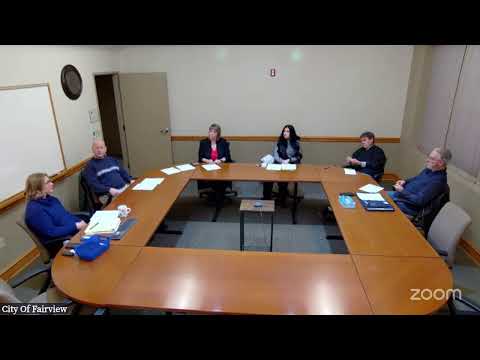
Members of the City of Fairview Economic Development Advisory Committee (EDAC) discussed steps to develop an interim cross section and restriping plan for Halsey Street that would reallocate lane widths to add parking and bike lanes and slow traffic.
City economic development staff member Sarah said the city "does have funds through Urban Renewal" that could help pay for an interim restriping effort, but that staff needs direction from council and coordination with Multnomah County on pavement overlays and responsibilities. She recommended mapping alternatives, getting an estimate from a consultant for a striping plan and deciding which jurisdiction would fund and build each component.
The discussion centered on balancing parking for local businesses, bicycle facilities and vehicle lanes. Committee members urged targeted outreach to the businesses most affected. One committee member recommended a short questionnaire and direct outreach to the dozen or so businesses that would be most impacted, with the idea of presenting consolidated business feedback to the council and, if directed, to a public open house before any striping is installed. “If too many opinions are solicited, we’re going to continue to, in another three years, be in the same position,” one member said, urging focused business input.
Speakers also discussed technical trade‑offs. Jason, a transportation staff member, said Multnomah County’s design manual and national recommendations drive minimum bike‑lane widths; staff noted the interim restriping likely could not achieve the final design widths but could narrow travel lanes slightly and create parking lanes that are 7 feet instead of the eventual 8 feet planned for final construction. Committee members raised safety and liability concerns about narrower parking and travel lanes at higher speeds and emphasized pairing restriping with traffic‑calming measures such as lower posted speeds and crosswalk work.
Committee members flagged enforcement and longer‑term management issues: several noted that new apartment units nearby could fill on‑street parking unless the city adopts regulatory limits (time limits, permit parking or enforcement) and that those enforcement resources are limited. Staff and members urged bringing a set of drawn alternatives to council for direction; several encouraged EDAC members to attend the city’s February 19 work session to present business support for a given option.
No formal council action was taken at the EDAC meeting. Staff said next steps would be to produce a small set of alternatives on paper, obtain consultant cost estimates for a restriping/striping plan, and present business outreach results and alternatives to the council for direction.
Ending — The committee agreed to prioritize targeted business outreach and to request that staff prepare restriping alternatives and cost estimates for council review; EDAC members were encouraged to attend the February 19 council work session to show business support for specific options.