Get Full Government Meeting Transcripts, Videos, & Alerts Forever!
Get email alerts on the County Budget topic
No spam. Unsubscribe anytime.
Champaign County Board Confronts Multi-Million-Dollar Budget Gap, Debates Process for Cuts and Revenue Options
Summary
Champaign County officials told the county board they face a near-term structural budget shortfall and must choose between identifying new revenue or trimming services; board members agreed to continue deliberations and asked staff for detailed cost and revenue options.
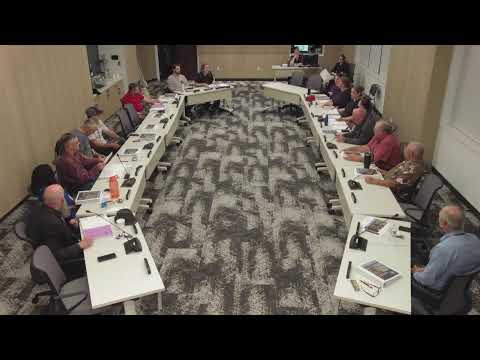
As the legislative budget hearing concluded, Champaign County Board members and administrators acknowledged a structural shortfall in the FY26 budget and discussed next steps for reconciling revenue and expenditure pressures.
County administration and department heads repeatedly warned that under the current revenue structure the county faces a projected deficit for FY26. Interim physical plant director Michelle Jett and other department heads described persistent staffing shortages, rising software and health-insurance costs, and the exhaustion of prior fund balance reserves. Jett said the county’s previous fund-balance cushion is largely spent; administration estimated an FY26 gap that board members later described in the discussion as approximately $2,000,000.
Jett urged the board to set a clear course: pursue revenue solutions or begin cutting services and positions. "We have a revenue problem... We have a budget right now with almost a $2,000,000 deficit," she said, adding that failure to act risks statutory trouble and degraded county services. The board discussed possible next steps: creating a legislative committee to pursue state-level advocacy in Springfield; convening an internal budget subcommittee to prioritize cuts or new revenue; and asking departments to identify line-item reductions or percentage-based cuts.
Board members proposed multiple procedural approaches. Member Emily suggested caucus-level small meetings to set priorities, while others recommended a public committee or a special County Board (Cal) meeting to deliberate. Several members urged combining short-term and long-term measures: simultaneously pursue potential revenue sources and identify cuts if revenue efforts fail. Board member John (surname not specified) cited the 2008–09 budget experience in McLean County — which required department-level percentage cuts — as a model for rapid tightening.
Members also raised narrow suggestions, such as using limited ARPA interest as a one-year stopgap for critical social services (discussed earlier for SNAP-Ed), prioritizing fully reimbursable positions (e.g., a PREA coordinator requested by the sheriff’s office), and examining potential revenue sources and their realistic yields. Several board members asked administration to compile a clear list of all new requests and their costs to enable targeted prioritization ahead of a special budget meeting in September.
Members agreed to continue the conversation at a future County Board agenda item (a "family discussion" or special session) rather than resolving spending priorities at the hearing. No cuts, tax proposals or formal revenue measures were decided during the meeting; staff were asked to prepare further detail and to return with options.