Get Full Government Meeting Transcripts, Videos, & Alerts Forever!
Get email alerts on the Human Services Nutrition topic
No spam. Unsubscribe anytime.
Local Extension Program Faces Staff Losses After Federal SNAP-Ed Cut
Summary
Champaign County Extension director says a congressional cut to SNAP-Ed will eliminate about 12 FTE statewide, about 10 in Champaign County, forcing program reductions and local staff layoffs; county board members discussed short-term stopgaps including ARPA funds.
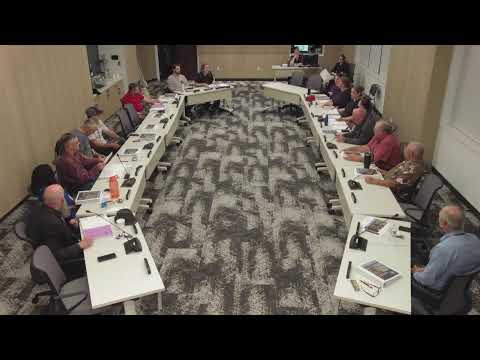
Ginger Base, county extension director for Champaign, Ford and Vermilion counties, told the Champaign County Board during a legislative budget hearing that a federal cut to the SNAP-Ed program will force the Cooperative Extension to lose roughly 12 full-time equivalent positions nationwide and about 10 positions that had been based in Champaign County. The program, Base said, served some of the county’s most vulnerable residents with nutrition education, school and senior programming, and community gardening projects.
The loss will start taking effect when current funding sunsets in February, Base said, and represents about one-third of the extension’s operating budget. "This program reached really our most vulnerable population," Base said, adding that the local office expects the funding to last only until about February and that replacing roughly $800,000 in lost grant funding will be difficult.
Board members pressed for short-term options. Board member (and County Board Chair) Travis (first name not specified in transcript) suggested the county could consider using some American Rescue Plan Act (ARPA) interest as a temporary patch. "It's not even close to this amount... but I would be interested in maybe between now and September hearing about how we could take... ARPA interest," he said. Board member Jeff (surname not specified in transcript) also said he would consider a one-year stopgap if it preserved the most urgent services.
Base outlined the SNAP-Ed activities that will be affected: direct education in schools and public housing, gardening programs to help households grow fresh produce, and senior nutrition initiatives. She said the program also provided a pipeline of entry-level community educators who could advance into other extension work; seven of the lost local positions were entry-level roles. "We provided education to help with that... gardening programs to help people grow their own food," Base said.
Base said extension staff are exploring partnerships with the health department and Feeding Illinois and pursuing alternative grants, but emphasized the scale of the funding gap. "$800,000 is a lot to make up," she said. Board members suggested coalition-building and leveraging county funds as temporary support while the extension pursues new grants.
Discussion at the hearing also touched on how state and university funding flow to extension services. Base explained that Extension funds come through the U.S. Department of Agriculture, are matched locally at roughly 85 cents on the dollar, and include Smith-Lever funds tied to land-grant university responsibilities. "We get some Smith-Lever money, which is federal," she said.
No formal county appropriation or vote on ARPA use occurred during the hearing; board members asked staff to explore options and return with proposals at the September packet and upcoming budget meetings.