
Retail Coach presents leads for White House trade area; council renews recruitment contract at $25,000
Get AI-powered insights, summaries, and transcripts
Subscribe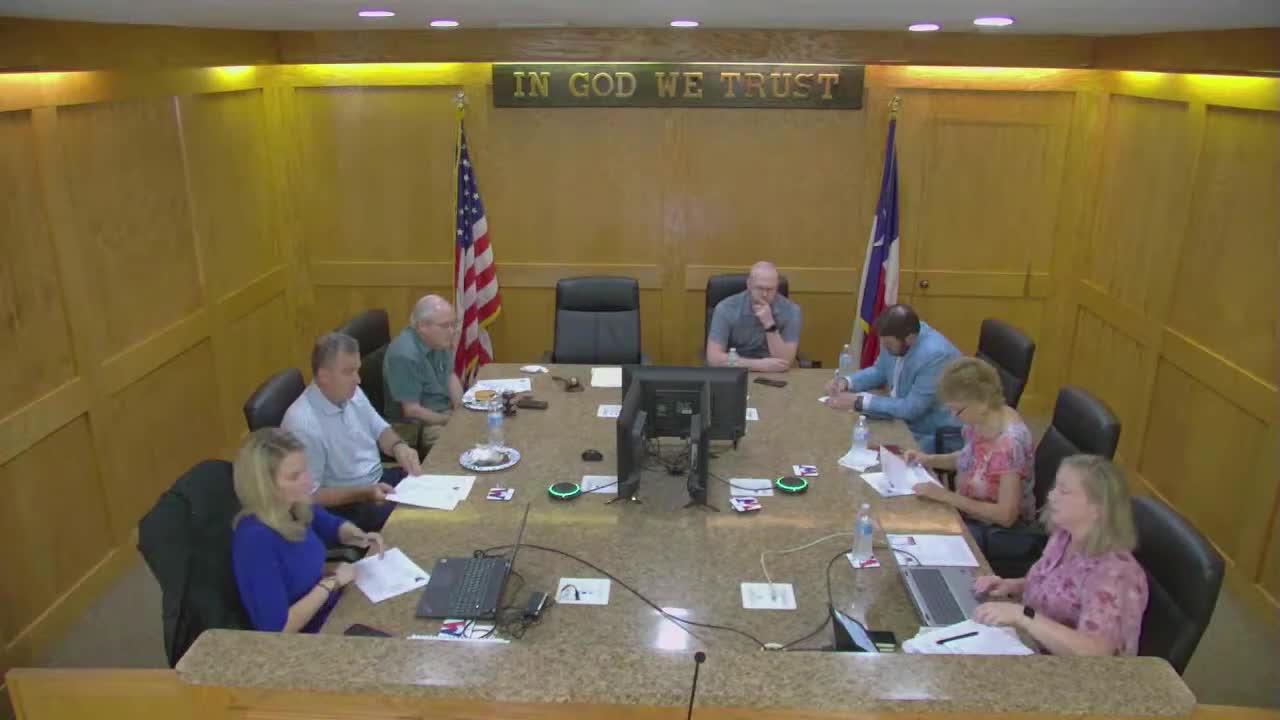
Summary
At a White House Economic Development Council meeting, Retail Coach presented trade-area data and prospective retailer leads; the council approved a one-year renewal of its recruitment contract for $25,000, a $7,000 decrease from the prior year.
Caleb Wilson, a consultant with Retail Coach, gave the White House Economic Development Council an update on retail recruitment and trade-area analysis and, later in the meeting, staff asked the council to renew the Retail Coach contract at a proposed $25,000 for the year.
The presentation summarized the firm’s approach to identifying prospective retailers and restaurants in the White House trade area, including use of census data and mobile-device trade-area studies to draw polygons of where primary customers live. Wilson said, “You’ve got that bare minimum of about 25,000 cars,” referring to daily traffic counts, and added that most deals now take “probably closer 18 to 24 months” to reach financial feasibility.
The nut graf: the Retail Coach briefing fed directly into a council decision to continue paying an outside recruitment consultant. Council members approved the renewal after staff explained the renewal amount was lower than the previous year’s contract.
In the presentation, Wilson listed categories of “warm” leads that Retail Coach is pursuing, citing hardware stores, quick-service restaurants, a 15,000–20,000-square-foot clothing retailer, casual full-service restaurants, entertainment venues and multi-tenant developers. He said some national brands will be franchise-driven and may require multiple in-year presentations to their internal site-selection committees. Wilson described the work as ongoing outreach at industry conferences (he cited ICSC and Retail Live) and in-person meetings with prospective franchisees and developers.
Wilson described the trade-area analysis method: overlapping 7–10 existing business locations, pulling mobile-device and census demographics and extracting the resulting demographics for the drawn polygon. He cautioned that the polygon should be reviewed annually because a “primary customer base is probably gonna grow” and change shape over time.
Council staff corrected a packet error during the agenda discussion, saying the original contract amount was $32,000, not $21,000 as printed, and that the proposed renewal of $25,000 represents a $7,000 decrease from the prior contract. Susan (staff member) told the council, “They have been invaluable to us. They have done great work. I’ve really been happy to partner with Caleb and the entire team there at Retail Coach. They’ve been very responsive.”
Following that clarification, a motion to renew the Retail Coach contract at $25,000 was made and seconded and the chair called for a voice vote; council members responded “Aye,” and the renewal passed. The council did not attach other directives to the contract renewal in the recorded discussion.
Discussion points the council raised during the presentation included the trade-area boundary (questions about northern limits), availability and pricing of sites in White House, the need to sell the market to franchisors and developers, and demographic attractors such as household income and median age. Wilson said the trade area population was “on the brink” of the next growth level and referenced a trade-area population near 70,000 as context for future prospecting; the transcript presented that as an estimate rather than a precise census figure.
The council’s formal action was limited to renewing the recruitment contract. Staff and the Retail Coach representative discussed follow-up reporting cadence; one council member said annual updates were acceptable, another council member suggested semiannual updates might be appropriate. The council did not adopt additional budget allocations or policy changes during the item.
Looking ahead, Retail Coach said it will continue outreach to prospects and revisit targets and trade-area boundaries annually. The presentation and contract renewal leave the current, one-year recruitment engagement in place at the $25,000 level.