
Brazos County residents, commissioners debate proposed 0.423059 property tax rate and call for greater transparency
Get AI-powered insights, summaries, and transcripts
Subscribe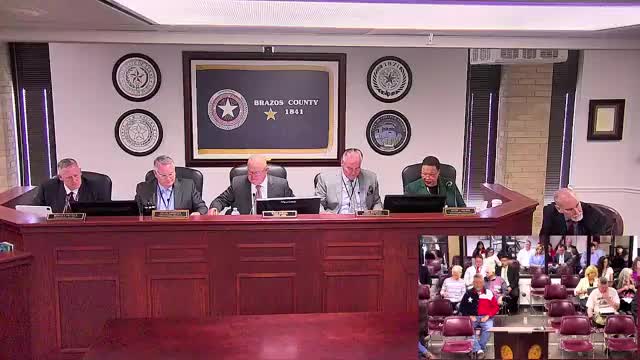
Summary
At a Sept. 9 public hearing, residents and county officials discussed a proposed property tax rate of 0.423059, appraisal-driven valuation increases and the county's budget outlook; speakers urged clearer accounting for indigent-defense costs and more public workshops before the court adopts a final rate.
BRYAN, Texas — Residents and members of the Brazos County Commissioner's Court on Sept. 9 traded concerns about rising property valuations and a proposed county tax rate of 0.423059, urging clearer accounting and more public workshops before the court adopts a final rate.
The hearing drew five registered public commenters and extended discussion among commissioners about appraisal increases driven, several officials said, by state-level pressures. Citizens and commissioners warned that higher valuations and uncertain state funding rules complicate the county’s budget and could raise bills for homeowners and businesses.
Why it matters: The county’s proposed rate was described to the public as 0.423059. County staff and commissioners said that, under Texas statute, the proposed rate must be disclosed relative to the no-new-revenue (NNR) rate and the voter-approved rate; speakers called for clearer, more transparent accounting of items that feed into those calculations, including indigent-defense costs that affect the voter-approved rate.
Public comments and examples led the hearing. Chris Barnes, who identified himself as a resident of Precinct 2, said voters had expressed a mandate to lower property taxes and added, “It’s the cities that probably waste more money than anybody.” Kathy Viens, a resident of Precinct 4, said the calculations were “so complicated and convoluted” and asked the court to clarify figures on the tax notice showing an 8.9% increase on existing properties and 12.03% on all property. She also noted the county’s published proposed rate of 0.423059.
Resident John Book told the court voters would challenge sudden valuation jumps and gave an example of the county portion for a $200,000 home: “...the county portion of property taxes would be about $846 a year.” Cindy Wiley, a longtime local commenter, urged fiscal restraint and accountability, saying, “Government’s first duty is to protect the people, not run their lives,” and warning that higher property taxes can reduce investment by homeowners and small businesses.
County staff and commissioners responded with explanation and context. Marcy Turner, first assistant county auditor, said staff provide total indigent-defense and indigent-health costs to the tax assessor-collector and do not separate indigent costs by other categories: “I can’t comment to that. That’s more of a sheriff question. We just track, total indigent defense costs and total indigent health costs.” Several residents had asked whether those indigent costs are itemized in a way that affects the voter-approved-rate calculation; Turner said the county provides totals used by the assessor-collector.
Commissioner Brown blamed external pressure from the state comptroller and appraisal district reappraisals for sudden valuation increases and urged property owners who disagree to seek appraisal reviews or appeals. Commissioner Conners (as referenced in the hearing transcript) and others emphasized that statutory definitions require the court to present the proposed rate relative to the no-new-revenue rate and that those calculations can change budget planning during the adoption process. Commissioner Nettles and other commissioners described frustration with state-driven cost mandates that affect county expenditures and reserves.
Judicial and administrative context: The County Judge (not named in the transcript excerpt) and multiple commissioners reiterated that the court has conducted eight days of budget workshops and intends further workshops and increased transparency. The judge told the audience that the court would debate and set a tax rate that day, with staff and commissioners available for questions. The judge also noted voters will have a November opportunity on a proposed constitutional amendment (as referenced in the hearing) related to exemptions.
Discussion versus decision: The transcript excerpt contains extensive public comment and commissioner explanation but does not record a formal motion or vote on a final tax rate. County officials described plans for additional workshops and more transparent materials; no final adoption was recorded in the provided excerpt.
Other items raised: Commenters asked whether a planned county storage/warehouse project (for election equipment/records) had been removed from the budget; a commissioner confirmed that $10 million facility project was “killed” and not in the current budget. Several residents asked for clearer line-item lists of projects put on hold; the judge replied the county would evaluate assets as part of a master plan and improve public transparency.
What’s next: Court members repeatedly urged citizens to monitor state-level decisions and contact state officials about mandates they view as shifting costs to the county. County staff said they will continue workshops; the court indicated a tax-rate discussion and potential setting of a rate would continue that day, but no formal adoption is recorded in the excerpt.
Ending: The hearing emphasized the interplay of local budgeting, appraisal values and state-level calculations; residents urged accountability and clearer data on the components that feed the county’s tax-rate calculations before the court finalizes its decision.