Get Full Government Meeting Transcripts, Videos, & Alerts Forever!
Get email alerts on the Superintendent Evaluation topic
No spam. Unsubscribe anytime.
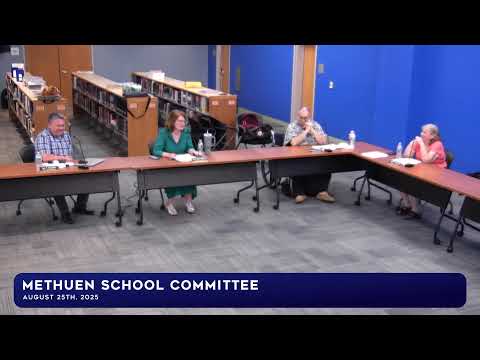
Methuen school committee approves superintendent evaluation after heated debate over process
Summary
The Methuen School Committee voted 5–2 to accept a summative evaluation rating the superintendent's goals as 'significant progress' overall, while several members objected to the committee's use of a composite methodology and to allowing the evaluation to proceed before a pending audit report was released.
The Methuen School Committee voted 5–2 on Aug. 25 to accept a summative evaluation of Superintendent Dr. Quang that rates the district's goals and standards primarily at the 'significant progress' or 'proficient' levels, after more than two hours of public and member debate over evidence, timing and method. The vote was the culmination of a months-long evaluation process under the Massachusetts Department of Elementary and Secondary Education rubric; the committee accepted the subcommittee's consolidated report despite objections from two members who said the composite summary masked minority viewpoints and omitted outstanding audit findings. The vote matters because state law and the superintendent's contract require the school committee to evaluate the district's chief executive; members warned that failing to follow the contracted process could invite legal challenge. Members who supported the evaluation said the subcommittee reviewed goals, evidence and standards and that most members who submitted individual assessments reached similar conclusions. Member John Donovan, chairing the presentation, said the evaluation followed DESE steps and that the superintendent's literacy, professional practice and district improvement goals each showed 'significant progress' or 'some progress' based on submitted evidence. "There were pockets of schools where students met the mark and some that came close," Donovan said. Opponents focused on the process and timing. Member Chris Maxwell said she declined to submit an evaluation because she didn't believe her input would be accurately reflected in the composite report and objected to completing the evaluation before circulation of a pending external audit. "I did not fill out an evaluation because I just didn't feel like my input would be considered," Maxwell said. Member Kevin Willette argued the composite method was optional and that dissenting viewpoints should be preserved in a separate minority report. The subcommittee chair and other supporters said DESE requires a five-step evaluation cycle and that the superintendent's contract (Article 4) specifies how assessments should be compiled. Donovan told the committee he had consulted the committee's attorney, who warned that two missing member submissions could give the superintendent grounds to challenge an improperly compiled evaluation. Formal action: the committee moved to accept the summative evaluation (motion by Member Shabiliya; second by Member DeZaglio). The roll-call vote recorded Dezaglio, Donovan, Keegan, Shabiliya and Mayor Borregard as yes; Maxwell and Willette voted no. Outcome: approved 5–2. Members said they were uncomfortable that the subcommittee had not provided a 'middle' rating option between 'proficient' and 'needs improvement,' and several speakers pressed for clearer focus indicators and for the outstanding organizational audit's recommendations to be considered when setting next year's goals. The committee also acknowledged that several documents underlying the evaluation are public records and that individual assessments are available for review. The committee will use the DESE rubric and the superintendent's stated goals on literacy, inclusive instructional practices and chronic absenteeism as the basis for next steps; some members urged the panel to revisit the evaluation process timeline and to preserve minority viewpoints in future evaluations.