
Medical‑parole recommendation for Melvin Green denied after board weighs dementia, victim impact and risk score
Get AI-powered insights, summaries, and transcripts
Subscribe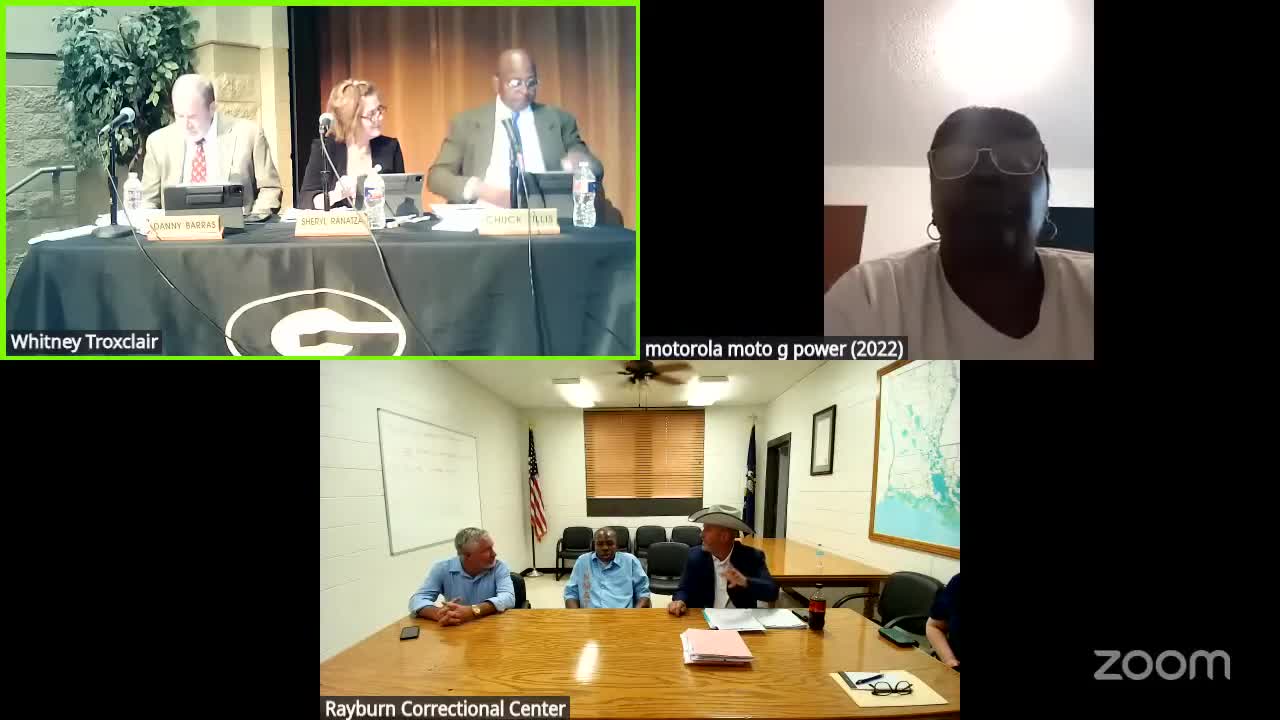
Summary
The parole board denied a request Sept. 11 to grant medical parole to Melvin Green, who has severe dementia and medical needs; the medical director recommended nursing‑home placement, Green’s family sought closer placement, but strong victim impact statements and a high risk score led the board to deny medical parole.
The Louisiana Committee on Parole denied a medical‑parole recommendation Sept. 11 for Melvin Green, a fourth‑felony offender whose medical team documented progressive, severe dementia and placement needs. The hybrid hearing included medical staff from Ryerson Correctional Center, victim impact statements and multiple family members by Zoom.
Doctor Martinez, the facility medical director, described progressive cognitive decline: staff must remind Green to eat and use the restroom, assist with incontinence and supervise him continuously. “His dementia is so severe,” Martinez told the board, that staff transitioned him to the infirmary and nursing unit where attendants assist with daily activities.
Green’s siblings and other family members asked the board to place him closer to home or allow nursing‑home placement so the family could visit and provide skin‑to‑skin contact. Family members said visits would comfort him and urged the board to approve medical parole or transfer to a nearby nursing placement.
The hearing also included a detailed victim impact statement from Jacqueline Floyd, who described severe, long‑term physical and psychological harm resulting from Green’s original offense. Floyd said Green “left me broke and torn and thrown on the side of the road like an animal” and urged the board not to grant parole.
Board members noted the medical recommendation for nursing‑home placement but also cited the risk assessment (static‑99 and other scoring) and extensive criminal history. The district attorney’s office and local law enforcement opposed medical parole on the grounds that Green’s 40‑year sentence reflected the seriousness of the offense and avoided a potential life sentence at plea. After executive‑session deliberations to consider confidential material, the board concluded Green’s medical needs were being met in the infirmary, that risk and opposition were substantial, and denied the medical‑parole recommendation. Board members recorded the decision with directions to reconsider if Green’s condition deteriorates further.
The board’s denial preserves Green’s incarceration while allowing the department to continue medical care; family members may ask the board to reconsider if his condition worsens.