
Lakewood Arts Commission has wrapped 33 signal boxes with artwork; more sites planned
Get AI-powered insights, summaries, and transcripts
Sign Up Free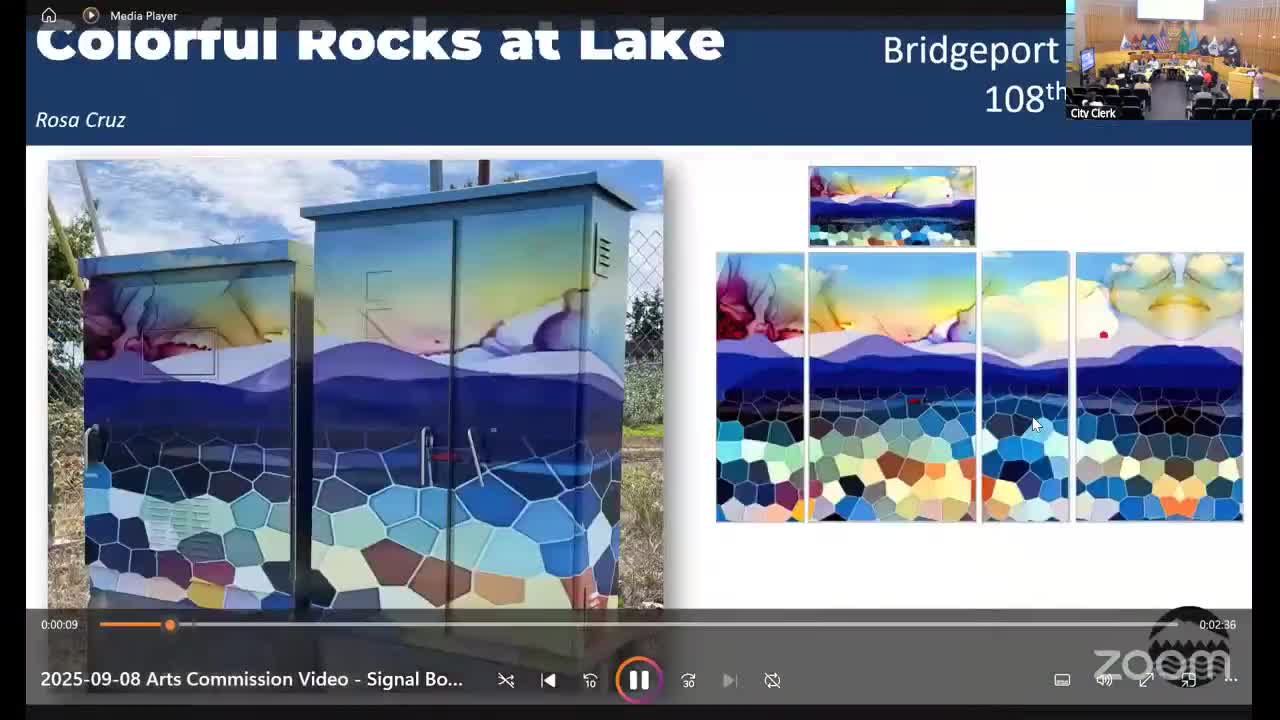
Summary
The Lakewood Arts Commission reported it has installed artwork wraps on 33 signal boxes citywide, at an average cost of about $2,500 per box, and plans additional student-driven wraps on Silicon Boulevard and Pacific Highway in 2025. Commissioners said the wraps pay artists modest stipends, last about a decade and appear to reduce graffiti.
The Lakewood Arts Commission told City Council it has wrapped 33 traffic-signal boxes across the city with commissioned artwork and plans additional wraps on Silicon Boulevard and Pacific Highway in 2025.
The program, the commission said, uses local and student artists and is paid from the commission's existing budget. “We are proud to have installed these 33 locations to date,” Earl Borgert, vice chair of the Lakewood Arts Commission, said during the joint meeting. Commissioners said each wrap costs roughly $2,500.
Commissioners and city staff described the program as a low-cost way to beautify streets and reduce graffiti. “About 2,500 per box,” a city staff member, identified in the meeting as Sally, said when asked about unit cost. On artist compensation Sally said, “700 per large box and 400 per small box.” The commission also said wraps typically last about 10 years and are relatively easy to maintain or replace when tagged.
The commission described its artist-selection process as a standard call to artists followed by a subcommittee review. “We do submit a call to artists, and then those call to artists submit various different works. And then we have a subcommittee or a subcommission that gets together and chooses which pieces of art that we feel best would identify with that part of the community,” Earl Borgert said, describing how the commission weighs community fit (for example, artwork showing children near a park or culturally themed work in an international district).
Commissioners said the production and installation also benefit local businesses: the vendor that installs wraps is a printing company with local operations, and the project produces work for that firm. The commission said it often selects artists from a mix of ages and cultural backgrounds, including students. “We reached out to the student artists at Pierce College for Silicon Boulevard boxes and to Pac into Hawassil art studio managed by Kellis Parlett for her students' art,” Borgert said, summarizing outreach for the next phase.
Councilmembers asked about life span and maintenance. Commissioners said wraps typically hold up well for about a decade and are straightforward to clean. They noted a few early wraps with negative space were more likely to be tagged and said they now favor fuller coverage to discourage graffiti. “All the research shows that it actually does, prevent graffiti,” Sally said when asked about vandalism prevention.
Next steps discussed included expanding the program to additional corridors and exploring a cultural exchange with the city’s sister cities: “There was some discussion about perhaps inviting each of the sister cities to submit a piece of art to put on a box,” commissioner Phil Raschke said, proposing a clustered installation as a possible anniversary project.
Commissioners asked council for continued support and noted the program’s relatively modest per-site cost compared with other public-art installations. The commission said the city-funded stipend to artists and materials come from its existing budget; council did not take a formal vote during the presentation.
The commission will return to council with details and locations for the 2025 wraps as plans firm up.