
EMS provider outlines fleet, staffing, billing and training plans for Patrick County
Get AI-powered insights, summaries, and transcripts
Subscribe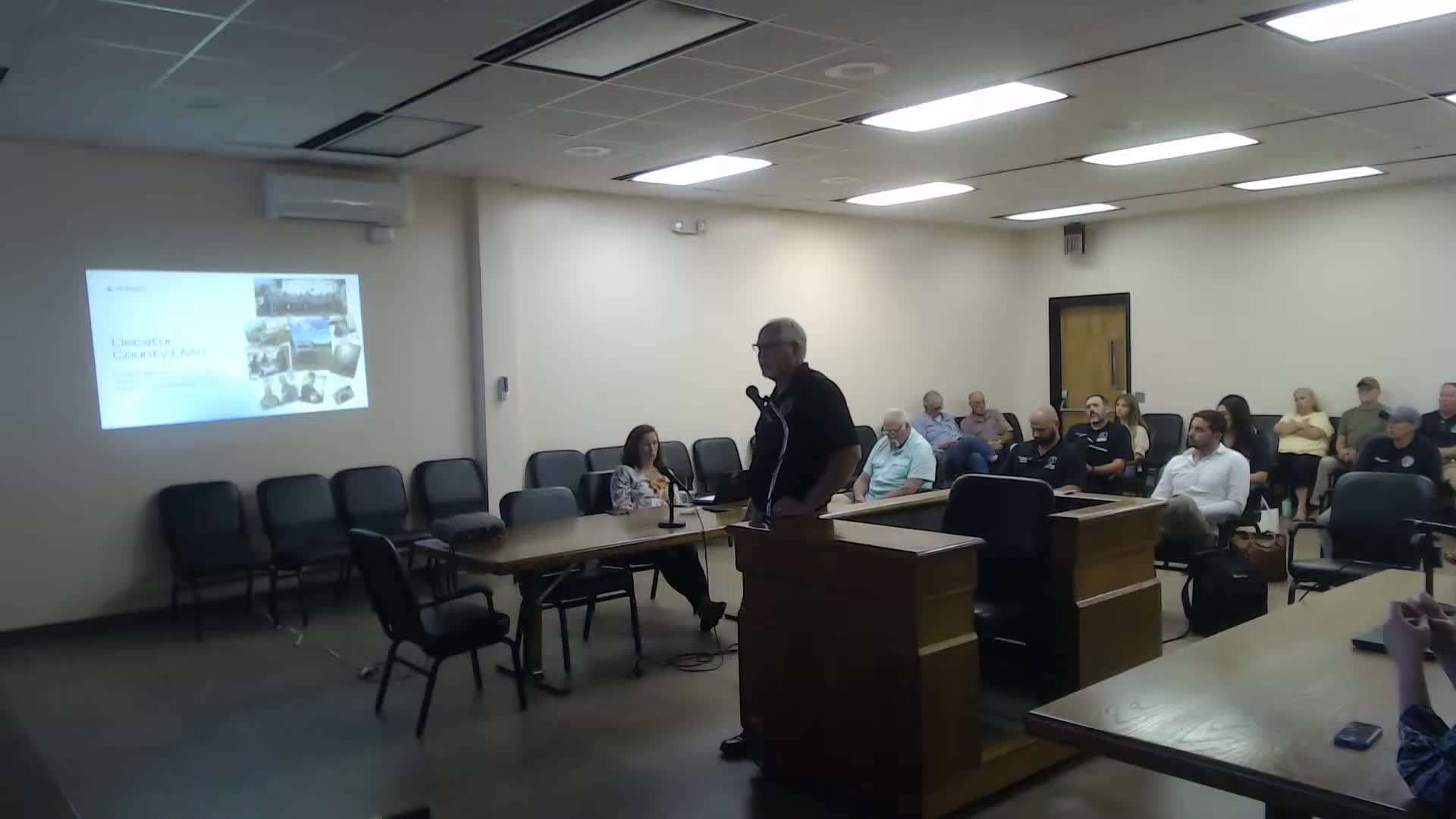
Summary
A representative for an emergency medical service described call volumes, ambulance staffing and maintenance, a patient financial-assistance program and community training plans while noting a contract for Lexington animal services; the county meeting adjourned by unanimous vote.
A company representative described plans for ambulance operations, staffing, billing and training to county officials during a Patrick County meeting, saying the provider will base ambulances at the hospital, keep spare vehicles at each location and run in-house maintenance and billing.
The presentation, delivered by an unnamed company representative, focused on call volumes across multiple counties, the number and staffing of ambulances at each location, a financial-assistance billing program and outreach and training partnerships with local hospitals and sheriff's offices.
The presenter said call volumes are high across their system and provided county-level examples. "Our call volume is... very large call volume," the presenter said, and reported daily averages such as about 20–30 calls per day in some counties and that certain stations are the busiest in their network. The presenter described ambulance counts and staffing patterns: four ambulances at the Brownsville location (three trucks full time plus a backup), four trucks running in Houston County, four full-time trucks in Henderson County (with the capability to run five), and two to three full-time trucks in other counties. The provider also said each location will have a spare truck available to avoid borrowing vehicles from neighboring services.
Why this matters: local ambulance availability, staffing and where vehicles are based affect response capacity and hospital transports in Patrick County and nearby counties.
The presenter described maintenance and equipment policies, saying the service performs vehicle maintenance in-house rather than outsourcing: "we do our own service center... we don't outsource any of our maintenance," the presenter said. The presentation included a photo description of a hangar capable of storing vehicles and even an aircraft; the presenter said the hangar measured roughly 50 by 60 feet.
On billing, the presenter said the service manages patient billing directly rather than through an outside firm and operates a financial-assistance program for patients who cannot pay. "We don't outsource billing," the presenter said. "We do have our own billing program where it's called financial assistance. If someone's not able to pay for their bill, we do work with that patient." The presenter also said the service generally uses Medicare-allowable rates as a reference, noting that Medicare fee schedule rates are the provider's standard: "Medicare says it's an $80 allowable — that's what we charge," the presenter said.
Training and community outreach were major themes. The presenter identified Sean Courtright as the manager of field training officers and said there will be a field training officer at each service location; training will also include hospitals, rescue squads, fire and sheriff's departments. The provider said it conducts first-responder programs with some sheriff's offices and helps place automated external defibrillators (AEDs) in certain units to improve cardiac arrest outcomes.
The presenter named additional local staff and partners: Rachel Bigcham (operations manager for Decatur County), a staff member identified as Beth in Houston County operations, board member Kyle Kopecki and board member Dr. Braden. The presenter said the company is replacing fleet vehicles on a regular schedule — "I get a new ambulance every eight weeks across my fleet" — and that staff safety and vehicle crash survivability are priorities: the presenter said the organization inspects ambulances before purchase to ensure crew protection.
The presenter also said the company has "entered into a contract" for animal services in Lexington; no county action on that contract was recorded in the transcript.
Formal business: the meeting ended with a motion to adjourn that carried. The transcript records votes by name during the adjournment motion: Mr. Marshall (Aye), Mr. Kendrick (Aye), Mr. Perry (Aye) and an additional aye by an unidentified speaker; the chair said the board will reconvene on September 8.
Less critical details: the presenter reported a recent vehicle collision in Henderson County in which a driver pulled into the ambulance’s path and the patient was seriously hurt; the presenter said crew safety protocols and equipment helped protect personnel. The presenter repeatedly emphasized in-house maintenance, spare trucks at each location and ongoing community outreach once the service begins local operations.
The presentation provided operational details county officials can use to evaluate emergency medical coverage and short-term logistics; the board adjourned after no further business was raised.