
Norfolk school board adds ‘Option 5,’ identifies buildings to remove as rezoning work begins
Get AI-powered insights, summaries, and transcripts
Subscribe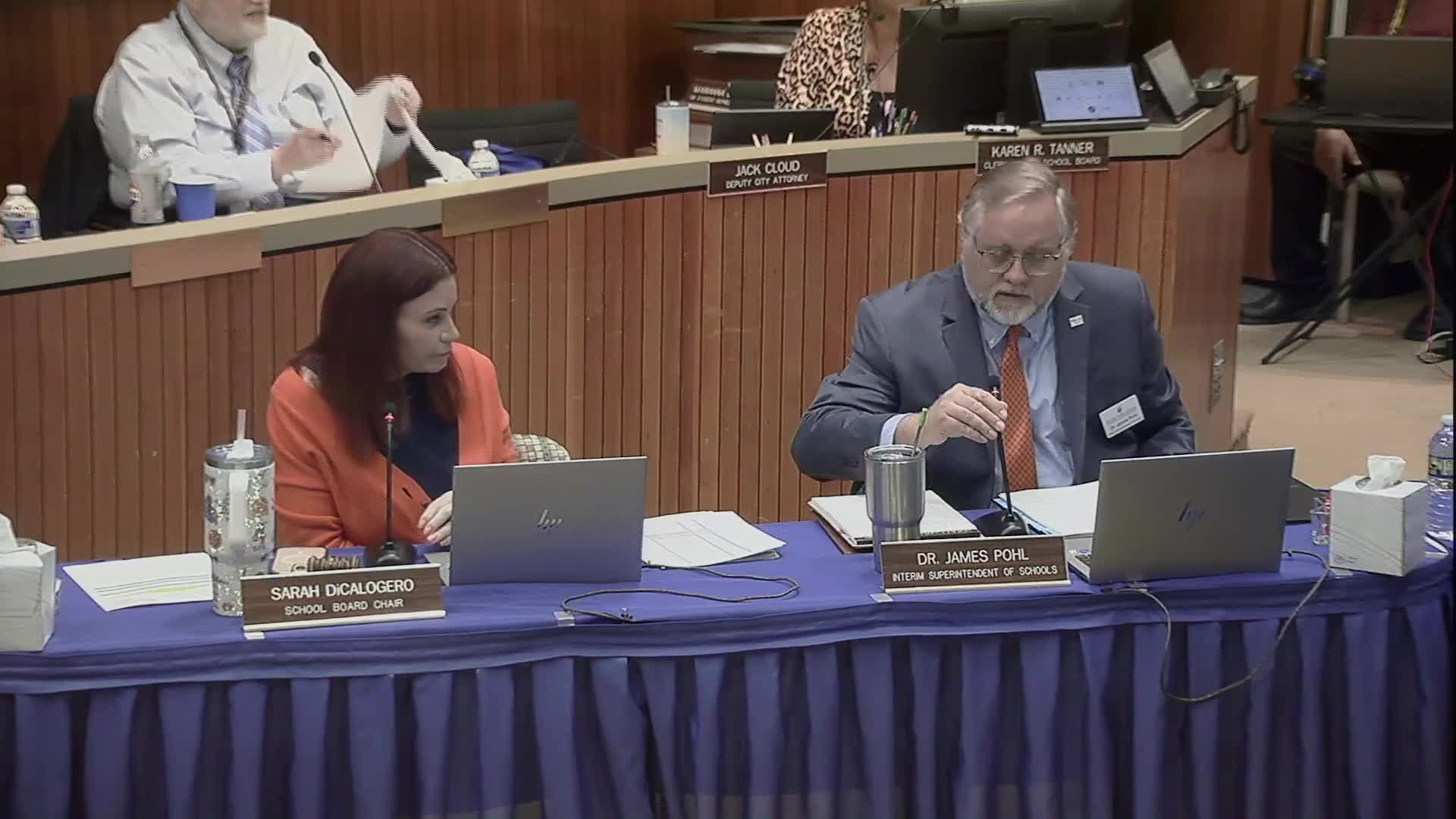
Summary
The Norfolk School Board heard a new consolidation plan, called Option 5, that delays firm student moves until a full rezoning study is completed, while the board identified a set of buildings slated for closure or repurposing and agreed to begin rezonings tied to the closures.
Norfolk School Board members on Tuesday heard a new consolidation plan, called “Option 5,” that Robert Pohl, a district staff member, presented as a community‑responsive approach that postpones most final student placements until a full rezoning study is complete. The board agreed on a list of buildings to remove from the division’s portfolio and directed staff to proceed with rezoning work that would inform where students ultimately will attend.
Pohl told the board that Option 5 ‘‘reflects the feedback we’ve heard from our community’’ and would begin with two initial consolidations in the 2026–27 school year while commissioning a division‑wide boundary and attendance‑zone study that would determine later moves. He summarized the opening steps as moving Saint Helena into Southside STEM (so Berkeley Early Childhood could move to a better facility) and consolidating several early‑childhood placements tied to Ocean Air and Willoughby.
The plan matters because it changes the sequence many trustees preferred: rather than immediately assigning where each displaced student would go, Option 5 removes specified buildings from the inventory first and requires the rezoning study to determine receiving schools and timing. ‘‘Any school closure requires a public hearing for the zoning and everything else,’’ Pohl reminded the board, noting the study would produce the data needed for thoughtful hearings and implementation.
Discussion at the meeting ranged from procedural concerns about two‑member discussions to sharp disagreement over pace. Colonel Ken Paulson, a board member who offered an alternative “Option 6,” argued that Option 5 ‘‘is a red herring and not an effort, but an effort to delay’’ and urged a faster, more definitive schedule to avoid a potential City Council response that could change school funding. Paulson referenced a March City Council resolution warning that a delayed closure program might prompt council action on categorical funding; he said the council could alter the district’s budget authority if closures do not proceed. Several other trustees countered that Option 5 aligns with board goals to deconcentrate poverty and gives staff and consultants time to complete a careful rezoning plan.
After extended discussion, trustees coalesced around a working approach: they said the board will list the buildings it intends to remove from the portfolio, authorize the administration and the hired rezoning consultant to begin boundary work once that list is finalized, and seek to begin a first round of closures in the 2026–27 school year. Board members repeatedly said the plan should include public hearings before any school closes.
Key facility decisions and clarifications made during the meeting include: - Lindenwood: the board endorsed repurposing Lindenwood as a professional‑development center for the division rather than returning the site to the city, pending cost details; staff said keeping Lindenwood in the district portfolio as a PD center would cost roughly $100,000 a year in utilities plus a custodian (about $140,000/year total, per staff estimates) but would avoid recurring off‑site rental costs. - Early childhood centers: the administration recommended moving the Saint Helena program into Southside STEM and relocating Berkeley’s ECC; trustees debated whether to swap the two or keep Berkeley in place. Staff cited a facilities‑condition cost gap — about $13 million estimated work at Berkeley versus about $8 million at Saint Helena — as one factor in the recommendation. - Career/technical and alternative programs: trustees discussed renovating Lake Taylor High School into a comprehensive CTE high school that could also house enhanced alternative‑education programming; the plan would allow closing the current VOTEC/NTC facility and Madison at Easton after the Lake Taylor work is completed. - CSEP (old Richard Bowling facility): the board agreed to close the old Richard Bowling site (the building that currently houses the regional CSEP program) and move that program into Chesterfield Academy if Chesterfield is repurposed to host CSEP; this move is contingent on facility upgrades and rezoning.
Board members also debated timeline choices. Colonel Paulson’s Option 6 condensed closures into a faster cadence (he proposed closing multiple schools in the 2026–27 and 2027–28 school years), while supporters of Option 5 stressed that rezoning and facility rebuild timing (for example, the proposed Jaycox rebuild and Lake Taylor’s CTE renovation) can affect when moves are feasible. Pohl and facilities staff said a purchase order for the rezoning study is already signed and that the rezoning work can begin after the board finalizes the list of buildings to be removed from the inventory.
No final vote to adopt a specific consolidation timeline or to approve closures occurred at the meeting. The only formal roll‑call action recorded during the session was a vote to permit Colonel Paulson to participate remotely under board policy BDD; that motion passed with board members Inge and Thomas moving and seconding and the roll showing the trustees present voting to permit remote participation. Trustees said staff will post documents and detailed cost estimates, and the board will vote on a consolidation resolution at a future meeting after receiving the rezoning study and clarifying dates.
Board members and staff emphasized community engagement: trustees said steering‑committee input will continue to be used, and neighborhood‑level outreach, transition committees, and public hearings will accompany any school closures. The board set an overarching target window in discussion — implementing initial changes beginning in 2026–27 and proceeding at roughly one to two closures per year through about 2034 — but several trustees said the timetable will be finalized after the rezoning study and before any required public hearings.
Ending: The board concluded the meeting with staff directions to post member‑provided materials to BoardDocs, provide the board with detailed cost and staffing analyses (including for Lindenwood and the Berkeley/Saint Helena comparison), and return with a proposed resolution and timeline after the rezoning consultant’s findings are available. Trustees said they would continue deliberations at the next public meeting before taking a final vote on closures or a specific consolidated plan.