Get Full Government Meeting Transcripts, Videos, & Alerts Forever!
Get email alerts on the School Consolidation topic
No spam. Unsubscribe anytime.
Norfolk School Board reviews four elementary consolidation options as enrollment falls
Summary
School officials presented four sequencing options for closing and consolidating elementary schools, citing a 10-day enrollment decline and a plan to reinvest savings; no vote was taken.
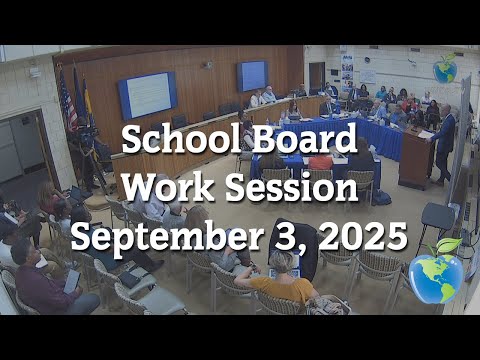
NORFOLK, Va. — Norfolk Public Schools officials on Sept. 3 presented four sequencing options for closing and consolidating elementary schools as the division continues a multi‑year plan to right‑size its portfolio amid falling enrollment.
The presentation, led by consultant David Sturtz of Wolpert and introduced by Superintendent Dr. Pohl, outlined options that close nine to ten buildings over a multi‑year period, pair closing schools with receiving schools, and phase rebuilds where funding and timing permit. “The consolidation of schools is not something we approach lightly,” Dr. Pohl said as the discussion opened.
Why it matters: Norfolk’s 10‑day count showed a decline of 671 K‑12 students from last year to this year and a decline of 189 students at the elementary level, figures officials said. The division says it currently operates substantially more building capacity than enrollment requires and wants to shift fixed building costs into direct student resources and modern facilities.
Key details - Four options: Option 1 (preliminary community plan); Option 2 (similar to 1 but adds gap years for planning and design); Option 3 (a minor sequencing change to Option 2); Option 4 (responds to community feedback by keeping Ghent open, keeping Monroe students in Monroe, moving PB Young to Jaycox rather than Ruffner, and shifting Lindenwood students to Monroe in place of Jaycox). Sturtz noted Option 4 closes nine buildings (eight if one is retained for professional development). - Capacity and classroom constraints: Using last year’s official enrollments, Lindenwood (239) + Monroe (293) combined to about 532 students; Monroe’s capacity was listed at 563, which the consultant calculated as roughly 95% utilization for that pairing. Sturtz warned that the combined pre‑K classrooms at Lindenwood and Monroe (eight total: seven at Monroe, one at Lindenwood) would need relocation or other accommodation under that option. - Facility verification: Consultant team and facilities staff confirmed school room counts and capacity field verifications within about a 2% variance of the prior study, giving officials confidence in the capacity figures used to model options. - Transportation and redistricting: Sturtz said consolidation should reduce total bus routes while increasing students per route, potentially increasing efficiency but also creating longer rides for some students unless boundaries are drawn to preserve walkability and reasonable travel times. He recommended a stand‑alone, robust redistricting process—building parcel‑level catchments and creating final boundaries that match the 10‑year portfolio, not temporary year‑to‑year fixes. - Timing and funding: Sturtz said most scenarios represent a roughly 10‑year timeline to sequence closures, rebuilds and redistricting, and that Option 2 was “a more realistic version” of Option 1 in matching likely capital funding timing. He emphasized avoiding multiple moves for the same students by coordinating rebuild sequencing and redistricting. - Community feedback and equity: In summarizing more than 300 community meeting sign‑ups, Sturtz said the dominant themes were requests for equitable reinvestment in buildings and programs, predictable and shorter bus rides, protection of walkability and pedestrian safety, and concern about concentrating poverty through boundary changes. He recommended continuing engagement with the steering committee and posting raw community input publicly; Dr. Pohl said the division had posted assurances about how transitions would be handled. - Savings and fiscal context: Sturtz cited prior district studies that estimate operational savings at roughly $1 million per elementary school closed per year (planning figure based on earlier work and updated for inflation). He also noted that, on the capital side, closing identified schools would reduce the district’s recorded capital deficiencies by roughly $211 million from a roughly $900 million backlog cited in prior analyses.
Discussion and next steps Board members asked detailed questions about specific school pairings (for example, PB Young, Ruffner, Jaycox, Lindenwood and Monroe), capacity math, pre‑K relocation options, and alignment with neighborhood redevelopment timelines. Board members discussed delaying particular moves so schools could strengthen climate/culture or wait for neighborhood redevelopment timelines (for example, demolition schedules that affect when a school district might close a campus).
No formal action or vote was taken; the board directed staff and the consultant to continue refinement and requested additional materials, including operational and capital estimates and redistricting analysis, ahead of upcoming decision points. The board agreed to schedule a special working meeting to draft the board’s own option and to continue community engagement and walk‑through bus tours for affected schools.
Ending The discussion concluded with the board asking staff to return with more detailed financial modeling, transportation impact analysis and redistricting proposals that adhere to the board’s stated goals of “trade‑up” improvements for students and respect for the board’s nonnegotiables. Consultants and staff said they would provide revised materials in advance of an October meeting and coordinate a joint meeting with city officials on repurposing property and capital funding arrangements.