
Columbia Heights presents language-access plan; school board to consider adoption Sept. 23
Get AI-powered insights, summaries, and transcripts
Subscribe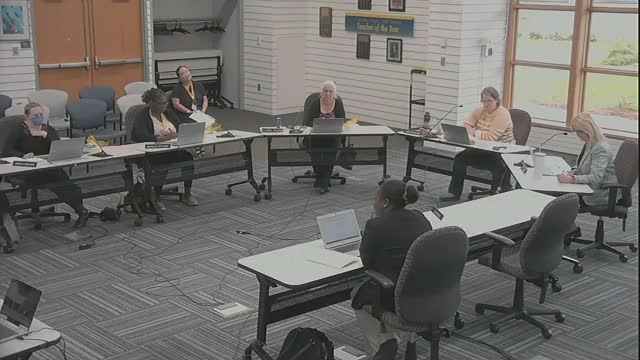
Summary
District staff presented a draft language-access plan that compiles translation and interpreter procedures, identifies 37 languages spoken by students and families, and lays out vendor and training practices; the board will be asked to adopt the plan at its Sept. 23 meeting under Minn. Stat. 123B.32.
Assistant Superintendent presented a draft language-access plan to the Columbia Heights Public Schools School Board on Sept. 9 and said the board will be asked to adopt the plan at its Sept. 23 meeting under Minnesota statute 123B.32.
The plan, the presenter said, brings existing translation and interpretation practices into a single document and is intended to meet state and federal requirements and to improve family access to school information. “This plan must explain how schools help students and families who use a language other than English and be included in the school handbook,” the presenter said, citing Minn. Stat. 123B.32 and noting the plan also requires periodic review.
District officials said the number of students identified as English learners has grown; the presenter said that when they began the district once had roughly one in three students classified as EL and that now it is about one in two. Staff said the district now represents 37 languages and that the plan lists the top languages by school and includes procedures to identify families’ language needs at enrollment, in the student information system (Synergy), and through site home‑school liaisons.
The plan outlines three sections: policy and regulation, an access plan with timelines and community engagement, and daily procedures for providing services. Services named in the presentation include written translation, phone and video remote interpreting, in‑person interpreters for conferences and events, and technology tools such as Seesaw and other communication apps that offer on‑the‑fly translation for routine communications. Staff identified three vendors the district uses for professional services: Propio (video and in‑person), LanguageLine Solutions (primarily phone), and All In 1 (written translation). Staff said they also use local interpreters for some languages, naming an example of a former Highland parent providing Oromo and Tigrina services.
Officials said procedures include: how staff request interpreters and translations; tracking and analyzing requests to identify needs; and prioritizing qualified interpreters for formal meetings such as IEP and 504 conferences. Staff said some routine classroom materials may be translated using AI or in‑house tools, but legally protected meetings require qualified interpreters.
Board members asked about what in the plan would be new versus existing practice. The presenter said much of the work is already in place, and the plan consolidates practices while adding aspirational changes — for example, multilingual signage or a system at the placement center that would help families self‑identify their preferred language when they arrive. The presenter also confirmed the student handbook (not the employee handbook) will include the plan’s required notice to families.
Staff identified next steps: finalize the plan for board adoption on Sept. 23, produce a more family‑friendly summary version for posting under Families > Language Services on the district website, continue staff training (including orientation sessions), and maintain a biennial review cycle for updates. The presenter also noted the plan includes provisions for translating emergency communications.
The presentation was informational only; no vote was taken at the Sept. 9 meeting. The board will consider adoption on Sept. 23.