Get Full Government Meeting Transcripts, Videos, & Alerts Forever!
Get email alerts on the Termination Of Parental Rights topic
No spam. Unsubscribe anytime.
Court hears agency recommendation to terminate parental rights after yearlong case
Summary
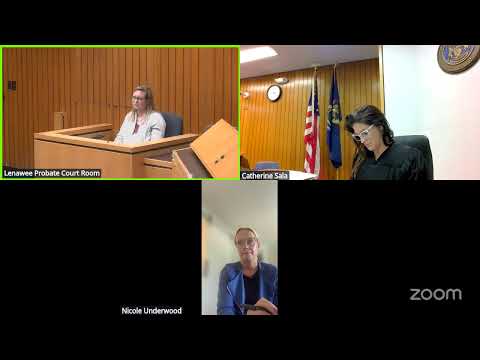
At a family-court hearing, a child-welfare caseworker recommended terminating the parental rights of a child’s parents, citing missed drug screens, spotty treatment attendance and ongoing domestic incidents; the court entered the agency's report and set a continuation for Friday at 10 a.m.
At a family-court hearing, a child-welfare caseworker told the judge the agency recommends terminating the parental rights of the child’s parents after more than a year of supervision and limited progress toward reunification. The agency's court report, which the judge received into the record after no objection, said the parents had inconsistent engagement with required services, multiple missed or contested drug screens and continued domestic incidents that the caseworker called "very concerning." "Because we've already been going on with this case for over a year, and the parents are still not making enough progress to continue," the caseworker said when asked whether she recommended termination. The child has been in relative foster care since June 2024, the caseworker reported. In that placement the child has a bed, regular medical and developmental services including speech therapy, and ongoing specialist follow-up for a previously recorded heart abnormality. The caseworker said the foster placement provides holiday and cultural continuity and that the child appears well adjusted in the current home. The parents' compliance with their case service plans was a central focus of testimony. The father, who identified himself in court as Harold Hallis and who testified at length, denied current drug use and challenged the accuracy of some positive drug-screen results, saying, "I don't trust any of you." The caseworker said the father began counseling in May, has attended about five or six sessions and missed three appointments; she described the mother as having attended only an intake during the reporting period and said the mother had indicated a desire to pursue inpatient rehabilitation but was awaiting placement. The report and testimony also flagged household conditions and health risks: the caseworker described a strong odor of cigarette smoke in the home and noted the child requires occasional breathing treatments; she said the parents had installed carpet and a bed frame in the child's room but that a mattress situation had been inconsistent in earlier inspections. The caseworker explained that the agency provides parents a "medical passport"—a running record of the child's medical appointments and outcomes—quarterly and that she emails it to the parents' contact when direct email to one parent is not available. On the question of service thresholds for parenting-time recommendations, the caseworker summarized the agency's criteria: producing three negative drug screens, participating consistently in services and receiving positive reports from providers. She also told the court what steps she would want the parents to take if reunification were to remain an option: "To get into some kind of inpatient rehab, and all the visible everywhere to at least do outpatient and, participate in drug screens also." The judge set a continuation hearing for Friday at 10 a.m. in the event the parties do not finish closing arguments, and otherwise left prior orders in effect. The court also received the agency's court report into evidence after the agency asked for its admission and no parties objected. The hearing record reflects dispute over some factual items the parents contested, including the timing and results of specific drug screens and whether the parents received timely notifications for required testing. The father repeatedly said he does not maintain a phone and that his partner Erica shares communications; the caseworker said she had been texting and emailing the parents’ contact to arrange screens and services. No final judicial decision on termination was announced during the portion of the hearing covered by the transcript; the court directed the parties to prepare closing arguments and scheduled the continuation.