Get Full Government Meeting Transcripts, Videos, & Alerts Forever!
Get email alerts on the Probate Accountings topic
No spam. Unsubscribe anytime.
Probate judge approves multiple accountings, continues several hearings for lack of service
Summary
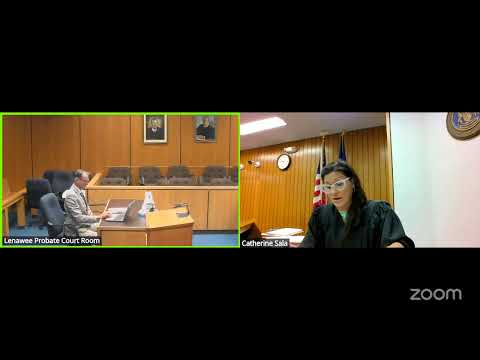
At a probate-court hearing, the presiding judge signed orders approving several conservators’ accountings, directed a transfer of remaining assets in one file to a residential trust, and sent several matters back to the clerk’s office for proper service or corrected petitions.
A presiding judge in a probate-court hearing approved final and periodic accountings in several conservatorship files and continued other matters for deficiencies in service or filings.
The approvals affect multiple adults under conservatorships; some orders end a conservatorsor’s financial duties, while others advance or confirm ongoing oversight. Several files were returned to the clerk’s office so notice or petitions can be corrected and hearings rescheduled.
In the matter of Kathy Colvin (File 51282DD), guardian ad litem Ariel Berger told the court she had reviewed the file and spoken with the conservator, saying the Coleman Foundation had opened a trust account and “they will become the payee for Social Security.” Berger recommended ending the conservatorship’s financial duties and continuing the guardianship role. The judge agreed and signed an order allowing the final accounting, giving the conservator up to 30 days to transfer remaining assets to the facility’s trust account. Berger told the court, “So I do believe that it's appropriate to end the conservatorship and continue with the guardianship portion only.”
Conservator Amy Jo Shaw confirmed the account activity and that the ward’s Social Security is being routed to the facility’s trust account to pay care costs; the court recorded that no significant cash assets remain in the conservatorship account once prepaid funeral and one Social Security payment were accounted for. The judge stated that once the court receives proof the transfer is complete, the conservator’s financial obligations will be discharged.
In the matter of Gary Farrow (File 52635), conservator Chris Farrell testified about efforts to account for funds that his predecessor had lost to scams. Farrell told the court that when he took over the account his father had been victimized in online scams and that some banking records were unavailable; he said, “I was never able to track down some of this money.” The presiding judge allowed the first-and-final accounting in that file and told Farrell that reimbursement for the missing amounts was not required based on his testimony: “Reimbursement for those amounts is not necessary given your testimony.”
The court signed similar orders approving accountings in other matters where the guardian ad litem or conservators had reviewed and had no objections, including Georgina Sal (File 53016) and the multiple accountings filed for Travis Mitchell (File 51589). Joyce Beavers, who appeared by phone on the Sal matter, told the court, “I did the best that I could. I believe it is all accurate and complete.” The judge signed orders allowing those accountings.
Several matters were not decided and were sent back for administrative correction. The court removed the Lois Jones matter (File 35258ED) from the calendar because proof of service on interested parties was not in the record and directed the clerk to reschedule after service is secured. The court likewise returned files for Mark Crater (File 52847), Ruben Torres (File 36693), and others where petitions to allow or waivers were not properly filed or service could not be confirmed.
The judge repeatedly noted that when clerks or attorneys identify missing waivers, receipts, or petitions the files will be routed back to the clerk’s office for correction and a new date will be set. Court staff said copies of signed orders will be provided to parties in the ordinary course of business.
What was discussion only: attorneys and conservators described missing records or accounting details and asked the court to review paperwork on file. What was direction: the court gave administrative directions—30 days for asset transfer in the Colvin file and returned several files to the clerk for service or corrected petitions. What was formal action: the judge signed orders allowing several accountings and denying the need for restitution in the Farrow file based on testimony.
Copies of signed orders and instructions to clerks were the final items for the day; the court instructed counsel and conservators to check with the clerk’s office about obtaining a copy of the signed orders and to follow up on any outstanding waivers or receipts.