
Board approves first consideration to rezone 40 acres adjacent to I‑29/I‑80 industrial park
Get AI-powered insights, summaries, and transcripts
Subscribe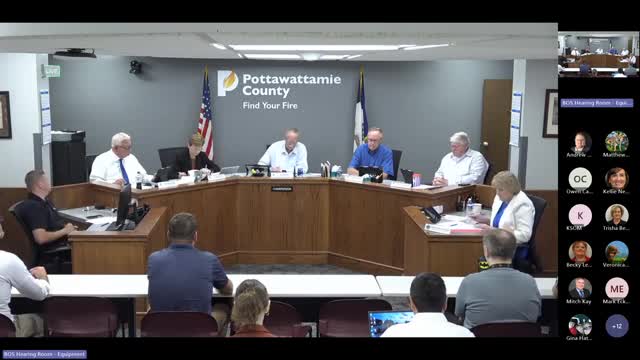
Summary
The Pottawatomie County Board of Supervisors voted to approve first consideration of an amendment to the county zoning map that would change roughly 40 acres east of the I‑29/I‑80 industrial park from agricultural/riverfront to limited industrial and set a second consideration date.
Pottawatomie County supervisors on Tuesday approved first consideration of an ordinance to rezone about 40 acres adjacent to the I‑29/I‑80 Industrial Park from Class A3 (riverfront/ag production) to Class I1 (limited industrial) and set the ordinance’s second consideration for Aug. 26, 2025. The public hearing and first vote came during a regular Board of Supervisors meeting at the courthouse.
The zoning change involves a parcel east of the existing industrial park off 190 Second Street. Matt Wyatt, director of planning and development, said the applicant, Armstrong Developments, requested the rezoning and that the county planning commission recommended approval in July. “This 40 acres lies directly to the east of that property,” Wyatt said during the hearing, describing the site and the planning commission referral.
The Board opened the public hearing and heard no members of the public indicate opposition or support on the record. Several supervisors raised infrastructure and drainage questions during the discussion: a supervisor said the City of Council Bluffs would need to approve subdivisions that connect to municipal water and sewer and asked about access to 190 Second Street and Wabash; another supervisor reiterated concerns from the planning commission about a high groundwater table and the potential for new improvements to increase runoff to adjacent developed areas.
Wyatt said an existing easement from the I‑29/I‑80 development provides current access into the rear 40‑acre parcel and noted there are options being discussed with the city to seek additional access from Wabash Avenue or from 190 Second Street. Board members did not adopt any infrastructure conditions at first consideration; the vote advanced the zoning change to a second consideration date so the Board can review additional details.
Action taken: the Board voted to approve first consideration of the ordinance and set the second consideration for Aug. 26, 2025. The county will hold the second reading before any final zoning map amendment is adopted.
Why it matters: rezoning from agricultural to limited industrial clears a regulatory hurdle for industrial development on the parcel but does not by itself authorize subdivision, utility extensions or construction. Those later approvals will require city and utility coordination if municipal services are needed.