Get Full Government Meeting Transcripts, Videos, & Alerts Forever!
Get email alerts on the Historic Restrictions topic
No spam. Unsubscribe anytime.
Lake Bluff resident urges enforcement of 1877 plat restrictions after neighbor’s fence blocks shared access
Summary
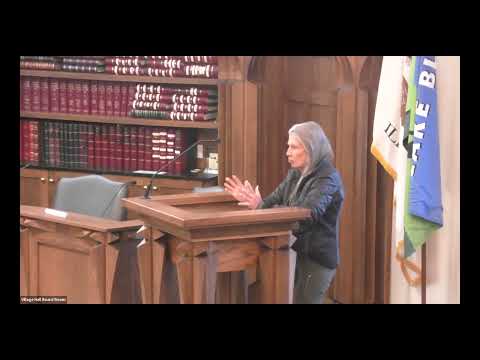
Stephanie Bjork told the Village of Lake Bluff Architectural Board of Review on Sept. 2 that a newly erected fence on Prospect Avenue blocks a historic shared driveway and urged enforcement of title restrictions recorded on an 1877 plat.
Stephanie Bjork, a Lake Bluff homeowner, told the Village of Lake Bluff Architectural Board of Review on Sept. 2 that a recently installed fence on Prospect Avenue has blocked what she says is a historic shared driveway and infringes on title restrictions recorded on an 1877 camp meeting plat. Bjork urged the board to investigate enforcement of the early plat restrictions after she said the Lake Bluff History Museum and other local custodians refused or failed to produce the documents she needs to substantiate her claims.
Bjork spoke at public comment and described her property at 414 East Prospect Avenue and related title language she said remains on her deed. She said her house was rebuilt under village conditions that required the exterior be unaltered and that many original boards were preserved; she said the title restrictions from the 1877 plat—referenced in an appellate and Illinois Supreme Court case she cited as Bjork v Davis—are on her title and should be enforced equally.
Bjork said a roughly 20‑foot section of fence recently was erected that appears to block her access to a shared easement she and a neighbor historically used as a driveway. She told the board that contractors who priced storm and roof work required use of that side access for dumpsters and staging and that the fence prevents necessary repairs. Bjork also said she filed FOIA requests to obtain copies of the historic plat and other documents but that custodians told her they are managed by a nonprofit historical organization and thus not subject to FOIA; she said she has not been provided the records she requested.
Board members said the topics Bjork raised—title disputes and records held by a nonprofit—largely lie outside the Architectural Board’s authority. One member advised that the village code contains an appeal procedure and cited Section 9‑1‑24(a)(4) (the code section noted during the meeting) as the path to seek an interpretation or appeal. Chair Hunter said he would walk the block to view the fence and referenced staff conversations already under way between Bjork and village employees, including Mr. Crook and Mr. Erwin.
Board members suggested Bjork could pursue a recorded‑document title search, contact the Historic Preservation Commission, or file a written appeal under the village code. Bjork said she had attempted to obtain records at the local library and history museum, that the museum’s online images were not legible for her needs, and that she had not received formal confirmation of the museum’s FOIA status.
There was no board motion or vote on the matter. The board adjourned after the public comment period. Bjork was told by board members and staff where to file a written interpretation or appeal and that village staff would continue to consult with her about the record requests.