Get Full Government Meeting Transcripts, Videos, & Alerts Forever!
Get email alerts on the Municipal Grocery Retailers Tax topic
No spam. Unsubscribe anytime.
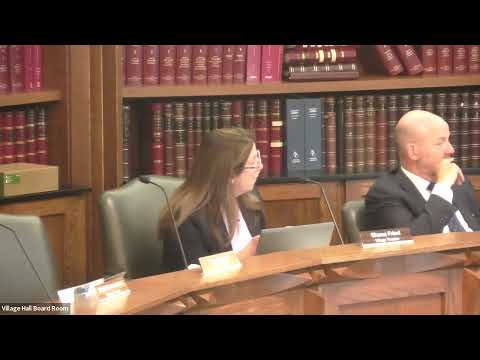
Lake Bluff trustees signal preference to replace grocery tax with 0.25-point home-rule sales tax
Summary
Trustees at a Sept. 8 Committee of the Whole meeting indicated a working consensus to seek an ordinance replacing the 1% municipal grocery retailers tax with an increase in the village's home-rule sales tax from 1.00% to 1.25%, directing staff to prepare ordinance language and note filing deadlines with the Illinois Department of Revenue.
At a Sept. 8 Committee of the Whole meeting, members of the Village of Lake Bluff Board of Trustees indicated a working consensus to replace the village's 1.0% municipal grocery retailers tax with a 0.25-percentage-point increase in the village's home-rule sales tax — taking that rate from 1.00% to 1.25% — and asked staff to prepare ordinance language and filing materials for board consideration.
The move is intended to preserve roughly $250,000 a year in local revenue the village expects to lose when the state-level grocery retailers tax was repealed and municipalities were permitted to adopt their own versions. Village staff noted the tax is a predictable revenue source because grocery purchases occur regularly, while trustees raised concerns that a grocery-specific tax is regressive and would fall disproportionately on lower-income households. Trustee Susan Reiter, chair of the finance committee, said, "I would be behind a 1.25 sales tax in lieu of a 1% grocery tax."
The board did not take a formal vote on an ordinance on Sept. 8; rather, trustees expressed a consensus preference and directed staff to return with a draft ordinance for a workshop or board meeting. Peter, a village staff member, told trustees, "It has to be filed with the Department of Revenue by October," referring to the filing deadline with the Illinois Department of Revenue (IDOR) to implement a municipal grocery retailers tax without a gap. Staff and trustees discussed the potential for a brief administrative gap if the filing missed the deadline, and that a missed filing would delay municipal application of the tax for months.
Trustees reviewed alternatives discussed by the finance committee: maintain the municipal grocery tax, raise the home-rule sales tax (the option now preferred by several trustees), raise property taxes, or pursue spending reductions. Spending cuts were described as difficult given the village's planned capital program. Reiter said she viewed the choice as binary between adopting the grocery tax or increasing the home-rule sales tax by 0.25 points to make up the projected shortfall. Other trustees echoed concern about placing a new tax burden directly on groceries, observing that many nonresidents shop at the village's retail centers and therefore contribute to sales tax receipts.
The meeting record shows trustees also discussed how municipal revenues are fungible and how the village might choose in a future budget to allocate additional sales-tax revenue to the police pension or other accounts; no formal earmark was adopted. Trustees asked about data on what share of grocery sales came from Lake Bluff residents versus nonresidents; staff said fewer than half of certain sales-tax receipts come from village residents, though the transcript did not specify the exact dataset or methodology used to produce that figure.
Trustees referenced examples from other Illinois communities: some municipalities kept a grocery-specific tax, while others increased general sales taxes to capture more revenue. Participants also mentioned that only a small number of states maintain a statewide grocery tax and noted political rhetoric in Springfield about the state-level tax repeal. IDOR has published technical guidance and suggested ordinance language to municipalities that adopt a local grocery retailers tax; staff said the village would use IDOR's guidance if it proceeds.
Next steps identified at the meeting: staff will prepare ordinance language for review at a workshop and provide the board with the technical filing requirements from IDOR. Any formal adoption and the effective date of a local tax will depend on timing of the ordinance and IDOR filing; staff warned that missing the Oct. 1 filing window would create a temporary gap in application of a local grocery tax and that the village could choose instead to implement an increased home-rule sales tax if the board so votes.
There was no final board ordinance vote on Sept. 8; trustees adjourned after directing staff to return with ordinance language and scheduling options for a workshop or village board meeting where a formal vote could occur.