Get Full Government Meeting Transcripts, Videos, & Alerts Forever!
Get email alerts on the Redistricting topic
No spam. Unsubscribe anytime.
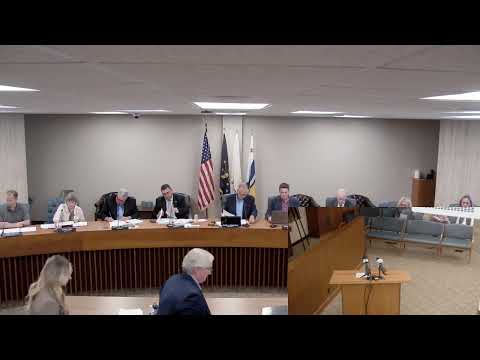
County council narrowly rejects resolution urging Indiana to avoid mid‑decade redistricting
Summary
A council resolution urging the state to reject mid‑decade congressional redistricting failed 5‑4 after several hours of public testimony; proponents argued the change would be undemocratic and costly, while opponents said redistricting is a state issue and beyond the council's direct authority.
A resolution urging Indiana lawmakers to reject a mid‑decade redistricting effort failed on a 5‑4 roll call at the Saint Joseph County Council meeting Sept. 9 after more than an hour of public testimony.
The resolution, filed by Council members Jennifer Shabazz, Mark Catanzarite, Diana Hess and Brian Tanner, said the council believes a statewide mid‑decade redistricting would "undermine our most sacred civil liberty" and called on Indiana to reject such a move. Council members voted down the resolution 5‑4.
Why it matters: supporters called the proposed mid‑decade remap a partisan effort that would discourage voter participation and impose large costs on taxpayers; opponents said the county council cannot prevent state action and that the issue should be addressed to state lawmakers or through courts if unlawful.
What the resolution said and who sponsored it Council member Jennifer Shabazz introduced a resolution titled "to protect fair and transparent redistricting," which cited Article I, Section 2 of the U.S. Constitution, the Indiana Constitution, and the Indiana Supreme Court case Peterson v. Norse as context for basing apportionment on decennial census data. The petitioners listed on the resolution were Jennifer Shabazz, Mark Catanzarite, Diana Hess and Brian Tanner.
Public testimony Dozens of residents spoke in favor of the resolution. Former state senator Douglas Hunt said, "if we really believe in founding traditions, of our country, we should really respect the restriction to redistrict only after every 10 year census." Douglas Hunt asked the council to send a message to Indianapolis.
Other supporters cited public trust, democratic norms and the financial cost of a special session (the resolution referenced a roughly $30,000 per‑day cost). Daniel Kameta cited national polling showing broad voter concern about gerrymandering and urged a unanimous council vote. Multiple speakers called the mid‑decade effort partisan and warned it would "disenfranchise" voters.
Council debate and outcome Council debate divided largely on jurisdictional and prudential lines. Council member Brian Rutten said the legislature has authority to pursue redistricting and encouraged constituents to contact their state representatives and senators. Council president Daniel J. Schutzel (recorded in the meeting as President Schutzel) and some members argued the council's resolution would not change state action.
The roll call was recorded as follows: yes — Diana Hess, Mark Catanzarite, Brian Tanner and Jennifer Shabazz; no — Malcolm Thomas, Paul Figg, Councilwoman Drake, Brian Rutten and President Schutzel. The clerk recorded the motion as failing by a 5‑4 vote.
What the record shows Supporters framed the issue as one of voting rights, tradition and trust in government; opponents emphasized the council's limited authority over state redistricting and criticized the resolution as largely symbolic. The vote ended with a narrow majority opposed to the local statement asking the state to forgo a mid‑decade remap.
Next steps The council's vote does not change state action; if the Indiana legislature proceeds with mid‑decade redistricting, challenges would be decided at the state and federal levels. The resolution and the council's debate create a public record the petitioners and members of the public said they would use to press state lawmakers.