Get Full Government Meeting Transcripts, Videos, & Alerts Forever!
Get email alerts on the Drinking Water Health topic
No spam. Unsubscribe anytime.
Residents, health advocates press panel for numeric nitrate limits after years of contaminated wells
Summary
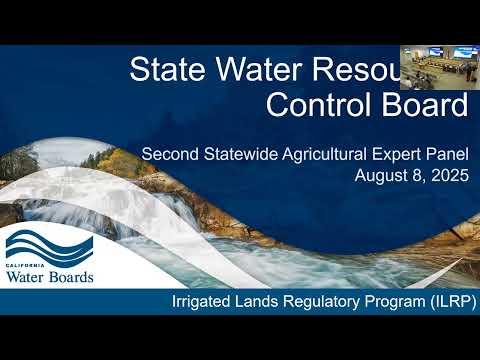
Residents from Salinas, San Gerardo and Central Valley communities told the State Water Resources Control Board’s expert panel on Aug. 8 that nitrate contamination has harmed health, increased household costs and left families relying on bottled or interim water supplies; NGOs urged enforceable numeric limits and faster regulatory action.
Community leaders and environmental groups urged the expert panel on Aug. 8 to recommend enforceable numeric limits on nitrate discharges and applications, saying repeated delays have left thousands drinking or paying for contaminated water.
Several residents described decades of exposure to nitrate‑impacted water. “We have been losing our families to cancer,” said Rosa Carrillo Orozco, general manager of the San Gerardo Cooperative, who recounted multiple replacement wells drilled as prior sources became contaminated. “We are here asking to put a limit. It's now. We can't afford to wait another 10 years.”
Kaya Rivers of Community Water Center summarized regional impacts: she said the Central Coast needs assessment lists 3,005 domestic wells and multiple public systems exceeding the nitrate maximum contaminant level (MCL), affecting roughly 14,000 residents, and that CV‑SALTS management zones estimate about 13,000 affected households in the Central Valley. Rivers told the panel that interim measures and bottled‑water programs are expensive and inadequate: “The real long‑term solution is to protect our groundwater basins from further nitrate contamination with limits.”
Environmental Law Foundation Executive Director Nat Cain argued that the panel’s recommendations could break a long history of delay. “If this panel doesn't recommend effective regulatory standards, if it recommends only further data collection, it will likely be another decade or more before the next opportunity will arise,” Cain said. He reviewed the regulatory timeline since the 1960s and warned that ongoing policy deferral risks leaving groundwater degraded for generations.
Community testimony underscored human and financial costs. Residents described medical conditions they attribute to contaminated water, repeated drilling of replacement wells, and the burden of purchasing replacement drinking water. One presenter said households were spending roughly $40 per month on replacement water after inflation adjustment. Presenters also described difficulties for elderly and disabled residents who must lift and handle 5‑gallon jugs.
NGOs and community lawyers asked the panel to evaluate the data but not to let perfect‑data standards justify continued delay. “We know enough to act now,” said NGO representative Marty Farrell of California Coastkeeper Alliance. Panelists and staff said the group will carefully review datasets; staff noted that legal standards under the Porter‑Cologne Act and the board’s nonpoint source policy require protective measures and timelines to achieve water quality objectives.
Next steps: The panel scheduled an Aug. 14 data meeting and told community representatives they will be given multiple listening sessions and opportunities to comment on draft recommendations. Board staff said the panel’s final report will be published and presented to the full State Water Resources Control Board.
Ending: Community and environmental witnesses asked the panel to recommend enforceable numeric standards or, at minimum, clear time‑bound triggers and actions. Panelists said they will balance those requests with technical analyses of the available data and the practicalities of implementation.