
Pinellas County survey shows strong overall quality of life but falls on utilities and disaster preparedness
Get AI-powered insights, summaries, and transcripts
Subscribe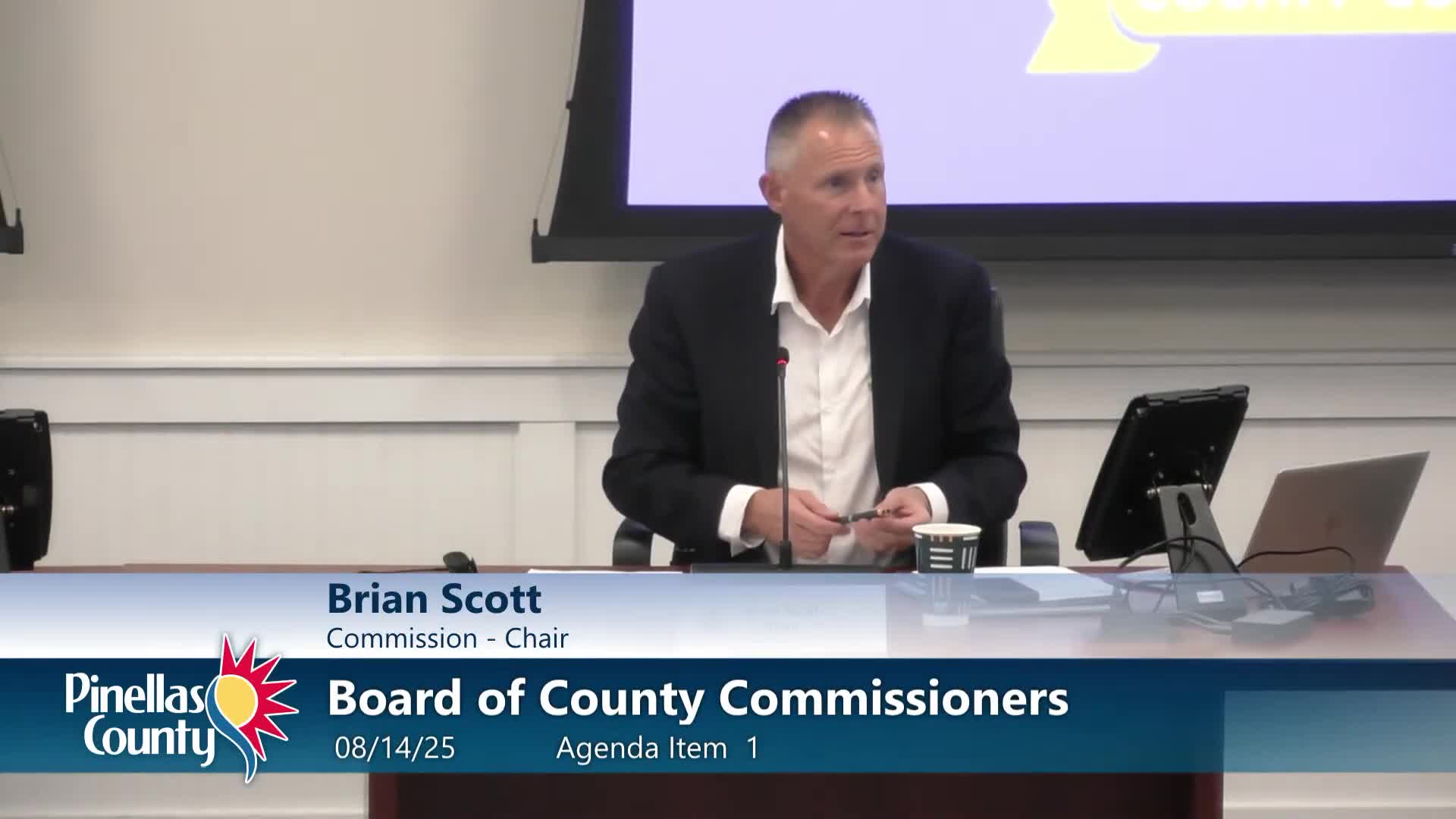
Summary
Polco and the National Research Center presented 2025 National Community Survey results to the Pinellas County Board on Aug. 14. The county’s overall quality-of-life ratings remain high, but multiple measures tied to utilities, storm readiness and mobility declined from 2024 and trailed some benchmarks.
Jason, a representative of Polco, presented results of the 2025 National Community Survey to the Pinellas County Board of County Commissioners on Aug. 14, reporting that most residents rate Pinellas County highly as a place to live while expressing concerns about utilities and disaster preparedness. "Residents continue to experience a high quality of life, in Pinellas County," Jason said during his presentation.
The Polco/National Research Center (NRC) report is based on a probability (random) mail survey and a separate open-participation online survey. Staff purchased a household address listing derived from U.S. Postal Service data, removed addresses outside Pinellas using county GIS boundaries, then randomly mailed invitations to 5,000 addresses beginning Feb. 27; 420 completed responses from that probability sample form the basis of the formal report. An open, countywide online survey collected an additional 1,904 responses; the combined total of completed surveys reported for 2025 was 2,324.
Why the results matter: The NRC benchmarking permits comparison with a national rolling database of roughly 500 jurisdictions, and a custom cohort of 19 large communities selected by Pinellas County. Officials said they planned to use the data to inform budget and program priorities before finalizing the fiscal 2026 budget.
Key findings presented by Polco included: more than eight in 10 residents rated Pinellas County positively as a place to live; many economic and cultural measures scored at or above national and custom benchmarks; mobility and ease of travel by car showed statistically significant declines since 2024; and multiple utility and emergency-preparedness items — including sewer services, power utilities, stormwater management and overall emergency preparedness — fell from 2024 and in several cases were below comparisons.
Polco explained methodology and statistical thresholds: items were reported as “similar” to national benchmarks if within 10 percentage points of the rolling national mean, and changes over time were flagged as statistically significant when they differed from the 2024 rating by at least 6.7 percentage points. The presenter also noted that 122 evaluative items were rated: 9 were higher than national benchmarks, 101 similar, and 12 lower; when compared with the custom cohort of 19 communities, Pinellas rated higher on 50 items and only one item — feelings of safety from flood, fire or other natural disaster — was lower.
Commissioners asked for more geographically disaggregated data. Commissioner Flowers and others asked Polco to break out utility-related and transportation items by cities vs. unincorporated areas and by demographic cross-tabs (income, length of residency, etc.) so county staff can identify where services or perceptions differ. Jason said those breakdowns exist in the interactive report and can be provided as PDFs.
Polco and county staff also flagged storm-related context: surveys spanned pre- and post-hurricane season and the presenter said the team planned to mark items plausibly affected by storm experience. The survey included custom Pinellas questions about priorities for future investment; stormwater and water/sewer systems ranked highest in residents’ stated importance, followed by traffic mitigation, housing affordability and beach erosion mitigation.
Officials said the NCS results would be used as a starting point for follow-up analysis and to identify areas for deeper study or targeted outreach.
Ending: County staff and Polco agreed to return disaggregated tables and to supply additional cross-tab analysis on utility and mobility items. Commissioners asked that results be shared with municipalities and partner agencies for local follow-up; no formal policy action was taken at the Aug. 14 work session.