
Local groups, city discuss cooperative grocery and grocer recruitment for North Killeen
Get AI-powered insights, summaries, and transcripts
Subscribe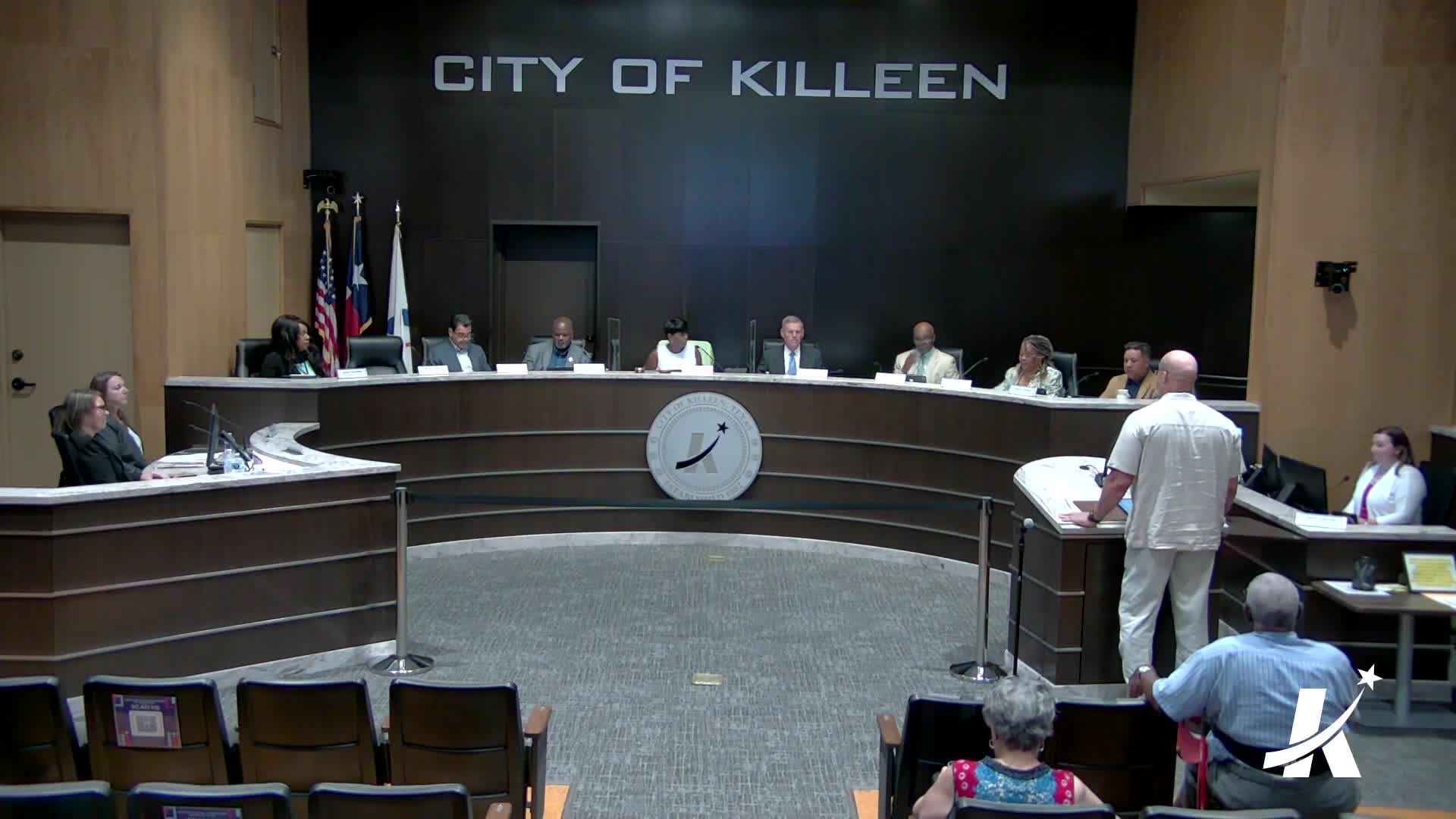
Summary
Community organizers and the Innovation Black Chamber of Commerce presented competing plans to address North Killeen’s long‑standing grocery access concerns; council members pressed for concrete developer commitments, and staff repeated that a city role would be limited to incentives and contract administration.
Community organizers and a local business development group used Killeen City Council’s Aug. 5 meeting to press for action on a persistent grocery access problem in North Killeen, presenting two different approaches and drawing repeated questions from council members about timelines, costs and what a city contribution would accomplish.
Community Hands of Central Texas and a separate group led by the Innovation Black Chamber of Commerce outlined different paths. Folly Brown of Community Hands summarized results from an interest survey and local meetings, saying 188 people responded and about 36 signaled interest in leadership roles in a cooperative grocery effort. “The cooperative grocery store is quite different from the traditional store because it’s people centered, people valued over profit,” Brown said. Dr. Sandra Crossley of the Innovation Black Chamber of Commerce outlined a proposed 24‑month, paid consulting and recruitment effort to attract a grocery operator, estimating a phased, four‑stage consulting engagement and requesting the council consider a professional services agreement.
Why it matters: Council members framed the problem as both an economic and operational question — a grocer needs steady foot traffic and reliable infrastructure to survive, while a cooperative model depends on community investment and has a longer timeline. Council members repeatedly asked whether a single, near‑term payment would guarantee a store, and presenters repeatedly said it would not. “There are no guarantees in business,” Crossley told the council, calling her proposal a structured, data‑driven recruitment and outreach program.
Key points and council response: Presenters described two distinct models. Brown emphasized a cooperative approach that can start small — including mobile or truck‑based operations similar to an Austin pilot cited in the presentation — and stressed local grower participation and community ownership. Crossley presented a recruitment plan that included market analysis, targeted outreach to supermarket executives, an on‑site marketing trip for executives, and an offer to match $50,000 in community contributions if the council authorized funds and a contract was negotiated. Crossley said the $50,000 would be used as part of an incentive/recruitment package and that the Innovation Black Chamber would pledge a match in value.
Council members pressed on several recurring topics: whether a grocer had already committed, how much the city would have to subsidize real estate and infrastructure, whether the city should reopen a formal request for proposals (RFP), and how any incentive dollars would be conditioned. Councilmember Segarra and others pointed out that existing downtown grocery or market operations already serve some residents and asked whether a cooperative or small‑format grocer could sustainably compete with larger chains. Councilmember Solomon and others asked for a clear, simple explanation of what a $50,000 contract would buy; Crossley and other presenters responded that the amount would fund consulting, outreach and recruitment rather than guarantee store construction.
Discussion vs. decision: The council did not adopt a new contract or allocate funds during the meeting. Multiple council members and staff reiterated prior council direction: in July the council made a motion of direction to explore options and to seek up to $50,000 if available at year end, but staff said that any city contribution would be subject to budget availability and contract terms. Several council members and presenters urged the three active local groups engaged on the issue to coordinate, and Councilmember Solomon recommended next steps: a nondisclosure agreement (NDA), a letter of intent (LOI) if a private developer or grocer is identified, and reopening an RFP when appropriate.
Next steps and context: Staff said a follow‑up presentation on grocery store recruitment is scheduled in about two weeks; presenters agreed to provide additional materials about similar Austin efforts and to work with city staff on next steps. Several council members said they would prefer a formal RFP and a public procurement process to any ad‑hoc arrangement, and that the city’s role would be to evaluate proposals when a grocer or developer made an offer that could trigger incentives, abatements or infrastructure commitments.