Get Full Government Meeting Transcripts, Videos, & Alerts Forever!
Get email alerts on the Legal Bills Attorney Conduct topic
No spam. Unsubscribe anytime.
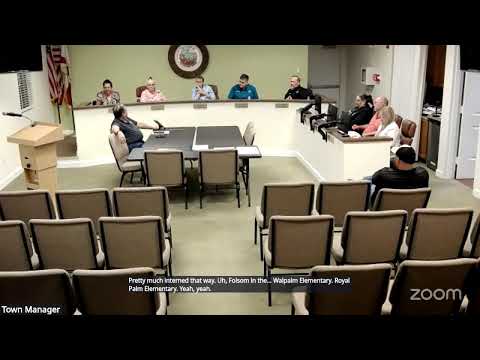
Council approves final invoice to prior town attorney amid questions over outside contacts and billing; town attorney urges single legal conduit
Summary
The Town Council approved payment of outstanding invoices to prior counsel on Sept. 3 while expressing concern about line-item charges and direct council contacts with outside counsel; the town attorney instructed council members to route outside-legal requests through his office going forward.
At the Sept. 3 meeting the Town Council voted to approve payment of outstanding invoices from the town's former outside counsel (invoice list dated through Aug. 11, total $11,183.10 on the presented bill list). A motion to pay the bills passed by a 4–1 vote after councilors debated whether to delay payment pending clarification of specific billed entries.
Several council members asked for item-by-item clarification of billing lines that show contacts with council members on various dates in July, requesting that the invoices identify which council member corresponded with the firm on each line. Councilor McClendon and others said they had contacted the prior attorney for limited, benign clarifications and asked whether those calls should have been routed through the town attorney. One council member asked the town attorney to supply initials for entries and to verify whether the listed dates correspond to phone calls or meeting attendance.
Town Attorney Kurtz told the council that retained outside counsel operate under his direction as town attorney and that council members should not directly engage outside retained counsel without informing him. Kurtz said that if council members contact outside counsel without notifying the town attorney it creates billing and messaging problems and may raise questions about interference in an active personnel matter. He said he will act as the conduit to outside counsel and will review any prior communications to identify which charges are appropriate for payment and which require follow-up.
Public commenters expressed concern that council members contacting outside investigators and lawyers could be improper, and some urged a review of billing and of the scope of an HR investigation that had been conducted. One commenter said the matter under investigation was now the subject of a review by the state attorney and urged care and transparency.
Councilors ultimately voted to pay the presented bill list to close the matter, while several asked staff to return later with documentation tying billed time entries to council communications and to explain any future protocol for council contact with outside counsel.