
Odessa council approves 2025–29 HUD consolidated plan and 2025 annual action plan
Get AI-powered insights, summaries, and transcripts
Subscribe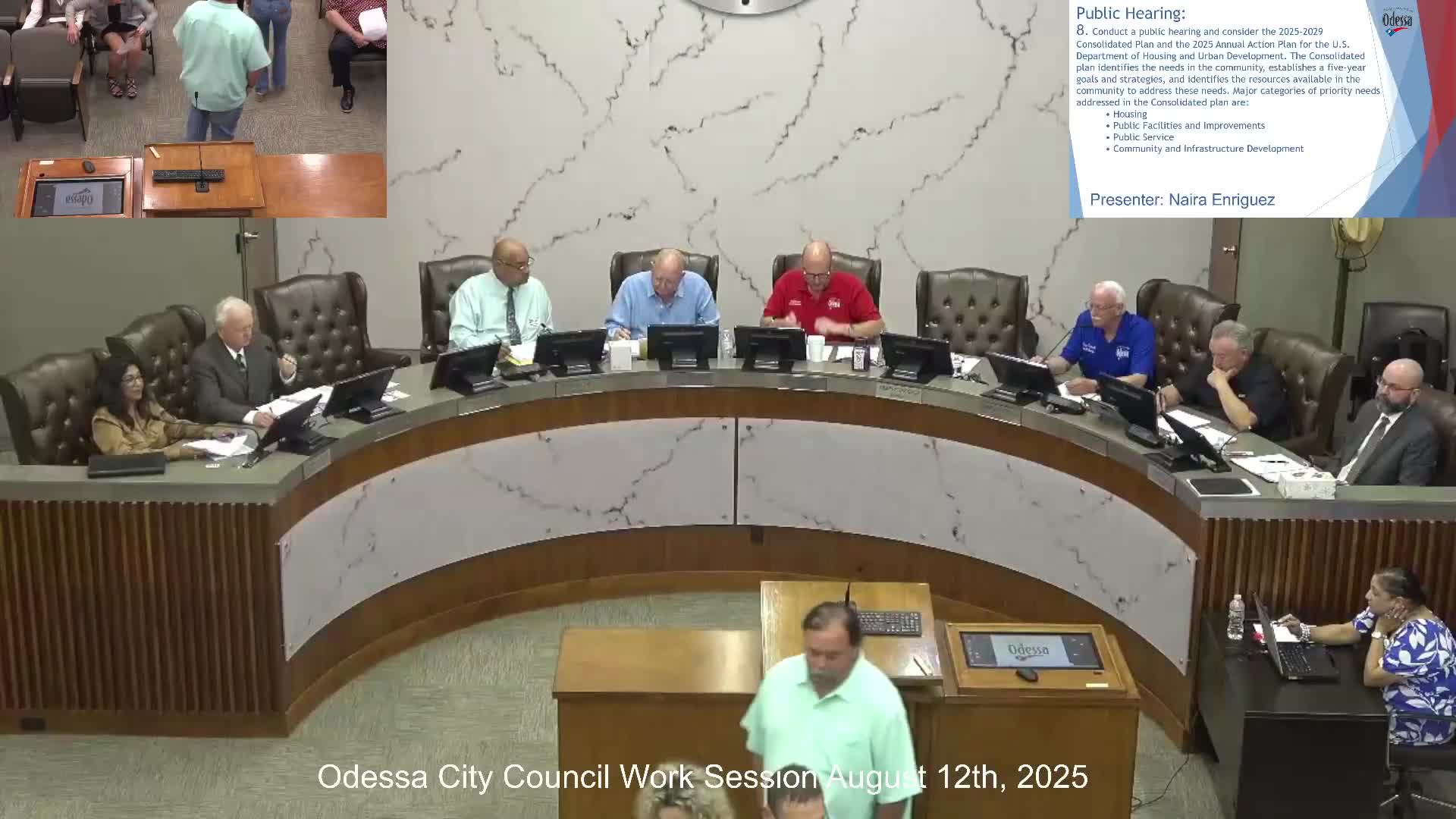
Summary
The City of Odessa approved its five-year HUD consolidated plan and the 2025 annual action plan after staff said the documents reflect extensive public outreach and must be submitted to HUD by Aug. 16.
The City of Odessa City Council on an aye vote approved the 2025–2029 Consolidated Plan and the 2025 Annual Action Plan, documents required by the U.S. Department of Housing and Urban Development that set five‑year goals and one‑year objectives for CDBG, HOME, ESG and HOPWA funding.
City staff said the plans reflect more than a year of outreach and must be submitted to HUD by Aug. 16. "We are now in the final phase, the public comment public review and comment phase," said Karen Dash, the consultant the city contracted to assist with the plan. Dash and city staff reported more than 550 citizens and 20 agencies participated in engagement activities and that the community survey returned about 320 responses in English and Spanish.
The consolidated plan identifies priority needs including affordable housing, public facilities and improvements, public services and community infrastructure. Staff presentations highlighted rental affordability gaps in Odessa: HUD and third‑party data cited in the presentation put a two‑bedroom fair‑market rent at $1,669 while the report estimated an affordable monthly rent for a minimum‑wage worker at $377.
Staff emphasized several recurring community priorities reflected in the plan and supporting materials: preserving and repairing affordable housing, expanding homeownership opportunities, increasing rental assistance and services for people experiencing or at risk of homelessness, and improving public facilities for seniors and youth. Dash said focus groups and interviews also raised interest in a daytime resource center for people experiencing homelessness.
Council members asked about changes from prior plans and allocations. A staff member noted an increased need for rental assistance, citing school‑district data that showed roughly 1,600 homeless students at a recent count. The council opened and closed a public hearing without speakers and then voted to adopt the consolidated plan.
The council vote was recorded as a motion by Council member Connell with a second from Council member Haney; the motion carried. Staff said finalized documents will be submitted to HUD by the stated deadline.