
Finance committee rejects Enterprise Fleet lease proposal, asks staff to pursue alternatives
Get AI-powered insights, summaries, and transcripts
Subscribe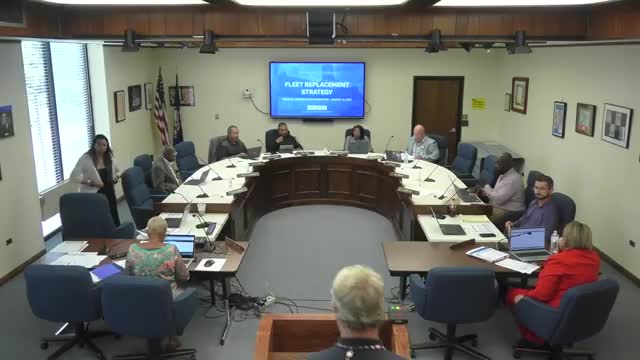
Summary
Lynchburg City Schools facilities staff presented a plan to replace aging vehicles through an Enterprise Fleet lease; the finance and facilities committee voted unanimously to halt that proposal and asked staff to explore other options and funding approaches.
Lynchburg City Schools’ Finance & Facilities Committee on a unanimous voice vote declined to advance a proposed vehicle-lease program with Enterprise Fleet and asked staff to pursue other options.
The committee’s action follows a presentation by Donald Floyd, the school system’s director of facilities, who told the committee that about 65% of the district’s light-duty fleet is more than 10 years old and that the division has been budgeting about $30,000–$45,000 annually for vehicle replacement. Floyd said the district currently replaces roughly two to three vehicles per year at that funding level and that, at that pace, it would take more than a decade to modernize the fleet.
Floyd summarized a leasing proposal from Enterprise Fleet that would replace 18 vehicles in year one under a lease program; the handout discussed in the meeting projected roughly $190,000 of year‑one vehicle purchases and included a longer-term lease cost column the presenter described as “around $3,300,000” over a multi‑year horizon. Floyd said the program would shorten the replacement cycle to a five‑year cadence, reduce downtime and maintenance, and increase resale value by turning vehicles at an optimal time.
Committee members focused on the financial tradeoffs. One member noted the district’s current in‑house replacement estimate of about $260,000 per year would allow buying five to six vehicles annually, compared with the Enterprise plan’s larger upfront cost and higher long‑term lease exposure. Committee members asked whether the district or the city fleet could provide alternative maintenance or procurement options and pressed staff on where additional future funds would come from if annual lease payments rose.
After discussion, a committee member moved that the committee not move forward with Enterprise and instead explore other options; the motion was seconded and passed by unanimous voice vote. Committee members asked staff to return with alternatives and clarified that the committee decision stops the proposal at the committee level and does not go forward to the full school board.
The facilities director said the district can use the national SOARscribe/Enterprise contract to move quickly if the board later decides to pursue that route. Floyd also flagged that some vehicles require up‑fit work (shelving, dump bodies, plow hookups) that adds to initial costs, and that lower annual mileage for school vehicles helps resale values under either procurement model.
The committee discussion also touched on longer‑term budget practices: members pressed for a consistent replacement allocation in the annual budget or inclusion of fleet replacement in the district’s capital improvement planning to avoid recurring shortfalls.