
State Rep. Helen Kerwin briefs Burleson ISD trustees on 89th Legislature education actions and HB2 teacher-pay provisions
Get AI-powered insights, summaries, and transcripts
Subscribe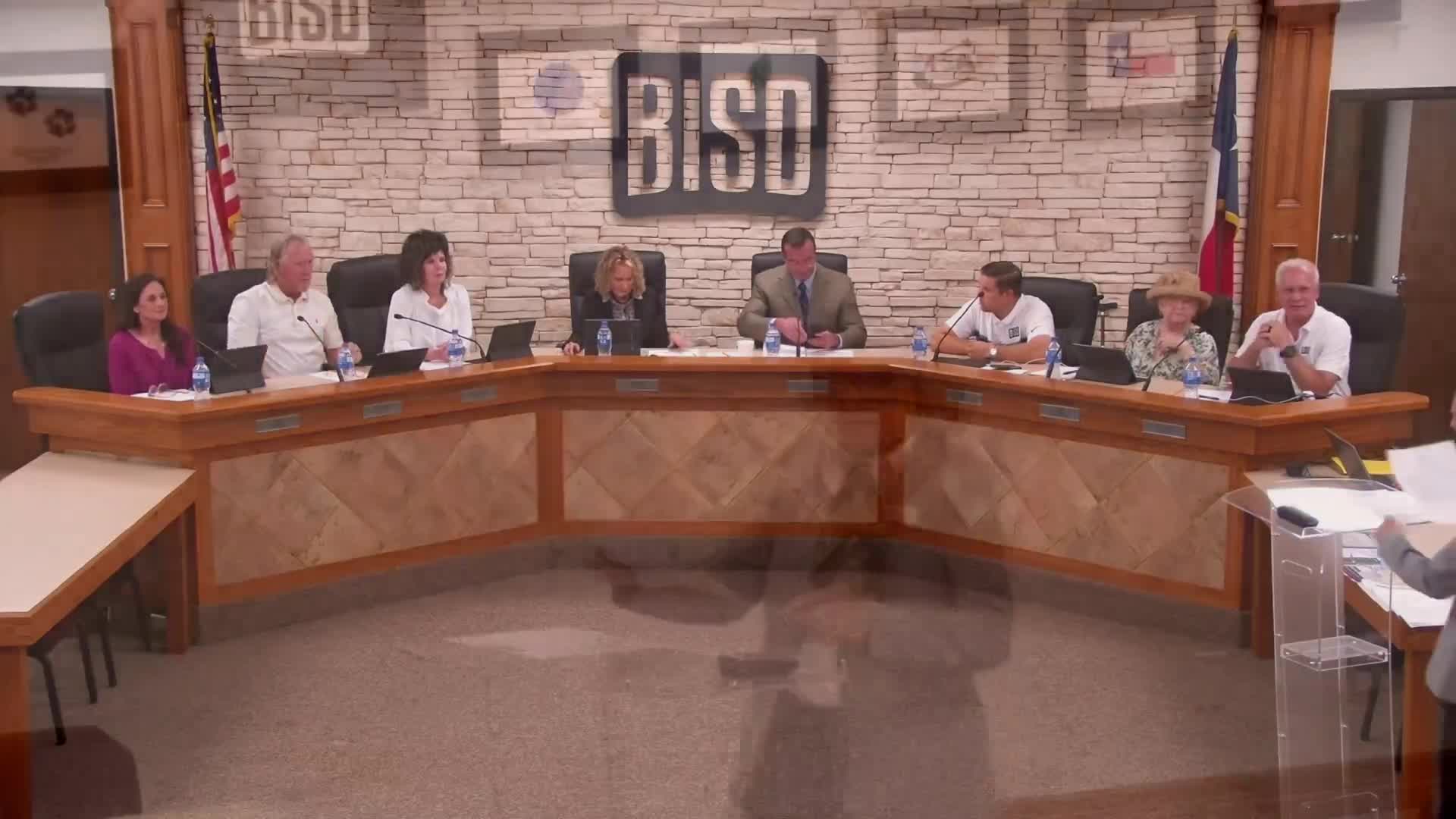
Summary
State Representative Helen Kerwin used the public comment period on Sept. 8 to summarize outcomes from the 89th Texas Legislature and special sessions, focusing on school-choice provisions, parental-rights bills, and HB2 — the education reform bill she described as concentrating on teacher pay, early literacy and special education funding.
At the opening of the Sept. 8 Burleson ISD Board of Trustees meeting, Representative Helen Kerwin offered a legislative update covering the recent 89th legislative session and two special sessions, highlighting bills the representative said affect public education and school districts.
Kerwin told trustees that the session produced measures she described as advances in border and grid security and listed legislative outcomes she said concerned education: parental-rights bills, school-choice provisions, a new civics and financial-education graduation requirement, and changes to statewide assessments. In the boardroom she emphasized HB2, which she called an “education reform bill” focused on recruiting and retaining teachers through permanent pay increases for classroom and nonadministrative staff and targeted funding for rural and mid-size districts.
Kerwin summarized aspects of HB2 as she understood them: permanent teacher pay increases targeted by district size, funds for special education, expanded early-education/pre-K funding, and shorter interim assessments to replace the longer STAAR administration. During her remarks she cited specific funding figures as presented to the trustees, including amounts she described for teacher recognition and special-education support, and said the bill’s funding comes from state general revenue rather than property taxes. Kerwin left written materials on school choice, property-tax implications and the state budget for district consideration.
Kerwin also addressed school-choice language enacted in the session and said the final bill requires at least one request for proposals for vendors and curriculum to prevent sole-source arrangements. Her comments were delivered during the public-comment period; trustees did not engage in formal Q&A because the board’s rules restrict questions during public comment. Kerwin closed by urging trustees to review the materials she provided.
There was no board action tied to the public comment; the remarks served as informational material from the representative to the trustees.