Get Full Government Meeting Transcripts, Videos, & Alerts Forever!
Get email alerts on the Housing topic
No spam. Unsubscribe anytime.
Cape Cod delegates hear unanimous working-group support to study regional transfer fee to fund year‑round housing
Summary
Barnstable County Administrator Michael Dutton told the Assembly of Delegates that a county housing working group endorsed studying a regional real‑estate transfer fee as one possible revenue source; county and local housing leaders urged more research and a regional approach rather than immediate legislation.
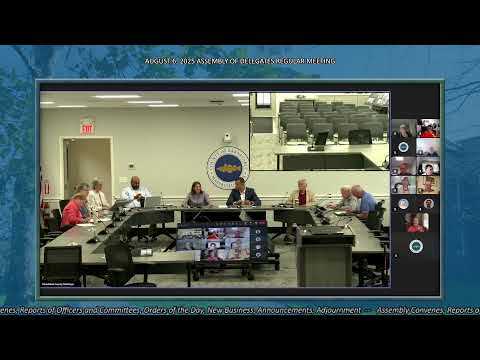
Barnstable County Administrator Michael Dutton updated the Cape Cod Regional Government Assembly of Delegates on Aug. 6, 2025, saying the county's housing working group has prioritized exploring a regional real‑estate transfer fee to raise money for year‑round and attainable housing.
The working group, Dutton told the assembly, recommended further research into a luxury transfer fee, year‑round deed restrictions, lease‑to‑locals incentives and improved coordination among towns and service providers. The group's members, he said, "were unanimously supportive" of pursuing study of a transfer fee as one funding option.
The recommendation matters because delegates, regional housing advocates and business leaders said the Cape faces a continuing shortage of year‑round housing for working households. Delegates asked how a transfer fee would be structured, whether it would require new county administration, and how revenues would be used; Dutton and outside speakers said those details need additional analysis.
Dutton described the working group's scope and recent activity, including an RFP to continue the shared regional housing services office (initially funded by federal ARPA dollars) and an examination of options such as year‑round deed restrictions, lease‑to‑locals programs and a possible regional pool of funds. He said registry of deeds revenue, a key operating source for the county, was about 6% lower in the most recent quarter compared with the same quarter last fiscal year.
Rob Brennan, chief legal officer for Housing Assistance, told delegates: "This is no longer a cyclical shortage. It's an existential crisis." Brennan urged a regional approach to funding and administration, citing the Cape and Islands Water Protection Fund as a model for delivering large, regional infrastructure investments. He said a regional mechanism would create a predictable revenue stream for building and preserving year‑round homes and urged the assembly to consider filing a home‑rule petition to authorize a transfer fee.
Paul Nizuki (identified in the transcript also as Paul Muswick), introduced as the Cape Cod Chamber of Commerce executive director, said the Chamber backed a regional transfer fee as a way to protect the "missing middle" workforce and recommended regional pooling because splitting revenue across 15 towns would dilute impact. He gave examples of variable yields by town and urged delegates to require revenue projections before deciding how to use proceeds.
Ella Sampoo, a community organizer with Community Development Partnership, urged delegates to focus the fee on luxury and second‑home purchases and to design distribution rules so contributing towns see proportional benefits. "We're really talking specifically about luxury homes, second homes, third homes, fourth homes that are owned by multimillionaires and billionaires," she said, arguing that a transfer fee can create a new funding bucket for attainable housing that is not already tied up by short‑term rental or wastewater priorities.
Delegates raised legal and procedural questions: whether a transfer fee would require a county ordinance, a home‑rule petition, or approval by voters; whether funds would be managed by a new county entity or an existing structure; and how to limit unintended consequences such as shifting costs to owners of lower‑value sales. Dutton and several delegates suggested next steps: deeper revenue modeling, legal review of vehicles (ordinance vs. home‑rule petition), and public committee hearings so the assembly can solicit broader input before making a formal proposal.
The assembly did not take a formal vote on a transfer fee at this meeting. Dutton said the working group will continue its research and can return with revenue estimates and recommendations; several delegates asked that the topic be prioritized and scheduled for committee discussion so the full assembly can review specific proposals in public.
Background noted during the meeting: the working group has nine members; Nantucket has tested a deed‑restriction and transfer‑fee approach (including an initial $2 million allocation and a 20% cap example mentioned in working‑group discussions); some towns on the Cape have adopted seasonal community designations under the state Affordable Homes Act; and the county is studying 5‑ to 10‑year financial indicators to inform long‑term planning. Speakers repeatedly emphasized the difference between "affordable" housing (typically income‑restricted) and "attainable" housing for middle‑income workers, and recommended that any revenue source be tailored to local needs and distributed equitably across towns.
Next steps identified in the meeting record included additional legal review, regression and revenue projections, consultation on whether Community Preservation Act funds could be used for deed‑restriction purchases, and further working‑group meetings and committee hearings before any formal petition or ordinance is drafted.
For now, delegates agreed only to continue discussion and information‑gathering rather than to enact a new fee or petition the legislature at this meeting.