Get Full Government Meeting Transcripts, Videos, & Alerts Forever!
Get email alerts on the Elected Charter Commission topic
No spam. Unsubscribe anytime.
County counsel outlines process, timing and legal limits after regional commissioners back elected charter commission
Summary
Barnstable County counsel Lauren Goldberg said a resolution the regional commissioners adopted supporting an elected charter commission will be filed with county officials and, if submitted to the secretary of the Commonwealth, put on the next biennial state ballot, with candidates required to gather 20 certified signatures and the elected commission limited to an 18-month period to report.
Barnstable County counsel Lauren Goldberg said a resolution the county—s regional commissioners adopted supporting an elected charter commission will be filed with county officials and, if filed with the secretary of the Commonwealth, placed on the next biennial state ballot.
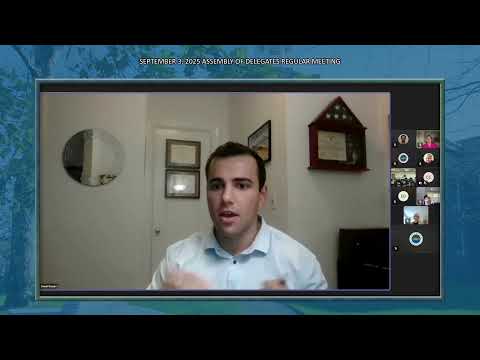
The counsel—s explanation matters because the commissioners voted Aug. 27 to forward a resolution asking voters whether they want an elected charter commission for Barnstable County. "Once that has been filed with the secretary, it would be included on the biennial state election," Goldberg said, adding that nomination papers for charter commission candidates are issued by the secretary and that "they would need 20 certified signatures." She also told delegates the commission would have 18 months to make a recommendation to voters.
Goldberg said two separate bodies of law govern how elected officials and public bodies may participate in the ballot question: the campaign finance statute and the conflict of interest statute. "Elected officials are allowed to have an opinion," she said, but the campaign finance law "prohibits the nonrequested distribution of information" about a ballot question. She said public bodies may post information on their websites but must make it click-to-open rather than distributing unsolicited emails that argue for a position.
Delegates pressed Goldberg on the expected timeline and practical effects. Delegate Kyle Frizell (Brewster) said the process described would likely place the ballot question on November 2026 ballots and, if voters approve, any new charter would not be final until a later vote (delegates and counsel discussed a likely 2028 follow-up vote and that, without special legislation, implementation or first elections under a new charter could be as late as 2030). Goldberg confirmed the basics of that timeline and said the elected commission—s report-and-recommendation schedule and any transition provisions would be set by the charter commission itself and could include transition language to change when officials would take office.
Several delegates said they were frustrated the appointed five-year charter review process already under way had not been used to pursue faster, collaborative changes with the commissioners. Delegate Brian O'Malley (Provincetown) and others urged that the appointed Charter Review Committee could have worked with commissioners to produce a faster proposal; Goldberg said the elected-charter route is a separate, parallel statutory path and does not by itself invalidate the appointed committee or its work.
Goldberg also addressed a key substantive legal question: a provision in chapter 801 of state law that says, in effect, once a resolution for an elected Charter Commission is filed, no other proceedings for adoption of another charter or form of government for the county may go forward until voters decide the question. Goldberg said that language appears intended to prevent conflicting concurrent charter efforts, and that it could produce legal uncertainty if the assembly tried to put other charter amendments on the same ballot while a chapter 801 resolution is pending.
Delegates asked whether the regional commissioners— resolution had been formally filed with the secretary of the Commonwealth; Goldberg said the resolution had been filed with the commissioners and that notification to the secretary was required but she did not confirm a secretary filing date.
Delegates also asked about financing and staffing for an elected commission. Goldberg cited chapter 801, section 9(b), saying "within 20 days after election of a Charter Commission, the treasurer shall credit to the account of the commission with or without appropriation $35,000," and that additional funds may be appropriated up to a multiple of the initial amount if needed to complete the commission—s work.
No vote or ordinance by the Assembly of Delegates occurred during the discussion; the item was a presentation and question-and-answer session with county counsel. Delegates said they would discuss next steps, including whether to continue work of the appointed Charter Review Committee and how to respond to the commissioners— resolution.
What happens next: if the commissioners have filed their resolution, nomination papers for county charter commission candidates will become available from the secretary of the Commonwealth and must be certified in the towns where candidates circulate them; Goldberg advised gathering at least twice the required number of signatures to allow for disallowances. Goldberg and delegates repeatedly urged that public bodies and individual officials track campaign finance rules and conflict-of-interest requirements before disseminating material about the ballot question.
Ending: The assembly left the matter open for further committee and delegate action; Goldberg said she would answer follow-up legal questions and delegates signaled plans to continue outreach to towns and to the appointed Charter Review Committee.