
Nantucket Board of Health seeks data, legal review as septic-variance moratorium approaches end
Get AI-powered insights, summaries, and transcripts
Subscribe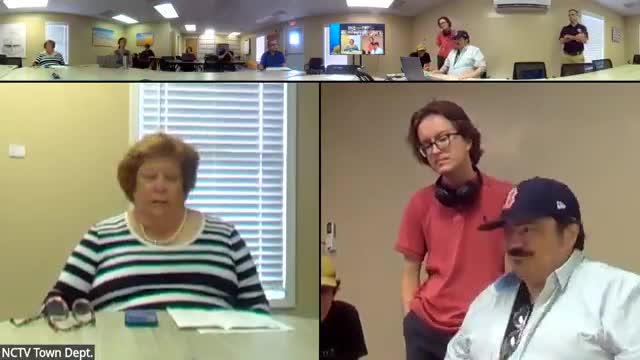
Summary
At a special Board of Health meeting, members debated limits on bedroom credits tied to nitrogen‑reducing septic systems in sensitive zones, agreed to schedule a follow-up meeting Sept. 11, requested staff produce zone and variance maps and a legal opinion, and said they may briefly extend a moratorium that expires Sept. 18.
The Nantucket Board of Health on a special meeting agreed to gather data, request a legal opinion and schedule a follow-up session as it considers how to handle septic-system variances in nitrogen- and pathogen-sensitive areas before a moratorium on variances ends Sept. 18.
Board Chair Anne Smith said the special meeting was called because the board has spent substantial time on “variances for homes in certain districts relative to septic systems.” Smith said the board has a moratorium on variances that “is coming to an end on the September 18,” and that members needed to decide whether to extend it briefly while staff collects information. "We have a moratorium on variances that's coming to an end on the September 18," Smith said.
The board’s discussion centered on whether existing local protections are adequate and where the town should require enhanced (nitrogen‑reducing) on‑site treatment systems — often called IA or ENR systems — which can allow higher bedroom counts under state Title 5 rules. Board member Gary (last name not specified) and others noted a tension between Title 5 allowances (which can permit more bedrooms with enhanced nitrogen removal) and local rules that in some districts limit bedroom credits regardless of technology.
Why it matters
The board framed the issue as a public‑health and water‑quality question tied to Nantucket’s single aquifer, groundwater recharge areas and surface waters. Several members raised concerns about nitrogen and other contaminants (including PFAS and pathogens) entering groundwater and surface waters from septic discharges, and whether granting bedroom credits for enhanced systems across parts of the island could increase loading. "We only have one aquifer and it's about water quality," board member Gary said. "We need to be mindful of our water supply."
What the board asked staff to do
Board members asked staff to prepare a concise packet ahead of a special meeting tentatively set for Sept. 11. The packet was to include: a grid or chart describing each protection zone (what restrictions are already in place and which are flexible); a one‑year lookback summary of variance applications with location and staff/board actions (to show any geographic pattern); and a GIS‑style overlay or summary showing where variance requests are concentrated. John, health department staff, summarized current regulatory constraints, including state Title 5 provisions and local watershed rules, and said staff can assemble the requested materials.
Legal review and data needs
Members agreed they need a legal opinion on the town’s existing authorities versus state requirements before making policy changes. "We need a legal opinion," Chair Smith said, asking town counsel to clarify what the board may and may not do under Title 5 and local regulations. The board also asked staff to identify the specific studies and findings (TMDLs, wellhead studies, recharge studies) that underpin existing protection zones so the board can state a factual basis for any rule changes.
Existing rules and examples discussed
John, health department staff, summarized the local patchwork the board is working with: Nantucket Harbor and Madaket harbor protection districts already have stricter requirements in place (including a one‑bedroom‑per‑10,000‑square‑foot policy the board has applied in those districts), Hammock Pond has a one‑bedroom‑per‑10,000 rule but does not require IA systems for new construction, and the DEP Zone 2 (wellhead protection) is a state‑designated recharge/wellhead district adopted locally. He also explained how Title 5 allows enhanced nitrogen removal systems (referencing the state’s ENR provisions) that can permit up to six bedrooms per acre where conventional systems yield four bedrooms per acre, and that bedroom credits tied to IA/ENR systems are a state regulatory option unless a local rule restricts them.
Alternatives discussed
Members discussed narrower, evidence‑based steps the board could take in the short term (for example, keeping the existing moratorium in place while assembling facts), and longer‑term options including a town subsidy or loan program to offset the extra cost of higher‑performance IA systems (a model the board noted is used in Barnstable County) and tightening specifications to require higher‑performance IA systems in protection zones if bedroom credits are to be granted. Several members said they prefer a stepwise, fact‑driven approach rather than an immediate broad restriction. "If we're going to allow more bedrooms, get the finest IA system you could possibly get," a board member repeated, paraphrasing a recommendation from an outside expert the board previously heard from Barnstable County.
Next steps and public procedure
The board tentatively set a special meeting for Sept. 11 to review the packet. If staff cannot produce the materials in time, the board said it will notify the public and is prepared to extend the moratorium briefly (members referenced a possible short extension to allow for review and public notice). The board also requested that staff identify which studies and legal authorities were used to adopt existing protection zones so the board’s rationale for any policy action is clearly documented.
Meeting outcome
No new local regulation was adopted at the special meeting. The board voted to adjourn at the end of the session. The board’s staff and members will prepare the requested materials for the Sept. 11 meeting and seek a legal opinion so the board can consider either returning to pre‑moratorium practice, adopting a refined policy for the affected zones, or extending the moratorium for a defined short interval while additional work proceeds.