
Historic District Commission approves 13A Willard changes but requires fixes to roof walk and front condenser
Get AI-powered insights, summaries, and transcripts
Subscribe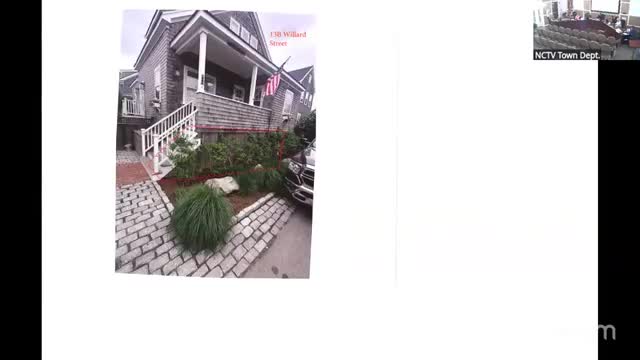
Summary
The HDC approved as-modified work at 13A Willard Street but ordered corrections after commissioners found the installed roof walk taller than approved and an AC condenser platform sited on the street side.
The Historic District Commission on Sept. 2 approved changes at 13A Willard Street subject to conditions after finding the installed roof walk higher than the approved drawings and an air‑conditioning condenser platform placed on the front (street) façade. Commissioners voted to require visual mitigation, relocation/ screening of the condenser and modest adjustments to the roof‑walk detailing.
Commissioners said the property’s vertical board skirting was acceptable but emphasized that any built work that differs from approved drawings must be returned to the commission for authorization. Commissioners noted the roof walk as photographed appears “at least a foot” taller than the application and discussed options short of complete reconstruction — including deeper fascia, an added horizontal band at the base of the roof walk and plantings to screen the platform. Several commissioners also said condensers should not be placed on the street side and directed the applicant to relocate them or provide a solution that avoids permanent street‑side visibility.
The commission adopted several conditions intended to lower the visual profile of the roof walk and obscure the condenser. The conditions included: planting two climbing hydrangeas evenly spaced along the front porch/porch skirt; extending the top fascia by a few inches (a 1x10 suggested) or applying an additional horizontal band to visually anchor the roof walk to the ridge; adding a horizontal weathering band/trim at the base of the vertical skirting (natural cedar or similar); and moving or screening the condensers off the street face. Commissioners left latitude for the chair or vice chair to approve minor façade details on return.
The applicant said the roof‑walk height resulted from interior accessibility work and that engineer Teague & Bond had been engaged for safety. A representative for builder Sam Herrick said the vertical plank skirting was selected to match other units in the condo association and that two large trees had been planted to screen the condenser platform from the street. Preservation staff asked commissioners to confirm whether an elevation certificate was on file for flood/stormwater considerations; staff noted FEMA/resilience factors would be relevant when changes are proposed in flood‑prone areas.
The commission recorded the vote to approve the conditions (four in favor, one opposed). The approval is conditioned on: (1) applicant submitting a short plan showing the fascia/band modification and placement of the two climbing hydrangeas; (2) relocating or screening the condensers off the street façade to the commission’s satisfaction; and (3) return to the commission if work requires removing or substantially altering the approved roof‑walk configuration.
The commission’s action is limited to design approval and does not relieve the applicant of building or zoning permits that may be required for setback, mechanical, or flood‑zone work.