Get Full Government Meeting Transcripts, Videos, & Alerts Forever!
Get email alerts on the School Enrollment Redistricting topic
No spam. Unsubscribe anytime.
Consultant presents updated enrollment forecasts; redistricting scenarios to be refined for fall decision
Summary
MP Planning presented updated 10-year enrollment forecasts and an initial redistricting sketch for Cheshire elementary schools, projecting roughly 200 additional students over five years and prompting staff and committee to refine boundary options before a fall Board of Education decision.
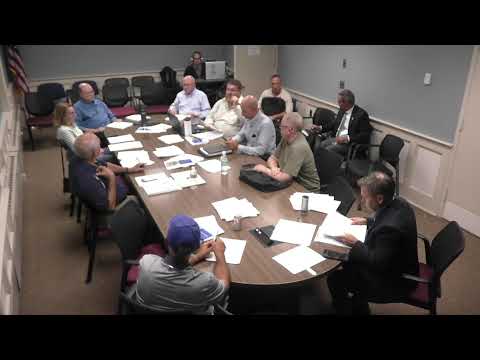
Mike Zuba of MP Planning presented updated 10-year enrollment projections and an initial redistricting scenario to the Cheshire School Building Committee, saying the work will guide but not decide boundary changes for the district’s elementary schools. The presentation identified recent housing activity and birth trends as the main drivers of near-term enrollment and proposed that the committee refine the earlier scenario used for the school construction grant.
The consultant’s update matters because new schools and boundary changes affect classroom capacity, bussing, staffing and the district budget. The study will feed into a Board of Education decision later this fall and is timed to inform the district’s budget process.
Zuba told the committee the firm updated kindergarten-through-6th-grade projections and tested three models (high, medium, low). He said the medium model “is the best” fit for redistricting work and that the district’s elementary enrollment is likely to rise into a peak around 2031–32. Zuba said recent higher birth cohorts and a cluster of new housing developments account for much of the near-term increase: roughly 650 recently built units and about 116 additional approved or planned units (Jack’s Farm and the Metro Realty project) are being tracked for student yield. After netting existing students, the firm estimated “about 200 more students that are gonna be impacting the school system over the next 5 years.”
Zuba explained methodology and capacity assumptions used for planning. The team applied a 20-student-per-classroom loading level and a 90% efficiency factor (a planning capacity yield of about 18 students per classroom) to create a planning capacity that includes headroom for uneven cohort sizes and a new‑school effect. He said the district’s elementary enrollment band in the first five years of the projection is relatively tight and shows a districtwide K–6 average near 2,400 students, with a possible peak around 2,500 in 2031–32. Zuba also described using residential multipliers and a student‑generation process to phase in students from developments that have not yet reached full occupancy.
Committee members and attendees pressed on specifics. One committee member asked whether bus-eligible students are assumed to ride; Zuba said routing work is being done with district transportation staff and that the analysis looks at routing feasibility rather than projecting exact ridership. He noted that bussing choices can alter cost: “they’ll look at it and say, oh, no. That’s gonna cost 2 extra buses,” which can make a scenario impractical. School staff confirmed they will get a preliminary week‑one 2025–26 enrollment extract to update geocoded addresses and finalize scenarios.
Committee chair Rich (speaking as the committee’s representative) reminded the public that the School Building Committee is paying for the enrollment study but “we are not deciders in any way when it comes to redistricting,” and said the Board of Education will make final decisions on attendance boundaries. Mike Zuba said his contract calls for producing multiple scenarios; the firm typically brings two or three options forward with pros and cons so district leaders can weigh capacity, transportation, staffing and public acceptability.
Next steps: consultants will geocode the 2025–26 preliminary enrollment when available, refine three scenarios tied to the medium projection, coordinate with transportation for routing and cost estimates, and return to the committee and the Board of Education in the fall (the consultant indicated a mid‑late fall window for decision support) so the district can finalize budgets and routes before the next school year.
Why this matters locally: the redistricting outcome will place students and families in new attendance zones, affect where future students attend the newly built North‑End (Barnum) school, and determine near‑term capital and operating costs for Cheshire Public Schools.