Get Full Government Meeting Transcripts, Videos, & Alerts Forever!
Get email alerts on the Public Safety Cameras topic
No spam. Unsubscribe anytime.
Riverview council approves one-year license-plate-reader contract amid surveillance concerns
Summary
At its June 16 meeting the Riverview City Council approved a one-year, $31,300 contract for Flock license-plate reader cameras for the police department after debate about privacy, maintenance costs and effectiveness.
RIVERVIEW, Mich. — The Riverview City Council voted June 16 to approve a one-year contract with Flock for license-plate reader cameras for the police department, approving a $31,300 initial contract as part of the consent agenda.
Council members debated privacy and civil‑liberty risks before the vote. “I just I don't know where that sort of thing will end,” Councilman Robbins said during discussion, describing concerns about a possible “surveillance state” and “Fourth Amendment issues.”
Police Chief Allen told the council the system can help identify stolen or wanted vehicles and said officers have used existing camera footage to solve crimes. “Just recently, I think we had, what, 10 uses we just used, within the year. So we've solved 10 crimes from those cameras this year, utilizing other department's cameras,” Chief Allen said. He described the proposed contract as a one‑year test so the city can assess community reaction and operational value; he also described how the plate‑reader system matches plate data to databases such as NCIC and what the transcript identifies as LEAN.
Supporters said the cameras can be a proactive tool for reducing vehicle break‑ins and catching suspects. “The benefit far outweighs any possible misuse or any bad actions by somebody. I fully support this,” Councilman Pray said.
Council members pressed for clarity on recurring costs. Chief Allen said the one‑year contract would cost $31,300; if the city renews the contract the next year the maintenance cost would be about $26,000 for that subsequent year. The chief said the vendor’s contract includes maintenance for the installed cameras.
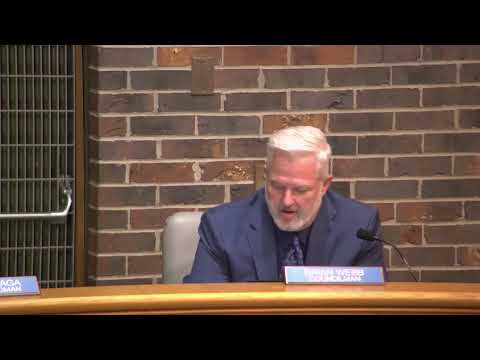
The contract was approved as part of the council’s consent agenda. The motion to approve the consent agenda was made by Councilmember Webb and supported by Councilmember O'Neil. Roll call in the transcript recorded yes votes from Councilmember O'Neil, Councilmember Pray, Mayor Andrew M. Swift and Councilmember Gagnaga and a recorded no vote from Councilman Robbins; other roll‑call entries were not clearly captured in the audio transcript excerpt.
The council did not adopt a separate, standalone policy change at the meeting; council members said the one‑year length is intended to allow the city to test the system and revisit the issue after initial results and community feedback.
The council’s approval authorizes the police department to move forward under the terms described in the agenda packet and the vendor contract; the transcript records staff and the chief saying they will follow existing procedures for data access and officer use, and that officers must verify vehicle make/model before any traffic stop based on a plate hit.
Council members also asked for continued transparency and for staff to return with information as the pilot proceeds. The transcript does not show any separate ordinance or policy amendment being adopted at this meeting regarding camera use.
What happens next: the one‑year Flock contract will be implemented by the police department, and council members said they expect staff to report back on the pilot before any renewal or longer‑term commitment.