Get Full Government Meeting Transcripts, Videos, & Alerts Forever!
Get email alerts on the Economic Development topic
No spam. Unsubscribe anytime.
Consultant presents "View Forward" plan urging waterfront cleanup, TIF and a dedicated economic development lead for Riverview
Summary
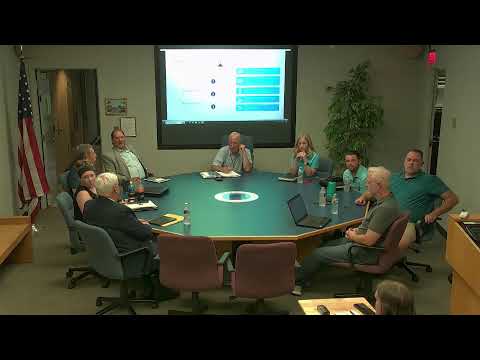
Luke Bynes, the presenter of the city’s economic strategy, told the Riverview City Council that the city has a narrow window of opportunity to convert underused parcels into housing, recreation and taxable development.
Luke Bynes, the presenter of the city’s economic strategy, told the Riverview City Council that the city has a narrow window of opportunity to convert underused parcels into housing, recreation and taxable development.
Bynes summarized findings from a data review, stakeholder interviews and steering-committee meetings and said the plan—called View Forward—lays out a set of actionable steps including opening the waterfront (with specific attention to the Arkema property), pursuing a land bank and special-assessment financing on contaminated parcels, using tax-increment financing (TIF) for Fourth Street improvements, and hiring a dedicated economic-development director.
Why it matters: The recommendations are intended to convert long-standing liabilities and underused assets—waterfront contamination, an aging landfill and an underperforming commercial corridor—into new residential and recreational uses that would generate tax revenue and infrastructure funds.
Bynes framed the plan around a SWOT (strengths, weaknesses, opportunities, threats) analysis that stakeholders and data supported. He noted Riverview’s high-performing school district, recreational assets and available development land as strengths. Weaknesses included aging infrastructure and underperforming commercial buildings; threats included contaminated waterfront parcels and the impending need to close or manage the landfill.
On specific proposals, Bynes recommended multiple, coordinated financing tools rather than a single fix. He described three interlocking ideas: leverage a land bank and a special-assessment district tied to the Arkema property to raise cleanup and public-improvement funds; create a Corridor Improvement Authority (a TIF-type tool) to drive redevelopment of Fourth Street; and consider moving or redesigning golf-course holes to free clean fill and acreage that could support new residential development.
Bynes said the city owns and manages key physical assets that make these approaches feasible: “You own the landfill, you own the golf course, you manage the landfill, you manage the golf course… you have dirt, you have property, you have machinery, you have equipment.” He added that combining those assets could let the city control some of the costs and logistics of site remediation and infrastructure construction.
He gave several quantitative illustrations from stakeholder meetings and his conceptual work: a nine-hole redesign typically requires 70–75 acres; a 100–125-acre residential parcel could yield on the order of 300–400 homes depending on density and environmental constraints; and, at one high level example, a special-assessment levy on a large corporate landowner could be conceived at roughly $1 million per year as an illustrative financing figure, to be covered over time by land sale proceeds and TIF revenues if redevelopment occurs.
Bynes also recommended hiring a dedicated economic development director—either a full-time city employee or a contracted/shared-services role—and convening a developer forum to test market assumptions with homebuilders and commercial developers. He said the Downriver Community Conference (DCC) and SEMCOG are regional partners the city should engage on waterfront planning and trail-gap analysis.
Council members and staff asked follow-up questions about infrastructure capacity, wetland mitigation and sequencing. Bynes cautioned that the Arkema property is contaminated and would require careful technical and relationship work with the corporate owner and with a land bank; he did not recommend the city itself take title to the contaminated parcels. He described the recommendations as multi‑year initiatives requiring due diligence, a dedicated staff lead and staged implementation.
No formal motions or votes were taken on the recommendations during the meeting; council members requested additional analysis and next steps before any binding decisions. The presentation closed with the consultant advising staged priorities and more stakeholder engagement before the council moves to policy or financial commitments.