Get Full Government Meeting Transcripts, Videos, & Alerts Forever!
Get email alerts on the Budget And Finance topic
No spam. Unsubscribe anytime.
Riverview presents budget priorities as landfill revenue ends; PFAS, water projects and capital needs highlighted
Summary
City staff presented the proposed 2025–26 budget and a multi‑year capital plan on April 14, emphasizing the loss of landfill income, the need to maintain police staffing, uncertainty over PFAS treatment costs, and a mix of projects funded from reserves and rates.
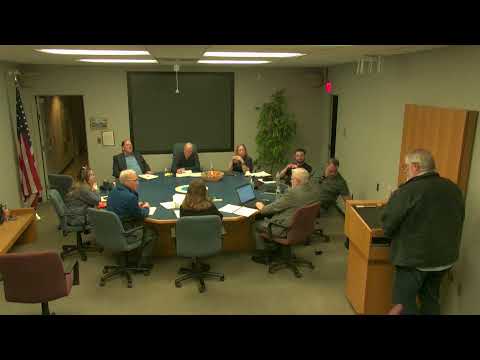
City officials reviewed key elements of Riverview’s proposed 2025–26 budget at an extended April 14 session, telling the council the city must replace revenue formerly provided by the landfill while maintaining services and addressing capital needs across water, sewer and public facilities.
City staff and council members said royalties and income tied to the landfill had historically contributed roughly $1.2 million a year (including methane/gas royalties sold to DTE) but that those funds are now being retained in a Land Preserve fund for landfill post‑closure obligations. Staff said the landfill will need to be self‑sufficient in closure and post‑closure care and that the city faces a significant long‑term liability: city materials cited roughly $60 million as the estimate to cover closure and post‑closure costs over the coming seven to eight years.
Finance presentations broke down several budget pressures and responses. Staff told the council that police and fire together represent the largest operating cost: about $5.6 million for police and $2.4 million for fire in the figures reviewed by the council. The proposed 2‑mill public safety assessment (addressed in the council’s separate April 14 action) is one near‑term step to help stabilize funding for the police department while the city retools longer‑term revenue assumptions.
Water and sewer operations were another focus. Staff noted that wholesale pass‑through increases from regional water suppliers required Riverview to adjust retail rates: engineers and the Great Lakes regional authority pass‑throughs were cited in staff discussion as producing water and sewer cost increases that staff passed to rates (the presentation referenced a water pass‑through in the high single digits and a sewer pass‑through in the mid single digits). Staff also described a looming regulatory requirement for PFAS treatment. Engineers’ preliminary estimates for a required PFAS treatment upgrade varied widely during briefing discussions — figures cited in the meeting ranged from roughly $3.5 million up to $22 million — and the council left a $10 million placeholder in the capital plan pending a final design and cost estimate.
Council members and staff discussed administrative changes in budgeting and chargebacks across enterprise funds. The finance director said she had realigned the city’s allocation of retiree health (OPEB) and administrative charges so those costs are borne in the fund associated with the original service area. Staff also proposed charging enterprise funds a consistent administrative percentage based on prior‑year revenue to reflect actual use of central services.
The presentation included capital‑planning items across multiple departments: parking‑lot and facility repairs at city buildings (including the library), water and sewer projects (including a prioritized sanitary tunnel project and lead service line replacements), and equipment replacements across public safety and public works. Staff identified a new block‑grant‑funded playscape project at Young Patriot Park (estimated at roughly $590,000 in grant funding with a modest local match for engineering) and noted the golf course is projecting positive cash flow for the coming year.
Council members thanked staff for preparing the budget and pressed for publicly available details; staff said the assessor’s property‑level roll and budget book snippets will be available at the clerk’s office and library. A resident commenter suggested the council publish a plainly worded plan showing how the city will fund the landfill closure obligation; the mayor and staff said they would consider more detailed reporting for residents as the multi‑year approach is developed.
What’s next: staff will finalize actuarial and assessor figures and return to council with any adjustments needed for the balanced budget; individual capital projects and bond questions will come back to the council for separate action as designs and bids are finalized.