Get Full Government Meeting Transcripts, Videos, & Alerts Forever!
Get email alerts on the Public Safety Technology topic
No spam. Unsubscribe anytime.
Riverview police present plan for eight Flock license-plate readers; first-year cost $53,000
Summary
Police and a Block Safety (Flock) representative outlined a proposal to install eight license-plate–reading cameras on major arterial roads, with a first-year cost of about $53,000 and annual maintenance of roughly $24,027; council members asked about privacy, data-sharing, locations and funding.
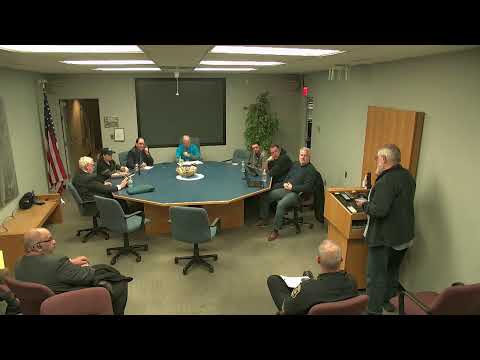
Riverview police briefed the City Council on a proposal to install eight fixed license-plate–reading cameras from Block Safety (Flock) as part of the police department’s capital improvement plan. Chief and Block Safety representatives described the system’s investigative uses, estimated costs and privacy protections during a Zoom presentation.
The police chief said the department asked for eight devices to monitor main roads such as Fort (Ford) Street, Sibley Road and Pennsylvania. Block Safety representatives described the system as a networked license-plate reader that captures license plates and vehicle “fingerprints” (descriptive vehicle features), can alert agencies in real time to vehicles tied to warrants or missing-persons reports, and integrates with national databases and missing-person systems. The presenter said data are retained by default for 30 days and that the department would control access; Block Safety said it provides an audit trail and a public transparency portal intended to document searches and use policies.
Costs and maintenance: presenters said the up-front first-year cost would be about $53,000, with ongoing annual maintenance around $24,027. The company said devices are solar-powered and use LTE for backhaul. They said hardware replacements following vandalism or catastrophic damage may be charged to the agency (manufacturer cost for replacement camera units is a few hundred dollars), and that localized maintenance teams can typically replace equipment in roughly 5–7 days when replacements are needed.
Privacy, use and sharing: council members asked whether the cameras would be used for traffic enforcement (they would not), whether audio sensors were included (they are not), and how long the lag is between capture and notification (presenter said typically under 30 seconds). Council members also asked about Fourth Amendment concerns; company representatives replied that license-plate readers are commonly used by law enforcement nationwide, that the data focus on vehicles rather than individuals, and that the vendor supports role-based logins and audit logs to track searches.
Funding and next steps: the chief said the department included the cameras in its capital improvement plan and that the proposed purchase would come from general fund CIP money unless alternative grants or shared regional funding are identified. Council members discussed potential grants (DCC, SEMCOG), ARPA (not available), and limited use of asset-forfeiture funds. No formal council action was taken at the meeting; the presentation will inform budget decisions for the next fiscal year.