Get Full Government Meeting Transcripts, Videos, & Alerts Forever!
Get email alerts on the Zoning topic
No spam. Unsubscribe anytime.
Planning commission recommends downtown zoning changes: sidewalk cafés permitted, facade rule tightened
Summary
The commission recommended a package of zoning amendments to city council, moving sidewalk cafés to a permitted use, removing a proposed accessory‑dwelling provision, adopting amended outdoor dining rules, and adding a two‑thirds facade trigger for major commercial renovations to support RRC certification and downtown revitalization.
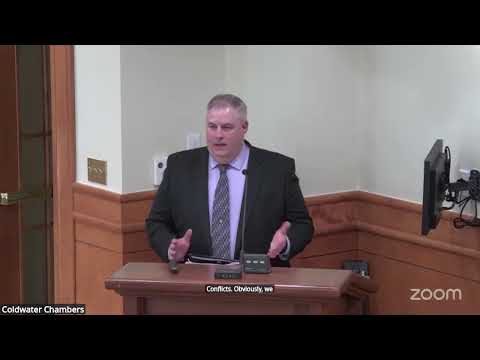
The Coldwater Planning Commission recommended that city council adopt multiple zoning changes intended to support downtown revitalization and meet Redevelopment Ready Communities (RRC) expectations. Commissioners voted to send the package to council as amended, including a shift that would classify sidewalk cafés as a permitted use rather than a special land use, removal of a proposed accessory dwelling provision (section 4.16) from the ordinance package, and an amendment to commercial building standards (section 5.16) to require a two‑thirds ground‑floor facade replacement threshold for major façade improvements.
Robert, a planning staff member, summarized the text amendments and said staff and consultants had worked with McKenna on definitions and code language. He told the commission that one outstanding administrative item for several applicants is tree counts and a lighting plan for certain projects. Planning staff also said the city’s stormwater reviewer had accepted calculations where applicable and that outdoor dining rules were revised to balance safety and flexibility.
Erin (planning staff) warned commissioners that delaying the package would slow the city’s RRC certification and delay access to grants and developer‑readiness benefits. "If this is tabled, it will delay the process of us becoming certified and then us accessing grant money becoming developer ready," Erin said.
Key changes recommended to council include: - Sidewalk cafés: Reclassify from special land use to permitted use in the C‑2 district; adopt application standards requiring a site plan, insurance indemnity form, and a minimum five‑foot unobstructed pedestrian path; hours for sidewalk cafés were proposed as 6 a.m. to 11 p.m. - Outdoor dining/sidewalk café conditions: Permit furniture and fencing that are architecturally compatible; prohibit advertising signage on furniture; require non‑permanent installation and allow council to revoke or suspend permits for safety or recurring violations. - Commercial building standards (section 5.16): Apply a ground‑floor transparency/ facade standard as amended; commissioners settled on language to treat major façade work as projects affecting two‑thirds of the ground‑floor facade (the commission asked staff to identify the administrative thresholds that constitute "major" work). - Accessory dwelling units above commercial (section 4.16): Staff recommended removing this provision from the current package and revisiting it later to avoid blocking RRC certification progress.
Commissioners discussed fee concerns for sidewalk‑café special land‑use reviews. Staff clarified that the $500 special land‑use fee under discussion generally covered mailings and newspaper legal notice costs and that, as written, that cost is typically a one‑time fee tied to the lease used for right‑of‑way occupancy. Commissioners asked council — not planning staff — to review the fee schedule if they wanted to change it.
After discussion, Commissioner Patty moved to recommend the full package to council "as presented and amended" (which incorporated the sidewalk‑café language and the two‑thirds facade provision) and the commission approved the motion by voice vote. The commission also requested staff to produce a clean draft for the council packet and noted there would be no additional public hearing required for the current textual amendments.