Get Full Government Meeting Transcripts, Videos, & Alerts Forever!
Get email alerts on the Historic Preservation topic
No spam. Unsubscribe anytime.
Historic District Commission hears CLG, Main Street updates; RFP for beach house reopened
Summary
Coldwater’s Historic District Commission on Wednesday, Feb. 12, 2025, heard updates on Certified Local Government (CLG) projects and the downtown Main Street program, including a reopened request for proposals for the beach house and metrics on visitor traffic and private investment downtown.
Coldwater’s Historic District Commission on Wednesday, Feb. 12, 2025, heard updates on Certified Local Government (CLG) projects and the downtown Main Street program, including a reopened request for proposals for the beach house and metrics on visitor traffic and private investment downtown.
The updates matter because the CLG program and Main Street activity guide preservation work and downtown economic-development projects that can qualify for state grants and local incentives. Commission members got status reports on active grants, procurement steps and upcoming funding requests that could shape rehabilitation work downtown.
Aaron, a city staff member, told the commission that the RFP for the beach house returned a single bid; on advice from the city’s counsel the solicitation was reopened and will remain open through March 7 to encourage additional responses. “We only received 1. And because of that, with guidance from Chapeau, we were advised to open that back up,” Aaron said. He said staff expanded outreach by sending the RFP to the Builders Association of Michigan, the Builders Association of Lansing, the Construction Association of Michigan and other trade groups and that all bidder questions and answers are being tracked and circulated to interested parties.
Aaron also reported that a preservation grant application from the Presbyterian church was submitted early in the process and that Lisa Renshaw is exploring an Evan Graham Preservation Award for the project. He said he has offered personal assistance to Renshaw and that she may request a letter of support from the commission if the congregation endorses applying.
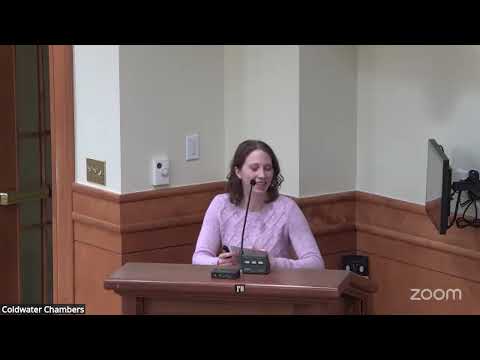
Audrey, Main Street/DDA staff, summarized the program’s annual report and several downtown projects. She said the Main Street reporting area covers about 13 blocks and that the 2023 visitor model counts almost 186,000 unique visitors per year based on anonymized device-location data (an IP-based method that counts a device once per day after seven minutes of presence). “Our downtown receives almost a 186,000 visitors per year,” Audrey said.
Audrey reported nearly $600,000 in net private investment and about $120,000 in public investment during the last reporting year and 12 façade projects completed. She noted a $75,000 façade restoration initiative grant from the Michigan Economic Development Corporation (MEDC) that has funded recent work and said additional grant‑funded projects are expected to be reported in the next update.
Audrey listed five new businesses that opened in the reporting period (Shawarma Station; Carpe Diem Skin Spa; TIGS Canteen Services; Jim’s Place; and City Barbershop) and noted other local expansions, including El Taco logo increasing its space and the Blush and Ivory building achieving full occupancy. She also highlighted a Main Street-sponsored mural painted by board member Matt Bielchini and a coloring-book project with the high school that traces historic building photographs into line drawings for local outreach and education.
On a planned ice-cream shop project, Audrey said an application is pending with MEDC and staff are exploring new state Brownfield TIF rules and eligible expenses to determine whether those incentives improve the project financials. “In the past year and a half, the state of Michigan has changed how the Brownfield incentive functions and what are considered eligible expenses,” she said, adding that the project is still in the “homework phase.”
Audrey also reported the Children’s Museum — which moved into the DDA building with local fundraising and a city loan — now draws about 14,000 visitors annually (an increase the report quantified as roughly 130%) and has added about 800 square feet of retail space to diversify revenue. She said Main Street logged roughly 1,000 volunteer hours in 2024 and outlined short-term events including a public-art program, a monthly downtown business meetup and a “Love Local” soup-and-chili event held the prior weekend.
Commission discussion included a question about whether visitor data indicates retail purchases or time-of-day patterns; Audrey said that level of transaction detail is not available from the device-based visitor report and would require direct surveys of businesses or additional data collection. She also said staff can run “pulse polls” and event-specific counts to supplement the anonymous device metrics.
No formal commission actions were taken on the CLG or Main Street items during the meeting; the session was limited to informational updates and staff follow-up. Next steps noted in the presentations: the beach-house RFP will remain open through March 7, staff will continue bidder outreach and Q&A distribution, and the Presbyterian church applicant may seek a future letter of support if its congregation pursues the Evan Graham Preservation Award application.
Audrey and Aaron encouraged commissioners to consider preservation projects under the CLG program — the city joined the CLG about a year and a half ago — including an updated historic resource survey (last completed in February 2006), design-guideline work for downtown architecture and educational workshops for building owners.
The commission moved on to other agenda items after the presentations.