Get Full Government Meeting Transcripts, Videos, & Alerts Forever!
Fraser zoning board reviews draft ordinance overhaul, debates façade, lighting and tree rules
Summary
The Fraser Zoning Board of Appeals met June 5 to review a draft comprehensive zoning ordinance update that proposes district changes, façade material standards, new lighting limits tied to recent variance cases, and more detailed landscaping and tree-preservation rules.
The Fraser Zoning Board of Appeals met June 5 and spent the bulk of the meeting reviewing a draft rewrite of the city’s zoning ordinance, hearing a staff presentation of proposed district changes, facade standards, lighting limits and detailed landscaping and tree-preservation rules that city planners say will reduce future variance requests and guide new development.
Planning staff Lauren Plummer opened the presentation, saying the project “kicked off July 2024” and outlining a public-engagement timeline that included surveys, steering-committee meetings and a first draft completed this spring. Plummer told the board the rewrite is mostly grant funded through the Michigan State Housing Development Authority and that the city provided additional local funds (amount not specified in the meeting). She said the steering committee will review a full draft this month before the city’s planning commission considers a second draft later in the year.
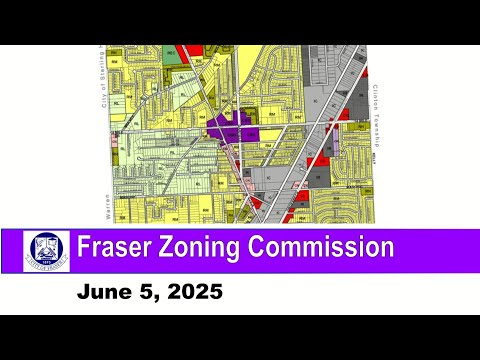
Board members focused on four substantive areas: district map changes, exterior-facade materials, lighting standards and landscaping/tree preservation. Plummer described map edits that remove small, underused districts and add a new transitional-residential district intended to buffer residential areas from commercial uses around the Central Business District; she also said some conditional rezonings produced map deviations around the Garfield and 14 Mile intersection.
On facades, the draft includes a materials table that assigns allowed primary and secondary materials by district and sets minimum coverage rules: primary materials must cover at least 75 percent of the first-floor facade and 50 percent of the second floor, while secondary materials can comprise at most 25 percent of the first…
Already have an account? Log in
Subscribe to keep reading
Unlock the rest of this article — and every article on Citizen Portal.
- Unlimited articles
- AI-powered breakdowns of topics, speakers, decisions, and budgets
- Instant alerts when your location has a new meeting
- Follow topics and more locations
- 1,000 AI Insights / month, plus AI Chat